

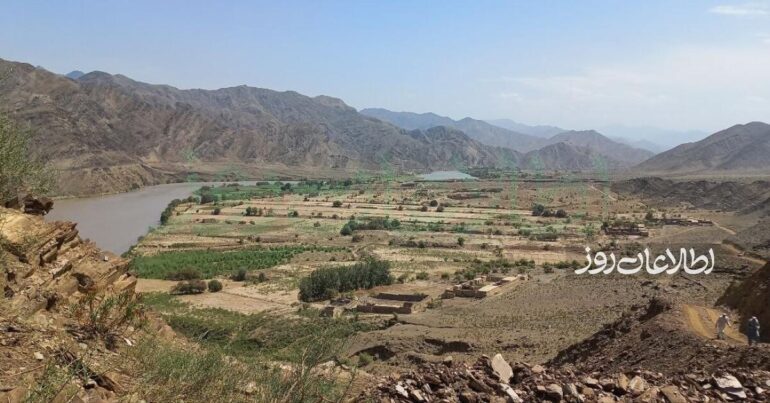

KABUL, AFGHANISTAN – Four people were killed and three others wounded in a clash between two families over a land dispute in Chaparhar district of eastern Nangarhar province, local Taliban authorities said.
Sayed Tayeb Hamad, a spokesperson for the Taliban’s police command in Nangarhar, said the incident took place on Saturday, September 12, in the Zagho village of Chaparhar district.
Hamad did not specify whether those killed belonged to one side of the dispute or both sides. He said Taliban forces arrived at the scene, transferred the wounded to a hospital and arrested two people in connection with the incident.
The spokesperson said an investigation into the clash was ongoing and that the detainees would be handed over to judicial authorities.
Since the Taliban returned to power in August 2021, disputes over land ownership and control have remained a recurring source of tension across Afghanistan. Taliban authorities have launched a campaign to reclaim what they describe as state-owned or illegally occupied land, resulting in the eviction of residents, closure of businesses and disputes with communities over ownership.
In Kabul, the authorities have moved to take control of large areas of land in the Omid-e Sabz township after a Taliban special court ruled that more than 1,500 jeribs of the area belonged to the state, a decision that has raised concerns among residents. In Herat, Taliban forces recently closed around 100 shops in Jebrail over a dispute concerning land ownership.
The latest case involves the Khatam al-Nabieen seminary in Kabul, where Taliban authorities have ordered the evacuation of the complex, saying it was built on government-owned land, while the seminary’s officials maintain that they have legal documents proving ownership and that the case remains before a Taliban court. Taliban forces have detained teachers and students and taken control of the premises. At the same time, disputes between Kuchis and settled communities over grazing land and territorial claims continue to recur in parts of Afghanistan, particularly in the central highlands.
These cases reflect the broader complexity of Afghanistan’s land disputes, where state claims, private ownership, communal rights, historical grievances and access to natural resources frequently overlap, creating conditions in which unresolved disagreements can escalate into confrontation and, in some cases, violence.
Land disputes and competing claims over natural resources have also triggered armed clashes in other parts of Afghanistan. On August 2, KabulNow reported that an armed confrontation between the Buri Khel tribe from Khost and the Giyan Khel tribe from Paktika had continued for four days over ownership of a mountain located along the border between the two provinces.
According to local sources cited by KabulNow, the two sides were using both light and heavy weapons in the fighting, with at least two people injured. The disputed mountain, located between Spera district of Khost and Giyan district of Paktika, contains extensive chilgoza pine forests, which both tribes claimed as their territory.
The mentioned incidents highlight how disputes over land and natural resources can escalate into armed confrontations when competing ownership claims remain unresolved, particularly in areas where formal mechanisms for determining land ownership and settling disputes are limited.

