

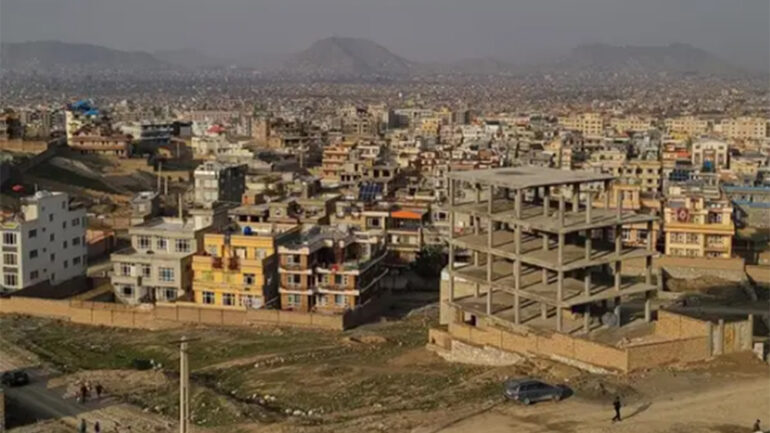

KABUL, AFGHANISTAN – The Taliban’s Ministry of Justice has ordered the enforcement of a special court ruling declaring more than 1,500 jeribs of land in Kabul’s Omid-e-Sabz Township state-owned, a move that could displace thousands of residents.
In a statement on Monday, the ministry said the Taliban’s Special Court for State Seized Land Cases had confirmed ownership of 1,507.49 jeribs (around 301 hectare) of land in the Township, also known as Haji Nabi Township, located in Kabul’s Districts 6 and 13.
The ministry said the ruling had been referred to the Commission for the Prevention of Land Grabbing and Recovery of Seized Lands for implementation, effectively ordering the evacuation of properties built on the land.
According to the ministry, the court issued its decision on April 20 after determining that the land had been surveyed, registered and recorded under five official cadastral sections as government-owned property. The ministry said the court concluded that the land had never been legally transferred to private individuals or legal entities and therefore remained state property.
The statement said current homeowners and landowners in the township should seek reimbursement for the cost of their land and any damages from those who sold them the properties, rather than from the Taliban administration.
Located in western Kabul, Omid-e-Sabz is among the largest residential developments built during the past two decades. The township is home to thousands of families, the majority of them ethnic Hazaras, who purchased plots of land or homes through private transactions over several years. Mohammad Nabi Khalili, the brother of former Vice President of Afghanistan Mohammad Karim Khalili, is reportedly one of the development’s major shareholders.
Since returning to power in August 2021, the Taliban have launched a nationwide campaign to review ownership claims over residential townships, urban developments and agricultural land. Taliban authorities argue that large areas of public land were illegally occupied, transferred or sold under previous governments and should be returned to state control.
The campaign, however, has raised concerns among residents and property owners in a number of affected developments. They argue that they purchased their properties through documented contracts and transactions recognized at the time of sale, and say they risk losing homes and investments despite having acquired them in good faith.
Critics of the process have also questioned the transparency of the Taliban’s land adjudication system, arguing that affected residents have limited opportunities to challenge rulings or seek independent judicial review.

