
KABUL, AFGHANISTAN – The United Nations Office for the Coordination of Humanitarian Affairs (OCHA) says restrictions imposed by the Taliban have affected both the participation of female aid workers in humanitarian operations and women’s and girls’ access to essential services and assistance, including hygiene supplies.
In its latest report, OCHA described these restrictions as concerning, saying they have disrupted efforts to respond to humanitarian needs in Afghanistan.
The UN agency said it recorded 29 humanitarian access-related incidents across Afghanistan in October 2026, 21 of which involved interference in the implementation of humanitarian activities.
Four incidents involved violence against humanitarian personnel, assets and facilities, while three were related to military operations and clashes. Another incident involved the denial of humanitarian needs or rights.
According to the report, most incidents were recorded in western Afghanistan, followed by the southern and southeastern regions. Eleven incidents were also classified under gender-related issues.
Of the 21 incidents involving interference in humanitarian activities, four concerned restrictions on the participation of female aid workers in humanitarian operations. Three involved delays or difficulties in signing memorandums of understanding (MoUs), while four concerned interference in programme implementation. Three other incidents involved requests for sensitive information about humanitarian personnel or aid recipients, and two affected women’s access to services or assistance.
Other reported restrictions included pressure on field operations, unannounced visits to offices, disputes over land and permits, requirements affecting the movement of humanitarian supplies between provinces, and attempts to influence project design.
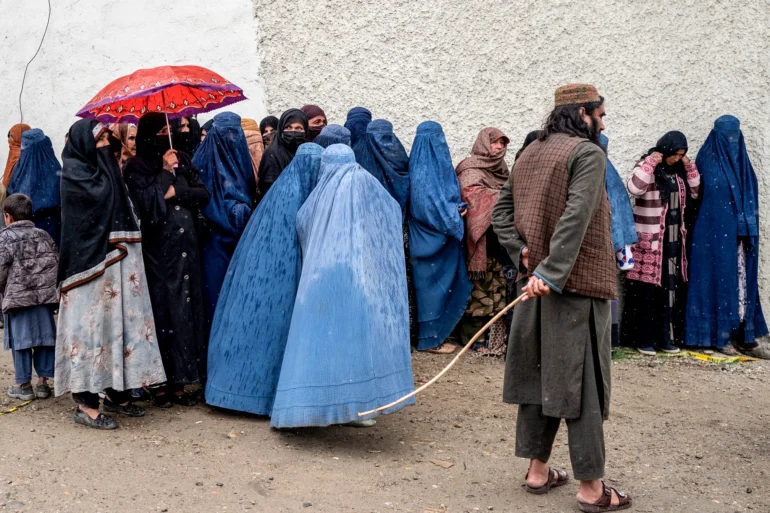
OCHA said the 11 incidents classified as gender-related included restrictions on female teachers and healthcare workers, limitations on women’s participation in livelihood activities, and barriers preventing women from accessing hygiene and dignity-related supplies.
The agency added that, in several cases, these restrictions disrupted the continuity of education, healthcare, training and other humanitarian activities.
OCHA warned that such restrictions risk further limiting women’s and girls’ access to essential services and undermining humanitarian organisations’ ability to deliver assistance in a culturally appropriate manner.
The UN humanitarian coordination office has previously reported numerous cases of Taliban interference in humanitarian operations, warning that such interventions prevent aid organisations from reaching people in need.
The Taliban have not yet commented on OCHA’s latest report. However, the group has previously denied interfering in humanitarian operations, saying it only monitors the distribution of aid.
The restrictions form part of a broader series of measures imposed by the Taliban since returning to power in August 2021, which have systematically curtailed the rights and freedoms of women and girls. Girls have been barred from attending secondary schools beyond the sixth grade, while women have been prohibited from attending universities and working in most government positions and many private-sector jobs.
The Taliban have also banned women from working for national and international non-governmental organisations and the United Nations.
Women and girls also face restrictions on travelling without a male guardian (mahram), accessing public spaces, participating in sports and recreational activities, and choosing how to dress. The Taliban’s Law on the Propagation of Virtue and Prevention of Vice, enacted in August 2024, further formalised restrictions on women’s behaviour, movement and presence in public. The United Nations has warned that these measures have severely undermined women’s access to education, employment, healthcare, justice and public life.