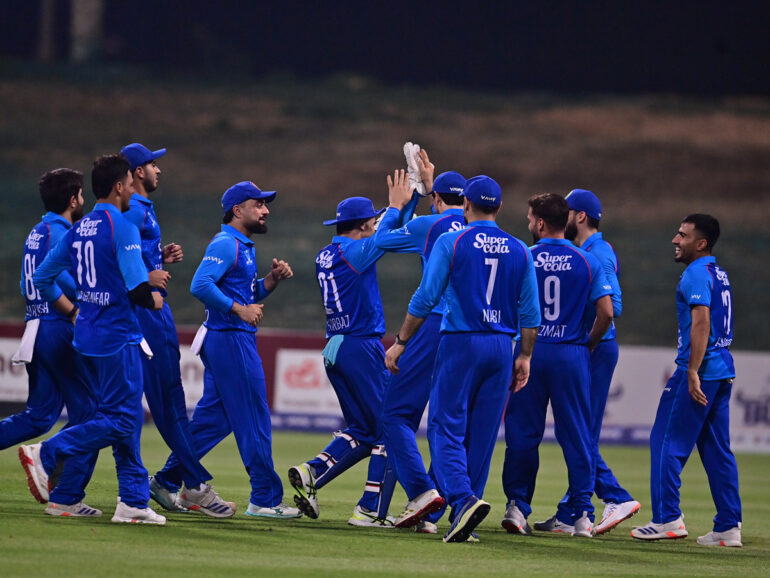

KABUL, AFGHANISTAN – Cricket Scotland announced that it will no longer schedule bilateral matches against Afghanistan outside International Cricket Council (ICC) competitions, citing the Taliban’s treatment of women and girls and broader human rights concerns.
Cricket Scotland said on Monday that the decision was based on its commitment to increasing women’s and girls’ participation in the sport, as well as concerns over the humanitarian situation in Afghanistan, Reuters reported.
Under the policy, Scotland will not arrange bilateral series against Afghanistan but will continue to face the team in ICC-organized competitions. Cricket Scotland said the policy would be reviewed annually or following major decisions by the ICC or significant changes in circumstances.
Australia and England and Wales have previously suspended bilateral cricket matches with Afghanistan over the Taliban’s treatment of women and girls.
Scotland has not played an official international match against Afghanistan since the 2021 T20 World Cup. However, Cricket Scotland said the Afghanistan Cricket Board requested access to training facilities in Scotland in July, ahead of Afghanistan’s men’s team series against Ireland, and again in September in connection with the Afghanistan T20 Premier League.
The Afghan men’s franchise league is scheduled to begin in December in the United Arab Emirates, with five teams expected to compete. The ICC has not yet approved the tournament.
The tournament has drawn criticism from members of Afghanistan’s refugee women’s cricket team, who have urged foreign players not to participate. They argue that international players should not support a cricket system that excludes Afghan women from the sport.
Since returning to power in August 2021, the Taliban have barred women and girls from participating in sports, including cricket, as part of a broader set of restrictions on their rights to education, employment and public life.
The restrictions have effectively dismantled women’s cricket in Afghanistan, forcing many female players to abandon their sporting careers or leave the country amid fears of persecution.
Afghanistan remains the only full member of the ICC without a women’s national cricket team. Many of the country’s contracted female cricketers have since resettled in Australia, where they continue to train and seek opportunities to play internationally.
In recent years, human rights groups, women’s rights activists and former Afghan women cricketers, both inside and outside the country, have called on ICC to suspend Afghanistan’s membership until women are allowed to return to the sport.
They argue that allowing the men’s team to compete while women remain banned from cricket creates unequal treatment and undermines international commitments to gender equality in sport.