
The Taliban’s return to power has restored territorial control without resolving Afghanistan’s deeper crisis of governance. The country illustrates a central paradox of state failure: a regime can consolidate its authority while undermining the institutions, rights, and social conditions necessary for a functioning state.
By Mohammad Bashar
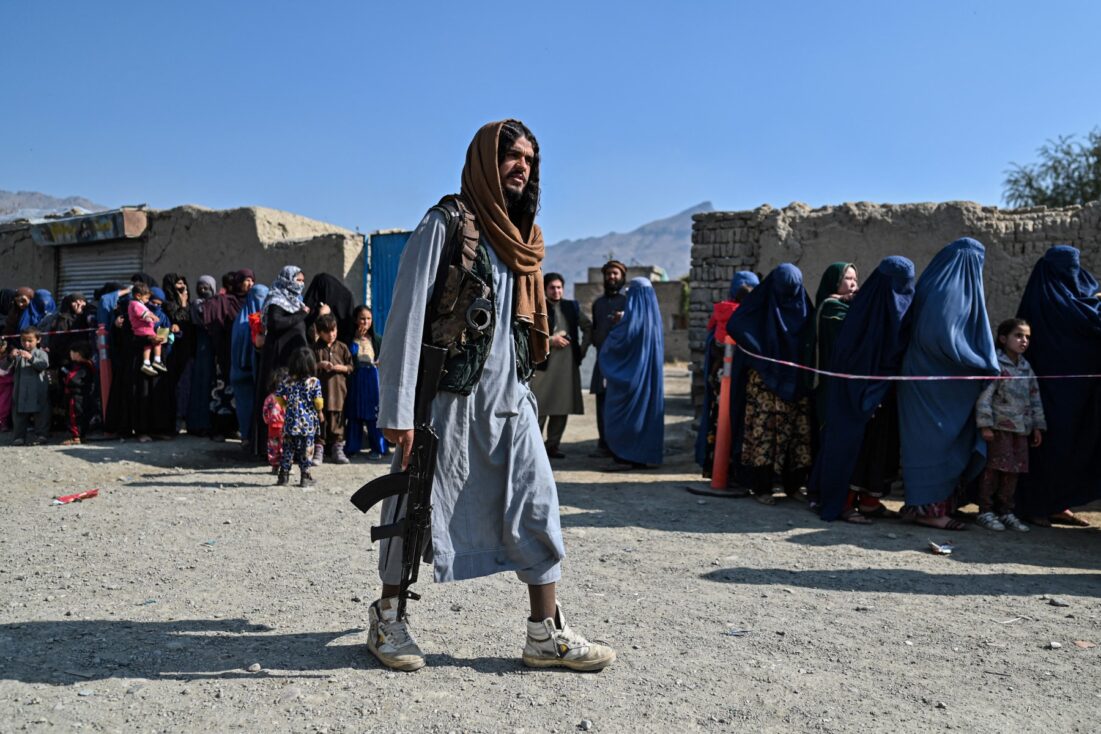
When the Taliban returned in August 2021, the collapse of the Afghan republic appeared to mark the end of one political order and the beginning of another. Large-scale fighting diminished, and the new authorities established control over nearly the entire country. Yet territorial authority did not produce a corresponding recovery in public welfare, political legitimacy, or economic security. For most Afghans, the end of open warfare brought neither meaningful political participation nor a credible prospect of a better life. Instead, insecurity shifted from the battlefield toward the household, the workplace, the classroom, the streets and the institutions governing everyday existence.
Afghanistan therefore challenges conventional understandings of state failure. If a state is judged primarily by its ability to maintain territorial control and suppress armed opposition, the Taliban have achieved a degree of success. If, however, effective governance includes the provision of public goods, the protection of fundamental rights, and the ability to govern through credible institutions, the picture becomes more troubling.
The central argument is not that Afghanistan has become a state without authority. It is that the consolidation of authoritarian power has coexisted with profound failures in the exercise of that authority. The Taliban regime has demonstrated an ability to command, enforce, and exclude, but these capacities have not translated into inclusive governance, sustainable development, or broad-based human security.
Beyond the Conventional Definition of State Failure
State failure is conventionally diagnosed through collapse: the splintering of territory, the fragmentation of armed command, and the retreat of public authority into localized fiefdoms. But this narrow rubric fails to capture a darker, more modern variant of institutional decay. A regime can preserve its administrative machinery, secure its borders, and monopolize physical force while entirely hollowing out the purpose of public governance. It can achieve total territorial dominance precisely as it abandons the protection of its citizens from systemic deprivation, social exclusion, and arbitrary rule.
Max Weber’s foundational account of the modern state hinges upon its claim to a monopoly on the legitimate use of physical force within a given territory (1946). Yet Weber’s definition exposes a vital fault line: possessing coercive power is not the same as exercising legitimate authority. The sheer capacity to enforce an edict proves that a regime commands raw power; it does not prove that its commands are accepted as rightful, that its institutions are structurally accountable, or that its decisions serve any broader public interest.
Francis Fukuyama’s work on state development helps explain this distinction. Fukuyama distinguishes between the scope of the state, which refers to the functions and responsibilities a government takes on, and state capacity, which refers to the strength of its institutions, the competence of its staff, and its ability to enforce laws and deliver public services effectively. A regime may try to control every aspect of daily life but still have weak institutions if it lacks clear rules, skilled staff, and ways to listen to the public.
This dynamic is further illuminated by Daron Acemoglu and James Robinson’s institutional economics framework, which distinguishes between inclusive and extractive political and economic institutions (Why Nations Fail, 2012). According to Acemoglu and Robinson, sustainable prosperity and state resilience depend on inclusive institutions that distribute power broadly, protect property rights, enforce the rule of law, and encourage broad-based participation in economic and political life. Conversely, extractive institutions concentrate power and wealth in the hands of a narrow elite, using the apparatus of the state to suppress competition, extract resources from society, and block innovation or human capital development.
The Taliban’s political order exposes this exact institutional fracture. While their security apparatus exercises pervasive control, political participation is extinguished, opposition is violently proscribed, and citizens are stripped of any institutional mechanism to contest state overreach. The total absence of elections or any inclusive political settlement means that public consent plays no role in shaping power.
Fukuyama’s and Acemoglu-Robinson’s frameworks reveal the true nature of this regime: by erecting extractive political structures that systematically restrict women’s and girls’ access to education and economic life, the authorities ensure short-term compliance at the expense of long-term societal survival. The result is a system that can force people to obey but cannot support long-term development or protect their well-being.
Authoritarian Consolidation and the Problem of Legitimacy
The Taliban’s rule rests on a highly centralized political structure where decision-making is concentrated within a narrow leadership and ideological framework. Rather than constructing institutions through which Afghanistan’s diverse population can participate in political life, the authorities have restricted the space for pluralism and dissent. Women, political opponents, independent journalists, and civil society actors have faced extensive restrictions.
The problem is not merely that the political system differs from liberal democratic models. It is that the concentration of authority is accompanied by limited accountability. Where public institutions cannot be questioned, policy failures become harder to correct, and grievances have fewer peaceful channels for expression.
Legitimacy also cannot be reduced to the absence of visible resistance. People may comply with authority because they accept it, but they may also comply because the costs of opposition are prohibitively high. Observable obedience is therefore not sufficient evidence of public consent. Furthermore, the presence of ongoing armed resistance, including various military groups and opposition fronts engaged in armed struggle against the Taliban across parts of the country, demonstrates that coercive enforcement has not achieved total pacification. A political order that relies heavily on force to suppress both civil dissent and armed defiance may appear superficially stable, yet it leaves the underlying relationship between state and society deeply fractured and unresolved.
Economic Recovery Without Broad-Based Prosperity
Afghanistan’s economic difficulties further reveal the limitations of judging state performance through control alone. The crisis predates 2021. Decades of conflict, weak productive capacity, dependence on foreign assistance, and fragile institutions left the country vulnerable to external shocks, which were subsequently intensified by international withdrawals and aid reductions.
The Taliban’s domestic policies and international isolation have added further constraints. Restrictions on women’s education and employment reduce the available workforce and deprive households of income. Limited access to finance and uncertainty surrounding economic governance complicate efforts to expand productive activity.
Nevertheless, Afghanistan’s economic trajectory should not be described as uninterrupted contraction. The World Bank estimated that the economy grew by 4.8 per cent in 2025, while GDP per capita declined by 5.6 per cent. This divergence illustrates why aggregate growth must be interpreted cautiously. An economy may expand in total terms while average resources per person fall, particularly when population growth and the return of displaced Afghans increase pressure on employment and public services.
Growth that does not translate into productive employment, rising household incomes, and greater economic security cannot resolve a crisis of development. The restrictions imposed by the current authorities actively undermine the human capital and productive potential on which long-term recovery depends.
The Exclusion of Women as a Failure of Governance
Few policies illustrate the contradiction between authoritarian control and effective governance more clearly than the restrictions on women and girls. The exclusion of girls from secondary education and universities, alongside restrictions on employment, is frequently discussed primarily as a human rights issue. It is that, but it is also a fundamental failure of governance and national development.
Education expands individual capabilities and contributes to a skilled workforce. Excluding girls imposes costs that extend well beyond the immediate denial of a right: it reduces the future supply of teachers, health professionals, and skilled workers, limits household earning potential, and weakens economic development.
UNICEF reported in March 2025 that approximately 2.2 million girls had been affected by the ban on secondary education. The significance of this figure lies in its cumulative effects. Each additional year outside the classroom deepens inequalities and may create critical labor shortages, restricting women’s access to healthcare by limiting the pipeline of female medical professionals. By sacrificing education and public participation to ideological control, the authorities undermine the human resources required for national recovery.
Humanitarian Dependence and the Limits of External Assistance
The continuing humanitarian crisis further demonstrates the distance between territorial authority and effective governance. The United Nations’ humanitarian planning estimated that 21.9 million people in Afghanistan would require assistance in 2026, reflecting the combined effects of poverty, displacement, food insecurity, and climate-related emergencies.
These conditions cannot be explained solely by Taliban rule. Afghanistan’s vulnerability has deep historical roots, and international decisions since 2021 have significantly affected available resources. However, the Taliban’s policies shape the conditions under which assistance is delivered. Restrictions on women humanitarian workers and limits on civic participation weaken the capacity of society to respond to its own needs. Emergency relief may prevent immediate suffering, but it cannot replace a functioning public health system or a productive economy.
Conclusion: A State That Survives but Does Not Serve
Afghanistan under the Taliban breaks the traditional vocabulary of state failure. The regime has not fractured territorially, and its apparatus of coercion remains formidable. But the capacity to rule is not the capacity to govern, and survival is not success. When a government defines stability as the total submission of society, it mistakes obedience for order and fear for consent. For millions locked out of classrooms, silenced by decree, or trapped in grinding destitution, a state that can project power without protecting its people is merely an occupying force of its own land. A country can indeed become entirely governable for those who hold guns, even as it becomes very difficult to live in for those who must live under them. The crisis in Afghanistan is no longer about a government falling apart; it is about a country held together by coercion, where the wide gap between state power and the public good remains the defining tragedy of Taliban rule.
Disclaimer: AI tools were used for minor language and grammar corrections. The research, arguments, and analysis are entirely the author’s own.