
KABUL, AFGHANISTAN – The international community must not allow the Taliban’s regime of repression and institutionalized discrimination to become normalized while it continues to destroy the lives of Afghans, particularly women and girls, the UN special rapporteur on human rights in Afghanistan said on Thursday.
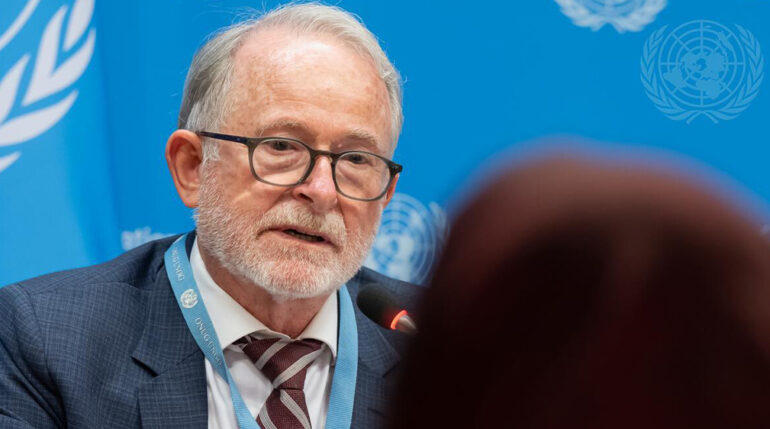
Richard Bennett, presenting his latest report to the U.N. General Assembly, called on states to ensure that engagement with the Taliban authorities does not confer legitimacy in the absence of “measurable, independently verified improvements in human rights.”
Taliban authorities have shown no willingness to reverse what Bennett described as systematic violations of fundamental human rights and have instead continued to deepen and formalize their repression, he said.
He pointed in particular to recent decrees affecting women and girls, saying they have further weakened protections against violence, made it increasingly difficult for women to leave abusive relationships and permitted child marriage.
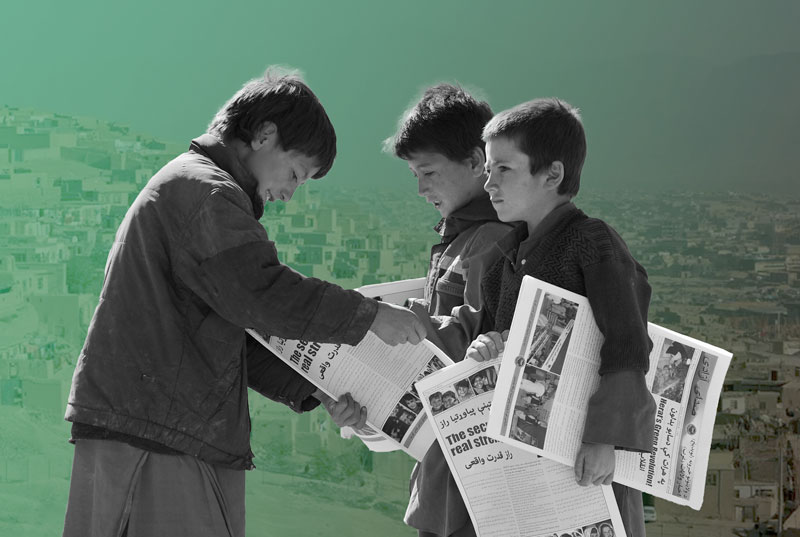
Bennett warned that current conditions could have lasting consequences for Afghanistan’s younger generation, citing exposure to gender-based violence, forced and child marriage, child labor and radicalization.
“For girls, the denial of education has serious consequences for their mental health and the country’s development as a whole,” Bennett said. “Despite these conditions, Afghan young people, particularly girls and young women, continue to pursue education and advocate for their rights.”
In his report, Bennett highlighted ongoing arbitrary detention, torture and other ill-treatment including sexual violence, enforced disappearances and extrajudicial killings, as well as severe restrictions on freedom of expression and civic space. The report also noted with concern persistent discrimination and abuse against marginalized ethnic, religious and linguistic communities, the persecution of LGBTI people and the exclusion of people with disabilities.
The U.N. expert called on member states to stand with the Afghan people, protect their rights and support their future. He urged states pursuing a dispute against Afghanistan under the Convention on the Elimination of All Forms of Discrimination against Women (CEDAW) to accelerate the process and reiterated calls for gender apartheid to be recognized as an international crime.
“Accountability demands sustained political will, international cooperation and determined action to ensure that those responsible for serious violations are brought to justice,” Bennett said.
He welcomed four arrest warrants issued by the International Criminal Court for senior Taliban leaders as an important step toward accountability, urging states to support the court and other channels, including the Independent Investigative Mechanism for Afghanistan and national prosecutions under universal jurisdiction.
Bennett also called on the international community to sustain humanitarian assistance and long-term support for education, healthcare, mine-action, media and civil society, especially women-led initiatives.
Over the past five years of Taliban rule, Afghanistan has become one of the most restrictive countries in the world, particularly for women and girls and religious and ethnic minorities. The authorities have imposed severe restrictions on women’s movement, education, employment, social mobility and other basic freedoms. Rights groups, U.N. experts, activists and Afghan women have described the Taliban’s treatment of women and girls as “gender apartheid” and urged the international community and the United Nations to recognize it as such.