
KABUL, AFGHANISTAN – Daughters of Taliban members were among students attending a secret school established in Kabul to provide education to Afghan girls and women barred from formal schooling, an Italian aid worker has told an Italian newspaper.
Susanna Fioretti, founder of Rome-based non-profit organisation Nove Caring Humans, told Corriere della Sera that she discovered two years after the school opened that some of its students were daughters of Taliban members whose parents wanted them to receive an education despite restrictions imposed by the authorities.
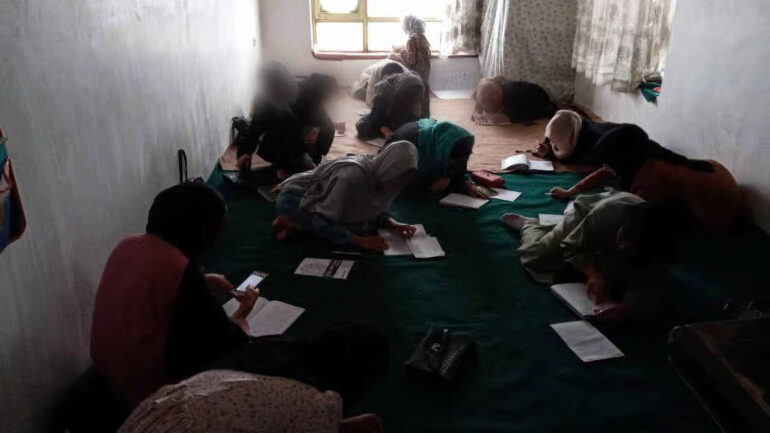
Classes were held in a room that also housed sewing machines, resembling a women-only workshop. In the event of checks, pens and paper would be hidden and sewing materials brought out. “Luck, but not only luck, was on our side, and not a single Taliban guard knocked on the door,” Fioretti said. “Then, after two years, we made an incredible discovery… there were daughters of Taliban. Their fathers and mothers wanted them to study.”
Fioretti said some Afghans with ties to the Taliban, those who hold more moderate views, oppose certain restrictions and work discreetly to circumvent them.
Secretly educating the girls remained dangerous, Fioretti said, with serious potential consequences for both the students and the organizers if the school were discovered.
Shortly after returning to power in 2021, the Taliban have barred girls from education beyond the sixth grade and women from universities and most jobs. Afghanistan is the only country in the world with such a ban. According to the United Nations, more than 2.5 million girls are unable to attend school across the country.
Underground schools continue to operate despite the restrictions. Some reportedly function with the knowledge or informal tolerance of Taliban officials, while others have faced closure. Multiple reports, including a 2022 investigation by the Afghanistan Analysts Network, have indicated that some senior Taliban members arrange education for their own daughters, either through secret schools inside the country or by sending them abroad.
In her interview, Fioretti discussed her separate efforts to secure women’s right to work. Through “negotiation and compromise,” she said, she helped create economic opportunities for some women inside Afghanistan. Taliban officials were initially surprised by the proposal and asked whether she understood which country she was in. She explained that women’s economic activities could generate income for the country, helping to secure their approval.
The Taliban eventually approved the program. Women who received awards attended a ceremony in the presence of a Taliban minister, Fioretti said. She added that Taliban authorities treated her “with respect” because she is an Italian woman and that she had always enjoyed the freedom to express her opinions in Afghanistan.