

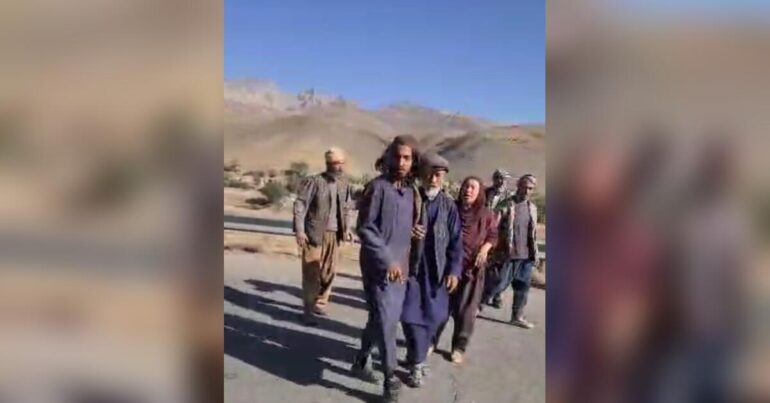

KABUL, AFGHANISTAN – Local sources on Wednesday, September 2, reported two separate clashes between Kuchis and residents of Behsud district in central Afghanistan’s Maidan Wardak province.
According to the sources, in one incident that occurred two days ago, four Kuchis allegedly beat and injured a local resident identified as Rajab Ali with stones and sticks. One of the Kuchis reportedly suffered a broken tooth during the confrontation.
A source said the Kuchi-Nomad and Settled Residents Dispute Resolution Commission ruled against Rajab Ali and ordered him to pay 80,000 Afghanis in compensation to the Kuchis.
In a separate incident, three residents of Siyah Sang in Hisa-ye-Awal Behsud were allegedly beaten by Kuchis, resulting in head injuries, according to local sources.
The sources said the dispute resolution commission fined the Kuchis in that case and ordered them to pay 120,000 Afghanis in compensation to the residents of Siyah Sang.
The incidents come as the seasonal return of Kuchis from Afghanistan’s central highland areas is underway.
Residents of Behsud have repeatedly accused Kuchis of damaging their agricultural land and grazing areas while traveling to and from the central highlands. Such disputes over access to farmland and pasture have frequently contributed to tensions and clashes between Kuchi communities and local residents.
One recent case was reported on July 29, when a young Hazara farmer, Mujtaba Naqavi, was allegedly shot dead in Hisa-ye Awal Behsud, Maidan Wardak, after confronting armed Kuchis whose livestock had entered his farmland. According to local sources cited by KabulNow, Naqavi was attempting to prevent the animals from damaging his crops when three armed Kuchis opened fire on him.
The incident has added to concerns among local residents about violence against Hazara communities during the seasonal movement of Kuchi groups through central Afghanistan.
Kuchis are traditionally nomadic and semi-nomadic pastoralist communities in Afghanistan, most of whom belong to Pashtun tribes. They have historically moved between different regions with their livestock in search of seasonal grazing grounds. Over the decades, these seasonal migrations have contributed to recurring disputes with settled communities, particularly in central Afghanistan, where disagreements over land ownership, grazing routes and access to pasture have often intensified existing tensions.
In some cases, disputes between Kuchi groups and local residents have escalated into violence. Residents and human rights organizations have reported incidents involving the alleged assault of civilians, destruction of crops and damage to agricultural land and grazing areas by armed Kuchi groups. Kuchis, meanwhile, have often maintained that their movements are based on longstanding or traditional grazing rights.
The issue has remained one of Afghanistan’s most persistent and complex land disputes, with successive governments facing criticism for failing to establish a lasting and peaceful mechanism for resolving competing claims.
Local communities have also accused Kuchi groups of killing residents during violent confrontations over land and grazing rights. Such allegations, alongside reports of attacks, intimidation and property damage, have deepened mistrust between some Kuchi communities and settled populations in areas affected by seasonal migration.
Much of central Afghanistan—including Bamyan, parts of Maidan Wardak, Ghazni, Daykundi, Ghor and Uruzgan—is predominantly inhabited by Hazara communities. Disputes between Hazara residents and Kuchi nomads over land and seasonal grazing have a long history. The roots of these tensions are often traced to the late nineteenth century, particularly the rule of Amir Abdur Rahman Khan, when large numbers of Hazaras were forcibly displaced from their lands and some Kuchi tribes were granted access to grazing areas.
Hazara communities and human rights advocates argue that these historical grievances, together with decades of ethnic and religious discrimination, continue to shape contemporary disputes. Residents in affected areas have repeatedly accused armed Kuchi groups of entering cultivated land, damaging crops and pastures, and using violence or intimidation during seasonal movements.
Since the Taliban returned to power in August 2021, local residents and rights advocates have raised renewed concerns about the recurrence of such incidents and what they describe as limited accountability for alleged abuses. They argue that the absence of an effective mechanism to resolve land and grazing disputes has left Hazara communities in parts of central Afghanistan vulnerable to further conflict and insecurity.

