
KABUL, AFGHANISTAN – The United Nations Development Programme (UNDP) says 5.5 million people in Afghanistan have gained access to water over the past five years through its Abadi project.
UNDP Afghanistan said in a post on X on Monday, November 23, that 5.5 million people, including 2.7 million women and girls, gained access to water between January 2022 and September 2026 through the project.
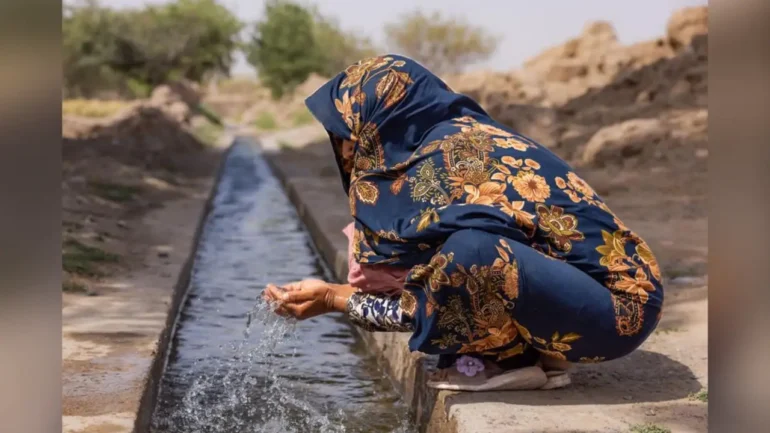
The UN agency said access to water is transforming lives in Afghanistan, where millions of people continue to face difficulties accessing safe drinking water.
According to the latest World Bank report on water access in Afghanistan, published last week, only 31 percent of the country’s population had access to safely managed drinking water as of 2024. The remaining 69 percent, or approximately 29 million people, lacked access to this level of water services.
The World Bank report also highlights the growing pressure on Afghanistan’s water resources. The country has been losing an estimated 4.9 billion cubic metres of freshwater reserves annually since 2003. In Kabul, groundwater is being extracted at nearly four times the rate at which it is naturally replenished, raising concerns about the sustainability of water supplies. More than 120,000 unregulated boreholes are estimated to extract approximately 127 million cubic metres of groundwater annually.
The report further notes that 81 percent of Afghans had access to at least basic drinking water services in 2024. However, access to safely managed drinking water remains significantly lower, as this standard also requires water to be available when needed and free from contamination.
The World Bank says agriculture employs 46 percent of Afghanistan’s workforce, contributes 33 percent of GDP and consumes more than 95 percent of the country’s withdrawn water. Water shortages therefore threaten agricultural production, rural livelihoods and economic stability. It estimates that drought reduced annual per capita GDP growth by an average of 0.23 percentage points between 1994 and 2024.
The UNDP has previously warned that water scarcity is affecting livelihoods, agriculture and migration in Afghanistan, with women and girls particularly burdened by the difficulties of accessing water. Through its broader water interventions under the Area-Based Approach to Development Emergency Initiatives (ABADEI), the agency has supported the construction and rehabilitation of canals and water infrastructure, irrigation systems and solar-powered water pumps.