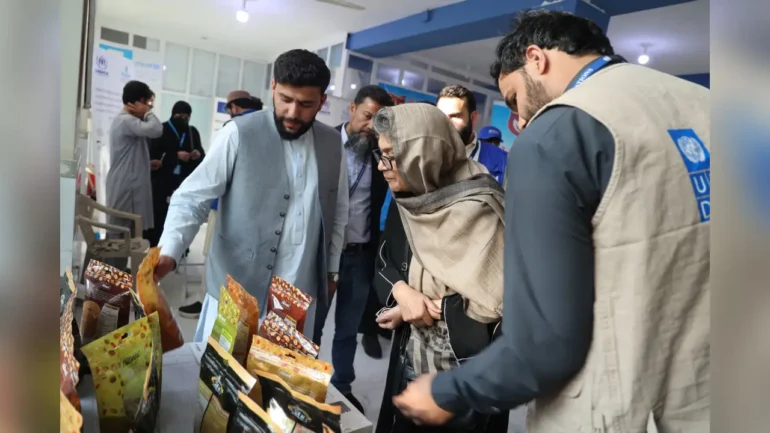

KABUL, AFGHANISTAN – Rabab Fatima, the United Nations Secretary-General’s Special Representative for Afghanistan and head of the United Nations Assistance Mission in Afghanistan (UNAMA), has concluded her first round of provincial visits, travelling to Nangarhar, Bamyan and Kandahar provinces.
In a statement published on Sunday, November 22, UNAMA said Fatima had met directly with residents of communities facing the combined effects of large-scale migrant returns, economic hardship, climate-related pressures and limited access to essential services.
During her visits to the three provinces, Fatima met with Taliban local authorities, women, community leaders, young people, business representatives, returnees and UN personnel to gain a better understanding of local priorities and explain the United Nations’ ongoing support and engagement in Afghanistan.
According to UNAMA, communities in the three provinces are facing multiple and overlapping challenges, including large-scale returns of Afghan migrants, economic difficulties, unemployment, climate change-related pressures, limited access to basic services and disruptions to trade and livelihoods.
Following her visit to a transit centre for returning migrants in Nangarhar, the UNAMA chief described the experience as deeply moving and educational, stressing that more needs to be done to provide immediate assistance and develop long-term solutions for returnees.
She said her visits had been deeply moving and eye-opening, highlighting the urgent need to provide returnees with immediate assistance, including shelter, food and protection, while also developing sustainable, long-term solutions.
Referring to her conversations with returnees in Kandahar, Fatima said many of their accounts were extremely concerning and their futures appeared uncertain.
She stressed the urgent need to strengthen support for vulnerable families, particularly women-headed households and children.
Fatima reaffirmed the United Nations’ commitment to the Afghan people, saying the organisation would continue working with local authorities, communities and international partners to address humanitarian needs and pursue long-term solutions in livelihoods, healthcare, education, climate resilience and private sector development.
During her meetings with Taliban officials, she also emphasised the need for progress in Afghanistan’s political process, saying this would help move forward on other issues facing the country.
According to UNAMA, Fatima is expected to continue consultations with a wider range of Afghan stakeholders in the coming weeks, including media organisations operating inside and outside Afghanistan and women’s organisations in Kabul.
Fatima began her role as the UN Secretary-General’s Special Representative for Afghanistan and head of UNAMA in October 2026. Since assuming her position, she has held meetings with several Taliban officials and visited three provinces in eastern, central and southern Afghanistan.
Fatima’s provincial visits come as Afghanistan continues to face a deepening humanitarian crisis under Taliban rule, driven by economic decline, widespread unemployment, restrictions on women’s rights, climate-related disasters and mass returns of Afghan migrants from neighbouring countries.
According to the United Nations’ 2026 Humanitarian Needs and Response Plan, approximately 21.9 million people, or 45 per cent of Afghanistan’s population, require humanitarian assistance, including millions of children. The needs include food, healthcare, clean drinking water, shelter and protection services.
The situation has been further aggravated by restrictions imposed by the Taliban on women and girls. Girls remain banned from attending secondary schools and universities, while women face extensive restrictions on employment, public participation and access to various services. The Taliban have also restricted Afghan women working for the United Nations from accessing UN premises, creating additional challenges for humanitarian operations.
Meanwhile, the return of large numbers of Afghans from Iran and Pakistan has placed additional pressure on already strained public services, employment opportunities and local communities. UNICEF reported that approximately 1.3 million Afghans returned from Iran and Pakistan between January 1 and October 3, 2026, including hundreds of thousands who were deported. Many returnees face difficulties securing housing, healthcare, education and sustainable livelihoods.
International humanitarian organisations have also warned that declining foreign assistance and funding shortages are limiting their ability to respond to the country’s growing needs. UNICEF reported that the 2026 humanitarian response plan remained 67 per cent underfunded at the end of September, affecting the delivery of essential health, nutrition, water and protection services.
The United Nations continues to engage with the Taliban authorities while calling for progress on human rights, women’s rights and an inclusive political process. However, the Taliban have not introduced significant changes to their restrictions on women and girls or established an inclusive political system since returning to power in August 2021.