

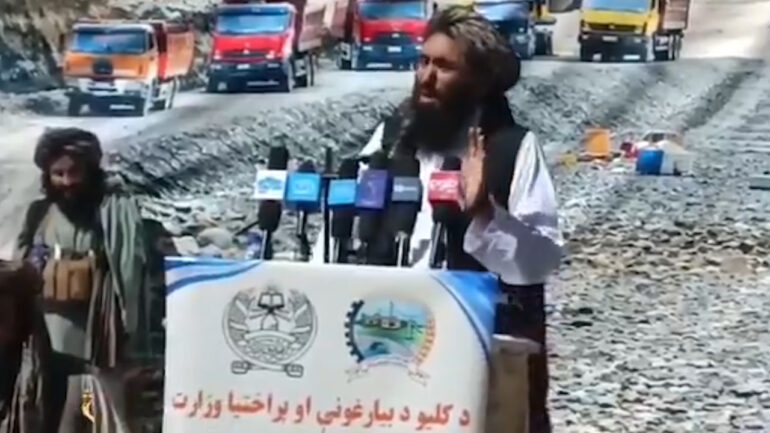

KABUL, AFGHANISTAN – Rahmatullah Najib, the Taliban-appointed governor of Badakhshan, has warned that anyone who takes what he described as a “negative move” against the group’s regime would be killed or arrested.
Najib made the remarks on Sunday, October 4, during a ceremony marking the opening of a dirt road in the Wakhan Corridor, according to local reports.
The Taliban governor said no one would be allowed to take action against the group’s government and warned that those who oppose its rule would face serious consequences.
His remarks came hours after the National Resistance Front of Afghanistan (NRF) claimed responsibility for a targeted attack against a Taliban intelligence official in Faizabad, the provincial capital of Badakhshan.
The NRF said the Taliban’s deputy intelligence chief for Faizabad was killed along with two of his guards in the attack. The group said the operation took place in the sixth district of Faizabad.
Badakhshan has remained one of the provinces where the Taliban faces both armed opposition and internal disputes. The NRF has claimed several attacks against Taliban positions in the province in recent months. On October 3, the group said it had attacked a Taliban checkpoint in Kuran wa Munjan district, claiming that one Taliban member was killed and two others wounded. The claim has not been independently verified.
Earlier in August, a newly formed anti-Taliban group known as Sepahian-e Mihan, or Soldiers of the Homeland, briefly seized control of Yaftal-e Payeen district in Badakhshan, marking the first reported temporary loss of a district by the Taliban since its return to power.
The province has also experienced tensions within the Taliban itself. In August, Juma Khan Fateh, a Taliban commander with strong local influence in the Darwaz area, fought Taliban forces in Nusay district for several days. The confrontation ended with Fateh’s surrender following negotiations with Fasihuddin Fitrat, the Taliban army chief of staff. His forces were subsequently disarmed, although the precise terms of the agreement and his subsequent status have remained unclear.
The dispute involving Fateh reportedly centred on the Taliban leadership’s efforts to disarm his loyalists, changes in local appointments and disputes over control of gold-mining activities in Badakhshan.
Since returning to power in August 2021, the Taliban has imposed strict restrictions on public dissent and protests, requiring residents to obey its orders and preventing demonstrations against its policies. In Herat, Taliban authorities banned protests following demonstrations in the predominantly Hazara-populated Jibrail neighbourhood over the detention of women.
During an initial protest on June 9, Taliban forces reportedly opened fire on demonstrators and beat protesters, killing at least one child and injuring around 20 others, according to local sources and videos. The death of Morteza Karimi, who was injured during the protests and later died, further heightened tensions. Following the demonstrations, the Taliban deployed hundreds of armed fighters, tanks and checkpoints across Herat and imposed similar security measures in Kabul’s Hazara-populated Dasht-e-Barchi neighbourhood to prevent further unrest.
The latest developments highlight the security and political pressures facing the Taliban in Badakhshan, where opposition attacks, local grievances and disputes among Taliban commanders have continued to challenge the group’s efforts to consolidate control over the northeastern province.

