
KABUL, AFGHANISTAN – An Iranian media outlet, Iraf, has reported that the man who attempted to assassinate Ahmad Khan Ghori, a former Afghan government official, at his home in the Iranian city of Mashhad was an operative working for the Taliban’s intelligence agency.
In a report published on Thursday afternoon, November 12, Iraf claimed that the attacker had received direct instructions from the Taliban intelligence agency in Kabul to carry out the assassination.
The outlet said that neither Iranian officials nor the Taliban authorities had so far commented on the allegations.
“Official Iranian and Taliban sources have not yet commented on this matter. However, if the report is confirmed, it would reveal the dangerous dimensions of the Taliban’s intelligence operations on Iranian soil and their implications for the country’s national security,” Iraf reported.
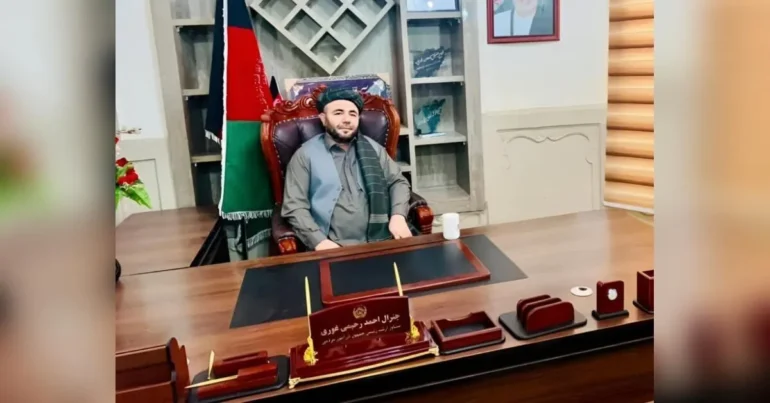
Ahmad Khan Ghori, a former adviser to Afghanistan’s president, former head of the Ghor Provincial Council and former military commander, was targeted in an assassination attempt at his residence in Mashhad on November 5. He was injured in the attack.
According to Iraf, the attacker entered Ghori’s home as a guest and placed a bag containing a power bank, which reportedly concealed explosives, in front of him. The bag exploded moments later, injuring both Ghori and the alleged assailant.
The attacker reportedly died several days later from the severity of his injuries.
Iraf added that earlier accounts indicated the bomber had sustained the most serious injuries because the explosive device was placed close to him. His condition had reportedly been critical following the explosion.
The outlet further reported, citing its sources, that the explosive device used in the assassination attempt had allegedly been contaminated with a lethal poison. It did not provide further details or independent evidence to substantiate this claim.
The reported involvement of a Taliban intelligence operative has not been independently verified. No official investigation findings or statements from Iranian authorities confirming the alleged connection have been made public.
The report comes amid a series of attacks targeting former Afghan military commanders and political figures living in Iran, raising concerns about their safety even after fleeing Afghanistan following the Taliban’s return to power in August 2021.
In September 2025, Maroof Gholami, a former mujahideen commander close to Afghan political and military leader Mohammad Ismail Khan, was shot dead in his office on Mofatteh Street in Mashhad. According to Iraf, the attacker entered the office under the pretext of arranging a meeting before opening fire. Iranian authorities subsequently announced the arrest of three suspects in connection with the killing.
On December 24, 2025, General Ekramuddin Saree, the former police chief of Takhar province, and Mohammad Amin Almas, a former Afghan military officer, were killed in an armed attack in Tehran’s Vali Asr district. Iranian officials later confirmed that an investigation was underway. In January 2026, an Iranian lawmaker said a suspect had been arrested and suggested that the attack might have been directed from outside Iran.
In March 2026, Karamuddin Reza Zadeh, a former member of Afghanistan’s parliament representing Ghor province, was also wounded in an armed attack in Mohammad Shahr, near Karaj. The attackers reportedly fled on motorcycles.
Taliban opponents and former Afghan political figures have repeatedly accused the group’s intelligence networks of involvement in attacks against former government officials and military personnel outside Afghanistan. However, these allegations have not been conclusively established through publicly released Iranian investigation findings.
In December 2025, Richard Bennett, the UN Special Rapporteur on the situation of human rights in Afghanistan, called for independent investigations into the killings of Saree and Almas, urging authorities to identify those responsible and bring them to justice.
The attacks have also raised concerns about the safety of thousands of former Afghan government employees, security personnel and political figures who sought refuge in neighbouring countries after the Taliban takeover. Many fled Afghanistan fearing reprisals despite the Taliban’s announcement of a general amnesty in August 2021.
A February 2026 assessment by the UK Home Office documented continuing reports of arbitrary arrests, detention, torture, enforced disappearances and extrajudicial killings of former government officials and security personnel in Afghanistan. The assessment noted that the Taliban’s general amnesty had not been consistently implemented.
Iran has hosted millions of Afghan refugees over several decades, including former government officials and military personnel. However, growing pressure on Afghan refugees, including deportations and difficulties obtaining legal residency, has added to concerns about the safety of those who could face persecution if returned to Afghanistan.
The latest allegations concerning the attempted assassination of Ghori have further intensified questions about the ability of Iranian authorities to protect former Afghan officials and investigate attacks against them on Iranian territory.