

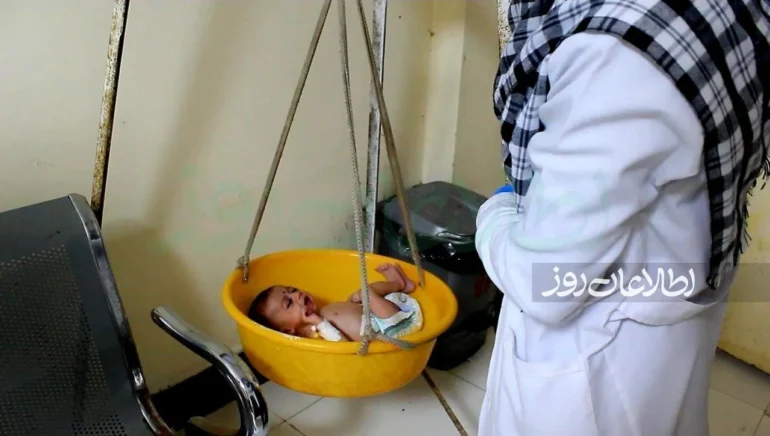

KABUL, AFGHANISTAN – Officials with Médecins Sans Frontières (MSF), also known as Doctors Without Borders, in Kandahar say the number of people suffering from malnutrition in the province has increased by 30 percent compared with the previous year.
Zia-ul-Rahman, a health center official with MSF in Kandahar, said that from January through August this year, 12,530 children suffering from malnutrition had sought treatment at the organization’s facility.
According to him, 3,450 of the children were suffering from severe malnutrition, while another 1,291 children were hospitalized due to health complications.
According to figures from the World Food Programme (WFP), 3.7 million children and 1.2 million pregnant and breastfeeding women are expected to face acute malnutrition this year.
Recently on August 4, WFP warned that Afghanistan’s child malnutrition crisis is rapidly worsening, as funding shortages have forced the agency to scale back life-saving food and nutrition programmes. According to the WFP, acute malnutrition among children has reached critical levels in 12 provinces—the highest number of provinces ever recorded at this level.
The agency warned that malnutrition is expected to continue rising through October unless urgent humanitarian assistance is provided.
Afghanistan typically experiences a seasonal increase in child malnutrition between July and October due to communicable diseases, poor water and sanitation, limited access to nutrition services, and worsening food insecurity.
However, WFP said the situation is particularly severe this year, with nearly half of Afghan children experiencing food insecurity during the first quarter, even during the country’s harvest season.
The agency attributed the worsening crisis to a combination of conflict, widespread unemployment, rising food prices, and declining humanitarian funding. The agency said 142 health centres across Afghanistan were closed in 2025 due to funding cuts, leaving more than 13,000 children without access to nutrition treatment.
Afghanistan continues to face one of the world’s largest humanitarian crises following years of conflict, economic decline, climate shocks, and declining foreign aid since the Taliban returned to power in 2021.
The United Nations estimates that 22 million people, nearly half the country’s population, require humanitarian assistance in 2026.
Aid agencies have warned that without sustained international support, food insecurity and malnutrition are likely to worsen, particularly among women and children.
Doctors Without Borders, is an international medical humanitarian organization that provides emergency medical care and assistance to people affected by conflict, disease outbreaks, disasters and other humanitarian crises. The organization has worked in Afghanistan for decades, providing healthcare and nutrition services, including treatment for severely malnourished children.
In recent years, MSF has continued to operate medical and nutrition programmes in several parts of the country, including Kandahar and Helmand.

