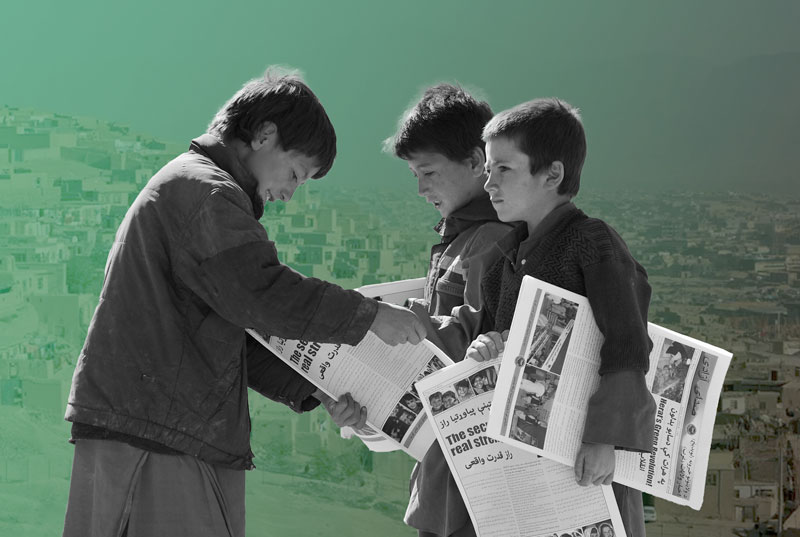

KABUL, AFGHANISTAN – Taliban restrictions have severely limited or destroyed young Afghans’ aspirations to pursue higher education, find work, achieve financial independence, start families, and contribute to society, the U.N. special rapporteur on human rights in Afghanistan said.
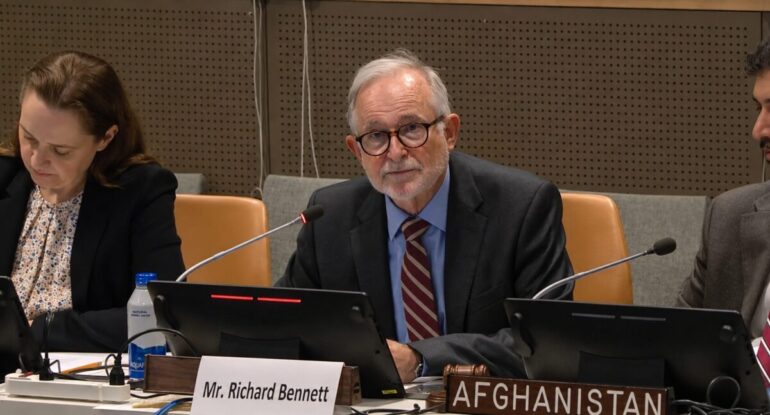
Speaking on Monday, November 2, at an event on the sidelines of the UN General Assembly’s Third Committee, Richard Bennett stressed that Afghanistan cannot achieve lasting peace and stability without young people’s participation in education, employment, leadership and decision-making.
The event, titled “Afghanistan’s Youth at a Crossroads: Rights, Aspirations, Challenges and Opportunities“, was organized by Afghanistan’s Permanent Mission to the United Nations in cooperation with the Raoul Wallenberg Institute of Human Rights and Humanitarian Law, with support from the permanent missions of Ireland and Denmark.
Citing figures from the United Nations Population Fund (UNFPA), Bennett said approximately 34% of Afghanistan’s population is aged between 10 and 24, while two-thirds of the country’s population is 25 or younger.
“Afghanistan’s youth aspire to pursue higher education, find meaningful employment, achieve financial independence, start families, participate in public life and serve their communities,” he said. “Yet today in Afghanistan, many of these opportunities have either been severely restricted or completely taken away.”
Bennett said young Afghans face interconnected challenges including discrimination, exclusion from education and jobs, poverty, limited access to information and freedom of expression, and exclusion from decision-making. Experiences differ by gender, ethnicity, religion, location, economic status, disability and educational background, he noted.
Bennett described the situation of women and girls as particularly concerning, saying they face severe and institutionalized discrimination that could amount to gender-based persecution.
The UN expert called on the international community to invest in practical opportunities for young Afghans, including scholarships, quality online education programs, technical and vocational training, digital skills development, entrepreneurship and access to international employment opportunities.
Speaking at the event, Naseer Ahmad Faiq, Afghanistan’s chargé d’affaires to the UN, also raised concerns about the impact of Taliban restrictions on the country’s younger generation, saying young people have seen their education interrupted, career plans disappear, and opportunities for social participation steadily reduced.
Citing UN figures, Faiq said more than 2.6 million girls have been denied secondary education since 2021, while women remain barred from universities and face restrictions on employment and movement that further undermine their independence and opportunities.
“Behind these figures are young people who hoped to become doctors, teachers, engineers or journalists, or simply to earn a living and support their families and have a dignified life,” Faiq said. “Every year of exclusion makes those aspirations harder to fulfil and deprives Afghanistan of skills it urgently needs,” he added.
Faiq also expressed concern over changes to Afghanistan’s education system, saying religious schools, or madrasas, are increasingly replacing mainstream education, while subjects such as foreign languages and civic education are being removed from the curriculum.
He warned that limiting access to modern education could undermine young Afghans’ ability to acquire the scientific knowledge and professional skills needed to respond to changing demands in the labour market.
Several young Afghans who joined the conference online from inside Afghanistan called for expanded access to quality education and greater support for educating the next generation. They also urged the creation of employment and remote-work opportunities so they could use their knowledge and skills.