

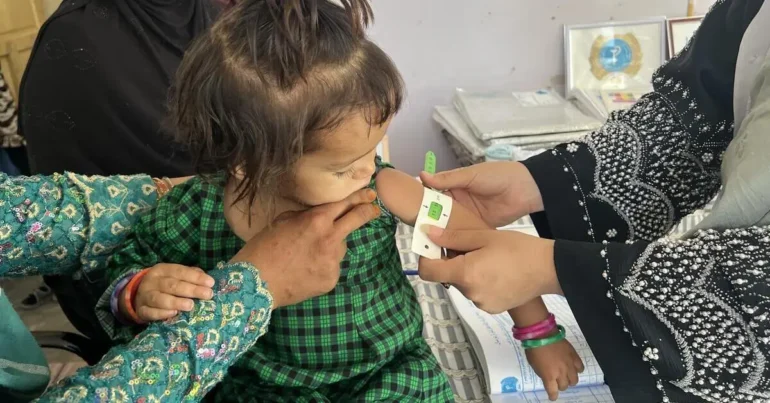

KABUL, AFGHANISTAN – The United Nations World Food Programme (WFP) has warned that Afghanistan is facing a rapidly worsening child malnutrition crisis, with funding shortages forcing life-saving food and nutrition programmes to scale back at a time when they are needed most.
According to WFP, child acute malnutrition has reached critical levels in 12 provinces—Helmand, Daikundi, Zabul, Baghlan, Uruzgan, Paktika, Nuristan, Sar-e-Pul, Ghor, Kandahar, Faryab, and Logar—marking the highest number of provinces ever recorded in this category.
The agency cautioned that malnutrition is expected to continue rising through October unless urgent humanitarian assistance is provided.
Afghanistan typically experiences a seasonal increase in child malnutrition between July and October due to communicable diseases, poor water and sanitation, limited access to nutrition services, and worsening food insecurity. However, WFP said the situation is particularly severe this year, with nearly half of Afghan children experiencing food insecurity during the first quarter, even during the country’s harvest season.
“Feeble cries of malnourished babies haunt the health clinics of Afghanistan as worried mothers—many themselves weakened by hunger—bring their children, desperate for treatment,” said John Aylieff, WFP Country Director in Afghanistan. “We are witnessing the next generation waste away in spite of this being harvest time—a time of plenty. This is not simply heartbreaking—it is unacceptable.”
WFP attributed the worsening crisis to a combination of conflict, widespread unemployment, rising food prices, and declining humanitarian funding. The agency said 142 health centres across Afghanistan were closed in 2025 due to funding cuts, leaving more than 13,000 children without access to nutrition treatment.
The situation has been further aggravated by disruptions to the supply of nutrition products. WFP said conflict in the Middle East and the nine-month closure of the Pakistan border severely affected supply routes, increased transportation costs, and contributed to shortages of essential nutrition supplies. As a result, nearly one million malnourished mothers and children were unable to access critical nutrition services for five months.
The agency estimates that nearly 3.7 million Afghan children will suffer from acute malnutrition this year, while an additional 1.2 million pregnant and breastfeeding women are also expected to be malnourished.
Aylieff warned that without immediate international support, the crisis could become even more severe.
“Afghanistan is already gripped by one of the world’s most severe and unrelenting malnutrition crises, and these staggering numbers could climb even higher. This crisis could eclipse all previous projections and condemn countless more children and mothers to preventable death,” he said.
WFP stressed that expanding nutrition treatment and prevention programmes remains essential to preventing further deterioration. However, it said there is currently no funding available for preventive nutrition services, despite them being the most effective and sustainable means of reducing malnutrition.
The agency is appealing for US$540 million over the next six months to sustain emergency food assistance and nutrition programmes across Afghanistan.

