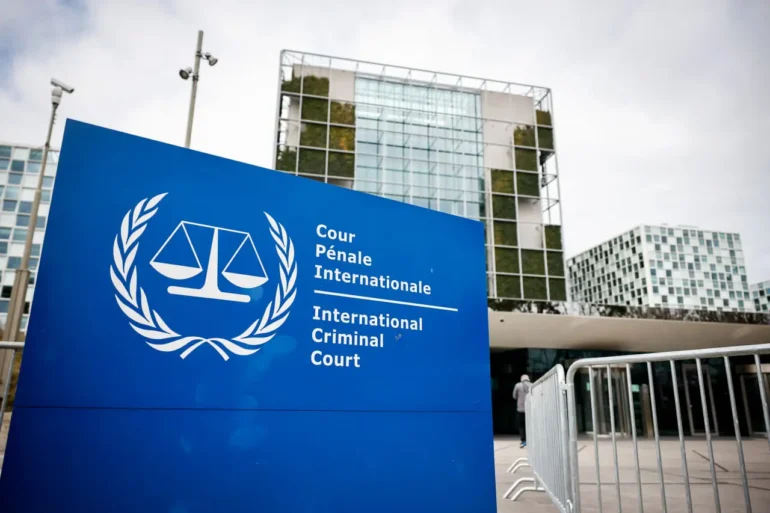

KABUL, AFGHANISTAN – Human Rights Watch (HRW) has warned that the International Criminal Court’s (ICC) recent decision to close part of its Afghanistan investigation could limit victims’ access to justice for war crimes and increase the risk of a double standard in accountability for crimes committed by parties to the country’s conflict.
In a statement released on Tuesday, November 17, HRW said the decision, made following pressure from the United States government on the international court, would further undermine accountability for alleged abuses committed by U.S. forces in Afghanistan.
Liz Evenson, director of the International Justice Program at Human Rights Watch, said victims of serious international crimes committed by parties to Afghanistan’s decades-long conflict have faced numerous obstacles in seeking justice.
She added that the ICC judges’ decision would create further barriers to future accountability for U.S. forces and the former Afghan government.
According to HRW, allegations against U.S. forces and the Central Intelligence Agency (CIA) include torture, cruel treatment, humiliation of detainees, rape, and other forms of sexual violence.
In the now-closed Afghanistan investigation, former Afghan government forces were also accused of torture, sexual violence, enforced disappearances, and extrajudicial executions.
The Taliban and the Islamic State’s Khorasan branch (ISIS-K) have also faced allegations of murder, attacks on civilians, and political and gender-based persecution.
The ICC’s Pre-Trial Chamber announced on Thursday, November 12, that it was closing the previous Afghanistan investigation and would continue investigating alleged crimes committed by the Taliban since their return to power in 2021 under a separate case, titled Situation in Afghanistan II.
The court cited a lack of investigative activity as the basis for closing the earlier case, which covered alleged crimes committed by U.S. forces, former Afghan government forces, and other parties to the conflict before the Taliban’s return to power.
The ICC Prosecutor’s Office appealed the judges’ decision a day later, requesting a review of the ruling and the suspension of its implementation.
Evenson said the ICC is a “vital forum for justice” and serves as a last resort when other avenues for accountability are closed.
She urged the court’s member states to take action to protect the ICC against what she described as U.S. efforts to obstruct justice.
The decision comes as the U.S. government under President Donald Trump has threatened to destroy the ICC to prevent the prosecution of American and Israeli nationals. Washington has also imposed sanctions on the court itself, as well as several judges and prosecutors, placing further pressure on its ability to operate and pursue justice.
The ICC’s investigation into Afghanistan was authorized in March 2020, following an appeal by the prosecutor after judges initially rejected the request in April 2019. The investigation covers alleged war crimes and crimes against humanity committed in Afghanistan since May 1, 2003, as well as certain crimes linked to the Afghan conflict committed in other ICC member states.
Afghanistan became a member of the Rome Statute in 2003, giving the court jurisdiction over crimes within its mandate committed on Afghan territory from May 1 of that year.
The investigation was initially delayed after the former Afghan government requested that ICC proceedings be deferred in favor of domestic investigations. However, in October 2022, ICC judges authorized the prosecutor to resume the investigation, finding that the national proceedings did not sufficiently cover the crimes under the court’s jurisdiction.
The ICC’s Afghanistan investigation has faced significant procedural and political challenges, including U.S. opposition to investigations involving American personnel. Since resuming the investigation, the prosecutor has prioritized alleged crimes by the Taliban and ISIS-K, while deprioritizing allegations against Afghan government forces and U.S. personnel.
The closure of the earlier investigation has raised renewed concerns among victims and rights organizations about whether allegations against other parties to the conflict will ever receive meaningful judicial scrutiny.
The separate Afghanistan II investigation focuses on alleged crimes against women and girls committed after the Taliban returned to power in August 2021. It follows a referral submitted in November 2024 by six ICC member states — Chile, Costa Rica, Spain, France, Luxembourg and Mexico — and is proceeding separately from the original investigation. The ICC’s recent decisions and the prosecutor’s appeals remain subject to ongoing legal proceedings.