

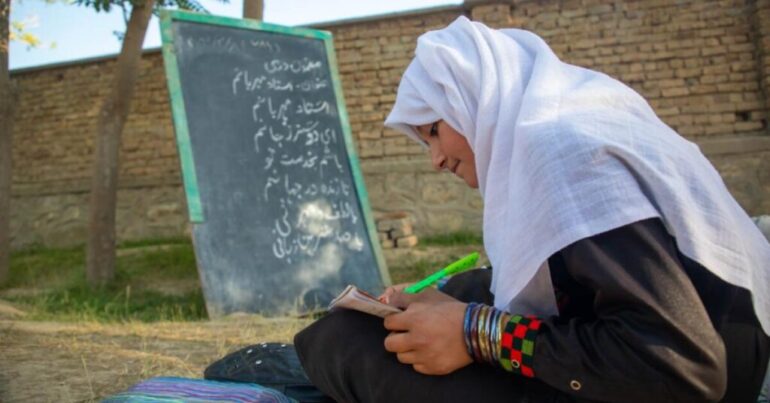

KABUL, AFGHANISTAN – The European Union has allocated €4.7 million to the United Nations Educational, Scientific and Cultural Organization (UNESCO) to support community-based literacy and livelihood programs for girls and boys in Afghanistan.
The EU delegation in Afghanistan announced the funding in a post on X on Tuesday, International Literacy Day. The partnership will provide literacy and livelihood skills training to 7,500 learners across the country.
“On International Literacy Day, the EU reaffirms its commitment to supporting education and literacy for Afghan girls and boys, helping them build a brighter future,” the delegation said.
International Literacy Day is observed every year on September 8. UNESCO describes the day as an opportunity to reflect on the role of literacy in learning, creating opportunities and helping build a better future for people and communities. This year’s theme is “Literacy for People, Planet and Prosperity.”
The funding comes as the Taliban continues to bar women and girls from secondary and higher education. According to the United Nations, more than 2.4 million adolescent girls remain excluded from secondary school, and thousands of women are barred from higher education. Afghanistan is the only country in the world where girls and women face a formal ban on secondary and higher education.
The restrictions have also affected the well-being of women and girls. UN Women reports that nearly 70% of women and girls in Taliban-controlled areas are struggling with anxiety, isolation and depression.
Despite repeated appeals from the United Nations, aid agencies, rights groups and some Islamic countries, the Taliban has refused to lift the ban, citing it as an internal matter.

