

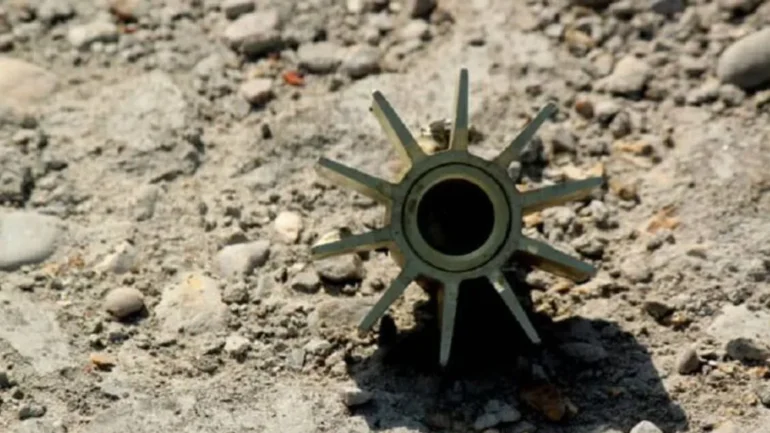

KABUL, AFGHANISTAN – A 15-year-old boy was killed and two girls were injured after unexploded ordnance detonated in Ali Sher and Terezai district of southeastern Khost province, Taliban authorities said.
Tahir Ahrar, spokesperson for the Taliban police command in Khost, said the explosion occurred around midday on Tuesday, September 15, in the Numarah-e Dawlati area of Ali Sher and Terezai district.
Ahrar said the condition of one of the injured children was serious.
Unexploded ordnance and landmines left behind by decades of war continue to pose a major threat to civilians across Afghanistan, particularly children, who may mistake explosive remnants for toys or other harmless objects.
According to the United Nations Mine Action Service (UNMAS), about 45,941 Afghan civilians have been recorded as killed or injured by landmines and explosive remnants of war since 1989. UNMAS says an average of about 40 people are currently killed or injured each month by explosive devices in Afghanistan, with children accounting for approximately 70 percent of casualties recorded in 2025.
UNMAS says nearly 1,070 square kilometres of land across Afghanistan remain contaminated by identified explosive hazards, affecting about 1,565 communities. It also says 369 educational facilities and 198 health facilities are located within one kilometre of hazardous areas.
The United Nations has described Afghanistan as one of the countries most heavily contaminated by explosive hazards. Decades of armed conflict have left mines and unexploded ordnance in residential areas, agricultural land, roads and other places used by civilians. The contamination restricts people’s movement, limits access to livelihoods and basic services, and creates particular risks for communities that depend on agriculture and livestock.
Despite extensive clearance efforts, the scale of the remaining contamination continues to pose a long-term challenge. UNMAS says mine-action partners have cleared more than 13.3 million explosive remnants of war and thousands of anti-personnel and anti-vehicle mines in Afghanistan since 1989, but thousands of hazardous areas remain.
The latest incident in Khost adds to repeated reports of children being killed or injured after coming into contact with explosive remnants of war. The continued presence of these devices means that the dangers of Afghanistan’s wars persist even in areas where active fighting has subsided.

