

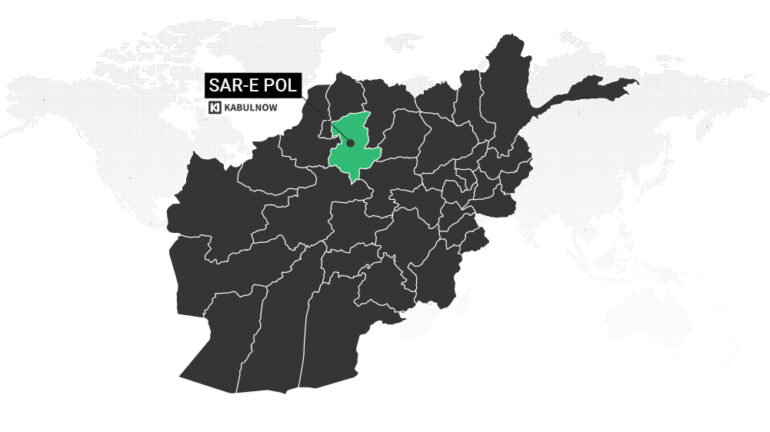

KABUL, AFGHANISTAN – A local source in Sar-e-Pul province, located in northern Afghanistan, says a Taliban member in Sozma Qala district shot and killed his 18-year-old wife, whom he had allegedly forced into marriage two months earlier.
Taliban authorities in Sar-e-Pul confirmed the woman’s death but claimed that she had died by suicide following domestic violence.
A local source told KabulNow that the young woman was originally from Gosfandi district and had allegedly been abducted by a Taliban member two months ago and taken to Sozma Qala. The source said the man subsequently forced her to marry him.
The source identified the Taliban member as Hassan and said he has another wife. According to the source, Hassan killed the woman on Friday, August 21, following a verbal dispute.
Another source identified Hassan, who is also known by the alias “Sangari,” as a guard for the Taliban district governor in Sozma Qala.
The second source also confirmed the woman’s death but said it was unclear who was responsible. According to the source, Hassan claimed that his wife had committed suicide. However, doctors reportedly said the bullet had entered from the back, contradicting the claim that she had shot herself.
Asked about the circumstances of Hassan’s marriage to the victim, the source said it was possible that the girl had been abducted.
The source said the girl was from Gosfandi district and that Hassan brought her to his home in a village one night. After the matter became known among local residents, several Taliban soldiers reportedly arrived the following morning and took both of them to the district center, where they were subsequently married.
Naqibullah Alamyar, spokesperson for the Taliban police command in Sar-e-Pul, told KabulNow that the woman had committed suicide because of domestic violence. He provided no further details and did not respond when asked whether anyone had been arrested or placed under investigation in connection with the case.
The case highlights continuing concerns over violence against women and forced marriages in Afghanistan, where women and girls face limited access to legal protection and mechanisms for reporting abuse.
The case comes amid broader concerns over violence against women and girls in Afghanistan. In a report submitted to the UN Security Council earlier this year, the UN Secretary-General said UNAMA had documented 21 cases of conflict-related sexual violence against 15 women and six girls in Afghanistan over the previous year.
The documented cases included rape, gang rape, forced marriage and forced nudity, with the UN attributing the incidents to Taliban officials, including members of the group’s security forces.
The case also comes amid growing concerns over forced and child marriage under Taliban rule. On May 14, the Taliban published Decree No. 18, known as the “Code on Judicial Separation of Spouses,” which sets out conditions for women and girls seeking separation from their husbands.
Rights groups have said the decree effectively upholds marriages arranged during childhood and places restrictive judicial requirements on women seeking to end their marriages, while granting husbands broader and unilateral divorce rights.
After the collapse of the Afghan government in 2021 and the Taliban’s return to power, the situation of women and girls has sharply deteriorated. They have been systematically excluded from secondary and higher education, restricted from many forms of employment, and subjected to severe limitations on their freedom of movement and participation in public life.
In many cases, women are unable to access basic services without a male guardian, and their visibility in society has been significantly reduced through institutionalized restrictions.
Many human rights organizations and UN experts describe these policies as a form of gender apartheid where laws and governance structures are used to enforce systematic segregation and discrimination against women and girls on the basis of gender alone.

