

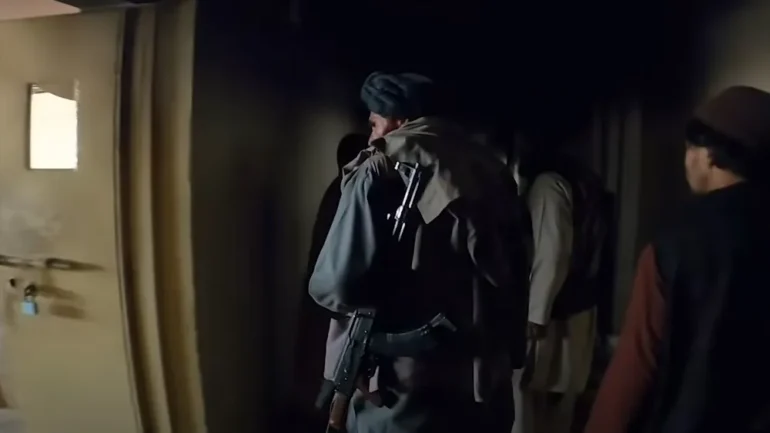

KABUL, AFGHANISTAN – In a report on conflict-related sexual violence, the United Nations Secretary-General stated that the United Nations Assistance Mission in Afghanistan (UNAMA) documented 21 cases of sexual violence against women in Afghanistan during the past year.
According to the report, which was recently submitted to the UN Security Council, the documented cases included rape, gang rape, forced marriage, and forced nudity committed against 15 women and six girls. The incidents were attributed to Taliban officials, including members of the group’s security forces.
The Secretary-General said that despite a ban on forced marriage introduced in 2021, the Taliban have been involved in perpetrating and supporting forced marriages.
The UN Special Rapporteur on the situation of human rights in Afghanistan also reported that women who challenge or protest Taliban gender policies have faced arbitrary detention, and that detainees have been subjected to torture and ill-treatment, including sexual violence.
The report notes that escalating conflicts, restricted humanitarian access, growing militarization, and funding cuts have weakened protection mechanisms for women and girls.
According to the United Nations, reductions in humanitarian funding have forced the closure of safe spaces and support services for survivors, limiting access to medical care, psychosocial assistance, and legal support.
Although the report does not provide detailed country-specific findings on Afghanistan in the sections reviewed, its conclusions are particularly relevant to Afghan women and girls, who continue to face severe restrictions on education, employment, freedom of movement, and participation in public life under Taliban rule.
International organizations have repeatedly warned that these restrictions have increased the vulnerability of women and girls while limiting their access to essential services and humanitarian assistance.
The report further emphasizes the importance of protecting women in conflict-affected environments, strengthening accountability mechanisms, and ensuring access for humanitarian organizations. It calls on governments, international institutions, and parties to conflict to take concrete measures to prevent sexual violence, support survivors, and uphold the rights and dignity of women and girls.
After the collapse of the Afghan government in 2021 and the Taliban’s return to power, the situation of women and girls has sharply deteriorated. They have been systematically excluded from secondary and higher education, restricted from many forms of employment, and subjected to severe limitations on their freedom of movement and participation in public life.
In many cases, women are unable to access basic services without a male guardian, and their visibility in society has been significantly reduced through institutionalized restrictions.
Many human rights organizations and UN experts describe these policies as a form of gender apartheid where laws and governance structures are used to enforce systematic segregation and discrimination against women and girls on the basis of gender alone.
This situation has not only deepened poverty and dependence but has also increased protection risks, including violence, forced marriage, and lack of access to humanitarian assistance. As a result, Afghan women continue to face one of the most severe and restrictive environments for women’s rights in the world today.

