

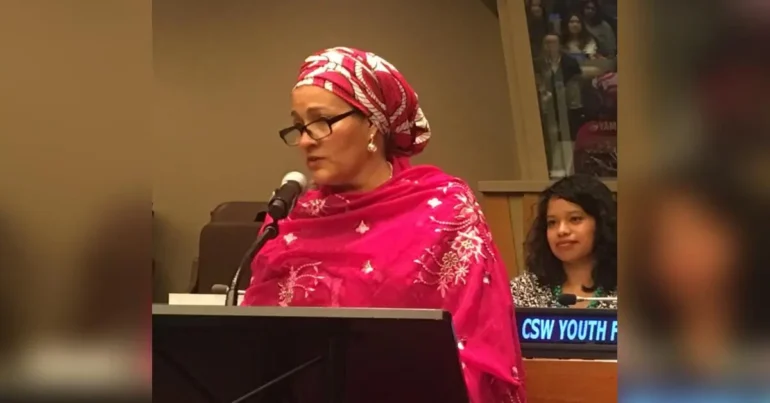

KABUL, AFGHANISTAN – United Nations Deputy Secretary-General Amina Mohammed has said Afghan women and girls continue to bear the burden of being denied their rights, with their hopes and dreams for the future remaining “on hold,” as Afghanistan marks five years since the Taliban returned to power.
In a message marking the fifth anniversary of the Taliban’s takeover of Afghanistan, Mohammed said women in the country must not be abandoned and called for continued international support for their efforts to regain access to education and participate in the economy.
“The women of Afghanistan cannot be left behind,” Mohammed said in a message posted on X. She urged the international community to continue amplifying Afghan women’s voices and stand firmly behind their efforts to secure their rights to education and economic participation.
The Taliban marked the anniversary of their return to power on Saturday, August 15. The group captured Kabul on August 15, 2021, after a rapid military offensive that brought an end to the internationally backed Afghan government and marked the Taliban’s return to power after nearly two decades.
Over the past five years, the Taliban have imposed sweeping restrictions on the rights and freedoms of Afghans, with women and girls facing the most extensive restrictions. UN Women said in a recent report that the Taliban have issued more than 100 decrees, directives and other measures targeting women and girls since returning to power, institutionalizing discrimination and stripping women of fundamental rights.
Afghan women and girls are currently barred from secondary and university education, while restrictions on employment, movement and access to public spaces have severely limited their participation in social and economic life.
The restrictions have also had broader consequences for Afghanistan’s economy and humanitarian situation. UN agencies and human rights organizations have repeatedly warned that excluding women and girls from education and employment deprives the country of a significant part of its workforce and deepens poverty and dependence on humanitarian assistance.
The fifth anniversary comes as Afghanistan remains internationally isolated under Taliban rule. Although the group has sought international recognition and engagement, its treatment of women and girls remains one of the central obstacles to normalization with the international community.
UN officials have repeatedly called on the Taliban to reverse restrictions on women and girls, particularly the bans on education and employment, while Afghan women activists continue to demand the restoration of their fundamental rights.

