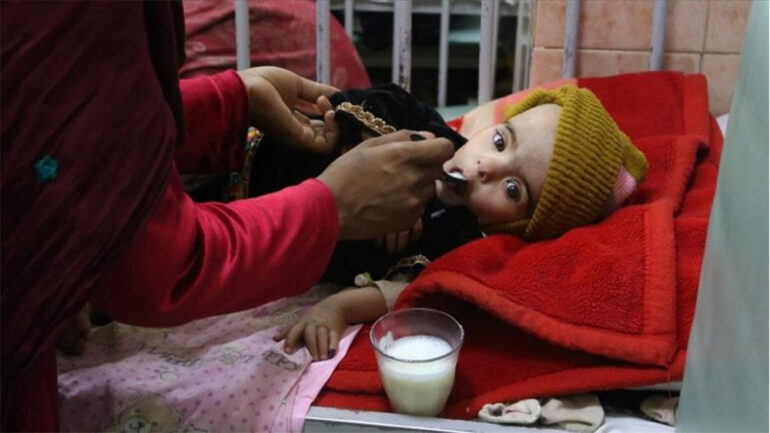

KABUL, AFGHANISTAN – Acute malnutrition among children in Afghanistan rose to 12% in the third quarter of 2026, up from 9.3% in the previous quarter, according to a new report by the United Nations Children’s Fund (UNICEF).
The report, titled Afghanistan Nutrition Sentinel Site Surveillance System, was released on Sunday. It found that food insecurity among children aged 6 to 59 months continued to worsen, rising from 81% in the third quarter of 2025 to 85.5% in the third quarter of this year.
UNICEF said 46% of children under five faced moderate or severe food insecurity in the third quarter of 2026, up from 40% during the same period in 2025.
The nutritional situation deteriorated in 22 of Afghanistan’s 34 provinces compared with the same period last year, the report said.
The number of provinces classified as having critical levels of acute malnutrition increased from 10 in the first quarter of 2026 to 16 in the third quarter.
Kandahar recorded the largest increase in acute malnutrition, with prevalence rising from 15.4% in the third quarter of 2025 to 23.1% in the same period this year. Significant increases were also reported in Baghlan, Farah, Herat and Sar-e-Pul.
Zabul, Kandahar, Helmand, Daykundi and Nooristan recorded the highest rates of severe acute malnutrition, ranging from 5% to 7.3%, the report said.
UNICEF said the findings highlight the need for early intervention, particularly in southern and central highland provinces that have remained critical across multiple rounds of surveillance.
The warning comes as Afghanistan continues to face a major humanitarian crisis, with millions struggling to meet basic needs amid persistent economic hardship, recurring natural disasters, reduced international assistance and the return of large numbers of Afghans from neighboring countries.
Nearly 22 million people in Afghanistan require humanitarian assistance this year, according to the UN, with women and children among the most vulnerable. UN agencies estimate that nearly 5 million women and children suffer from acute malnutrition across the country.
Meanwhile, humanitarian agencies face a major funding shortfall. The UN has appealed for $1.71 billion to meet urgent needs this year, but only about 30% of the required amount has been secured so far, the UN Office for the Coordination of Humanitarian Affairs (OCHA) said.
Aid agencies have called for sustained international funding, warning that shortages are limiting the delivery of food, shelter, healthcare and other essential services to millions of vulnerable Afghans.