
KABUL, AFGHANISTAN – As the annual 16 Days of Activism against Gender-Based Violence campaign begins, women’s rights defenders are renewing calls for an end to violence and discrimination against women and girls, with Afghan women continuing their struggle against what rights groups describe as systematic and institutionalized gender-based oppression under Taliban rule.
The annual campaign, observed from November 25, the International Day for the Elimination of Violence against Women, to December 10, Human Rights Day, brings together activists and organizations worldwide to raise awareness about gender-based violence, commemorate its victims and demand stronger protections for women and girls.
In a statement marking the campaign, Human Rights Watch warned that women’s rights are facing growing threats across the world amid rising authoritarianism, armed conflicts and efforts by governments and anti-rights movements to reverse decades of progress towards gender equality.
Afghan women are among those facing some of the most extensive restrictions on their fundamental rights. Since returning to power in August 2021, the Taliban have systematically excluded women and girls from public life, banning girls from secondary schools and universities, restricting women’s employment in many sectors and imposing severe limitations on their freedom of movement, access to public spaces and participation in society.
These restrictions have effectively deprived millions of Afghan women and girls of their rights to education, employment and equal participation in public life. The United Nations and international human rights organizations have repeatedly warned that the Taliban’s policies amount to systematic discrimination against women and girls.
Despite these restrictions, Afghan women’s rights defenders, activists and civil society organizations continue to campaign for the recognition of gender apartheid as an international crime. They argue that the systematic exclusion of women from education, employment, political participation and other areas of public life under Taliban rule constitutes a form of institutionalized oppression that requires international accountability.
Human Rights Watch has also called for gender apartheid to be recognized as an international crime, arguing that existing international legal frameworks should address the systematic and institutionalized nature of discrimination against women and girls in Afghanistan.
The global campaign comes amid broader concerns about the reversal of women’s rights in different parts of the world. Human Rights Watch highlighted restrictions on reproductive rights in the United States and Russia, efforts by conservative groups to undermine women’s rights in several African countries, and cuts to funding for preventing gender-based violence in Argentina.
Technology has also created new forms of violence against women. Online harassment, digital surveillance, threats and sexually explicit deepfake images are increasingly being used to intimidate, silence and abuse women. Women politicians and activists are particularly vulnerable to digitally facilitated attacks.
Armed conflicts have further increased the risks facing women and girls. In countries including Sudan and the Democratic Republic of Congo, sexual violence remains a serious feature of ongoing conflicts, while survivors often face significant barriers to accessing protection, healthcare and justice. Women political prisoners in Myanmar have also faced torture and ill-treatment.
However, women’s rights defenders continue to push for stronger legal protections and accountability. In March 2026, the UN Commission on the Status of Women called for improved access to justice for women and girls. The European Parliament also adopted a resolution in April calling for sexual consent to be the determining factor in rape legislation across the European Union. In November, Hungary announced plans to ratify the Istanbul Convention, a major European treaty aimed at preventing and combating violence against women and domestic violence.
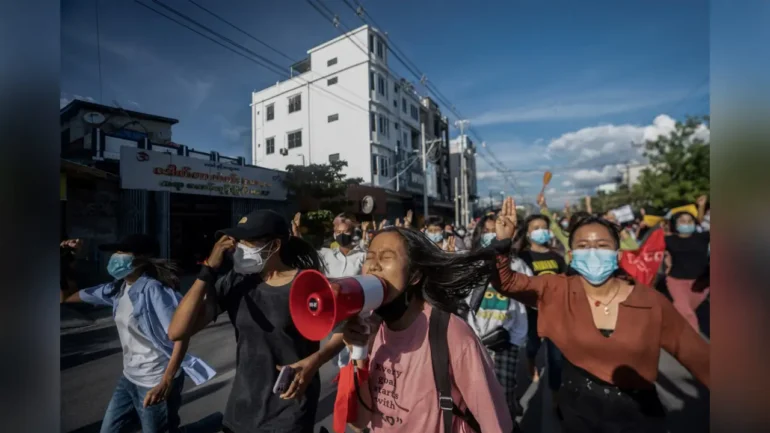
Human Rights Watch said activists are also challenging technology-facilitated gender-based violence and demanding that technology companies take responsibility for protecting women and girls from online abuse. Meanwhile, young women in different countries are increasingly participating in protest movements against corruption and authoritarianism.
For Afghan women, however, the struggle extends beyond preventing individual acts of violence. It also involves challenging a system that has institutionalized discrimination, denied them access to fundamental rights and excluded them from almost every aspect of public life.
As the 16 Days of Activism campaign begins, Afghan women’s rights defenders continue to demand international recognition of gender apartheid, the restoration of women’s fundamental freedoms and accountability for violations committed against women and girls in Afghanistan.