
KABUL, AFGHANISTAN – An estimated 53% of primary school-age children in Afghanistan remain outside formal education, even as demand for schooling remains high, according to a new report jointly published by UNESCO and UNICEF.
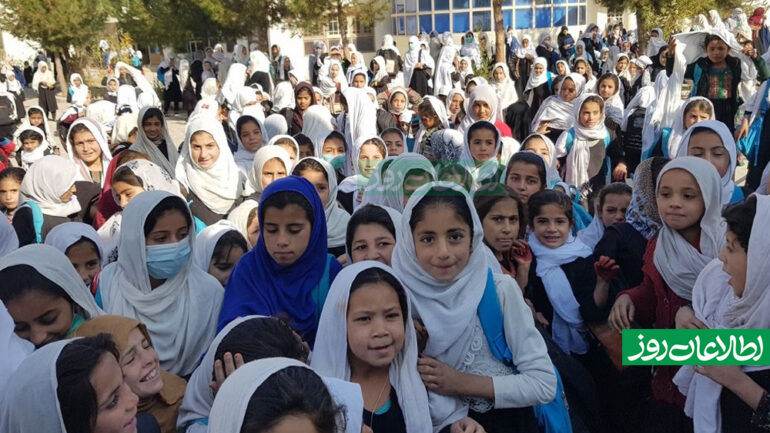
The Afghanistan Education Situation Report 2026, released on Wednesday, November 4, highlights the continued exclusion of adolescent girls from secondary education, with more than 2.6 million girls denied access to education since the Taliban returned to power in August 2021.
The report says that community-based education, literacy and skills development programs, distance and digital learning, and private tutoring remain among the few available learning opportunities for adolescent girls, but are far from sufficient to meet their educational needs.
“By October 2026, approximately 5,300 community-based classes were operating, serving around 162,000 learners, 64% of whom were girls,” the UN agencies said, stressing that these programs cannot replace in-person schooling or substitute for children’s fundamental right to formal education.
The report also highlights growing pressure on the country’s education system, as the school-age population increased from approximately 10.4 million in 2019 to 11.5 million in 2024. The rise has placed additional demands on already overstretched schools, teachers and education services.
The continued exclusion of girls and women from education, recurring emergencies, insufficient investment and large-scale returns of Afghans from neighboring countries have further widened the gap between demand for education and the system’s capacity to respond, the agencies said.
Despite these challenges, the report says, families and communities continue to seek educational opportunities for their children, including in areas where access to schools remains limited. “Approximately 6.6 million children were enrolled in public primary schools in 2025, around 560,000 more than in 2022.”
The report also raises concerns about the quality of education and students’ learning outcomes. Citing a national assessment of 55,000 pupils across all 34 provinces, the UN agencies said fewer than half of Grade 4 students achieved minimum proficiency in language at the Grade 3 level, while only one in four met the minimum proficiency standard in mathematics for the same grade.
“The findings underline the urgent need for sustained investment in teachers, effective classroom instruction and adequate teaching and learning materials,” the agencies stressed.
UNESCO and UNICEF called for the full restoration of the right to education for Afghan girls and women and for the alleviation of barriers that undermine quality and reverse two decades of progress in expanding access.
“Without urgent action, Afghanistan will leave a whole generation behind and undermine the foundations of its future recovery and development,” they warned.
Shortly after returning to power in August 2021, the Taliban barred girls from attending secondary schools. The restrictions were later extended to universities and most forms of higher education, effectively excluding girls and women from education beyond the primary level.
Afghanistan remains the only country in the world where girls and women are officially prohibited from pursuing secondary and higher education.