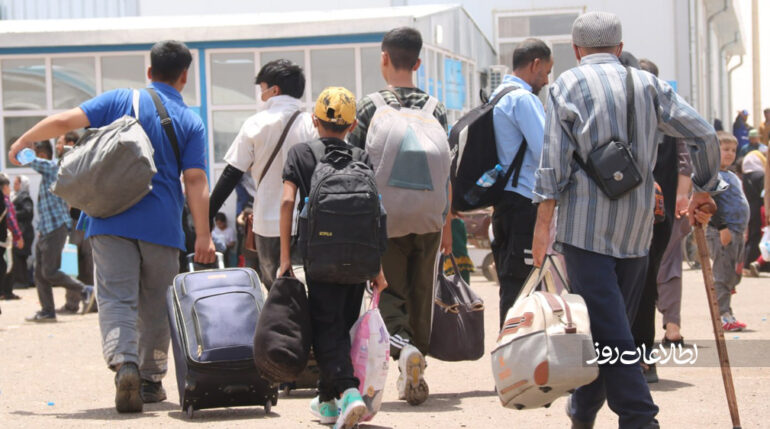

KABUL, AFGHANISTAN – An estimated 1.29 million Afghans returned from Iran and Pakistan between January and September 2026, amid an ongoing campaign of forced deportations and deteriorating living conditions in both countries, the UN refugee agency (UNHCR) said.
In a report published on Sunday, November 8, the UN agency said 43% of those who returned were forcibly deported, while the remainder left because of worsening living conditions and restrictions in Iran and Pakistan.
The agency said many returnees arrived in Afghanistan under difficult circumstances and with limited resources, requiring urgent assistance and livelihood opportunities to rebuild their lives.
According to the report, UNHCR needs $216.4 million to respond to the situation in Afghanistan. However, amid a sharp decline in humanitarian funding since the Taliban’s return to power, the agency has allocated only $30 million in flexible funding.
Of the 1.29 million returnees, about 202,000 people, or around 45,000 families, received cash assistance at border crossings, according to the report. Some 45% of these households were headed by women, 33% had at least one member with a disability, and 4% were headed by children.
To illustrate the challenges facing returnees, the report also highlights the experiences of two Afghan women who have returned to the country.
Samira, who lives in Dasht-e Shor in Mazar-e-Sharif, returned from Iran and is now the sole breadwinner for her family, supporting her sick mother and younger siblings. She learned tailoring in Iran and borrowed money to buy a sewing machine and start a small clothing business. However, she needs additional equipment, including an overlock, embroidery and zigzag machines, to expand her work.
Muslima, a widow and mother of three in Jawzjan province, lost her shelter and moved into a room in her relatives’ home. She supports her family through carpet and kilim weaving. Her limited income barely covers the family’s basic needs, and she requires a carpet-weaving machine and better access to markets to increase her earnings.
UNHCR stressed return alone does not end the vulnerability of these families. Livelihood and protection support remain essential for sustainable reintegration, but reduced funding has left many, including those in similar situations to Samira and Muslima, without the necessary assistance.
The mass return comes as Afghanistan faces one of the world’s worst humanitarian and human rights crises. Nearly half of the population need assistance, while women and girls remain stripped of most of their basic rights under Taliban rule.
The UN, aid agencies and rights groups has warned that without urgent international support and regional cooperation, the situation could escalate into a wider humanitarian disaster with serious consequences for Afghanistan and beyond.