

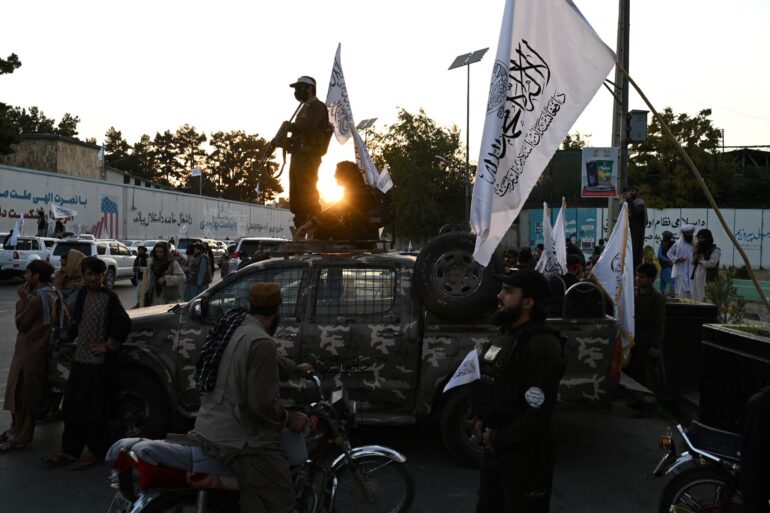

KABUL, AFGHANISTAN – A group of independent United Nations experts on Thursday warned governments against moves to normalize relations with the Taliban, citing systematic human rights violations, particularly against women and girls, as the group marks five years in power.
In a joint statement, the experts, including Richard Bennett, the Special Rapporteur on human rights in Afghanistan, said there should be no normalization of the Taliban authorities, including by accepting diplomats or holding meetings in capitals, without demonstrated, measurable progress on human rights benchmarks, especially for women and girls.
“For five years, Afghans’ human rights have been systematically violated, yet many continue to strive bravely and against the odds to restore them. The international community must not let them down again,” the experts said.
They noted that a year earlier they had issued a similar warning. “We repeat that warning today with greater urgency, because the temptation to normalize has grown while the grounds to justify it have not.”
Over the past year, the experts said, the Taliban had further entrenched institutionalized gender-based repression that amounts to the crime against humanity of persecution on the grounds of gender. They highlighted recent decrees on criminal rules of courts and the separation of spouses, saying these allow violence against women, permit child marriage and discriminate against religious minorities.
“Normalising a regime that systematically persecutes more than half of its population does not promote change; it legitimises oppression,” the statement said.
The experts urged states to actively support the codification of gender apartheid as a distinct crime against humanity. They also called for greater support for the International Criminal Court and warned that the newly mandated Independent Investigative Mechanism for Afghanistan must not remain only an achievement on paper but should be properly and swiftly resourced.
They called on the Taliban to respect the human rights of Afghans and Afghanistan’s treaty obligations, repeal policies that violate those rights, and end the forced imposition of a single model on the country’s diverse population.
Since retaking power in August 2021, the Taliban has imposed sweeping restrictions on women and girls, including bans on secondary and higher education, most forms of employment, and access to public spaces such as parks and gyms. Ethnic and religious minorities face ongoing discrimination in government participation, public services, religious practices and aid distribution.
The group has also tightened control over media and free expression by closing independent outlets, detaining journalists and imposing strict censorship, while civil society space has shrunk amid harassment, arrests and reprisals against activists.
Despite repeated calls from the UN, rights groups, activists and many governments to reverse course and respect human rights, particularly those of women and girls, the Taliban has intensified the crackdown while describing the issues as internal matters in which others should not interfere.

