

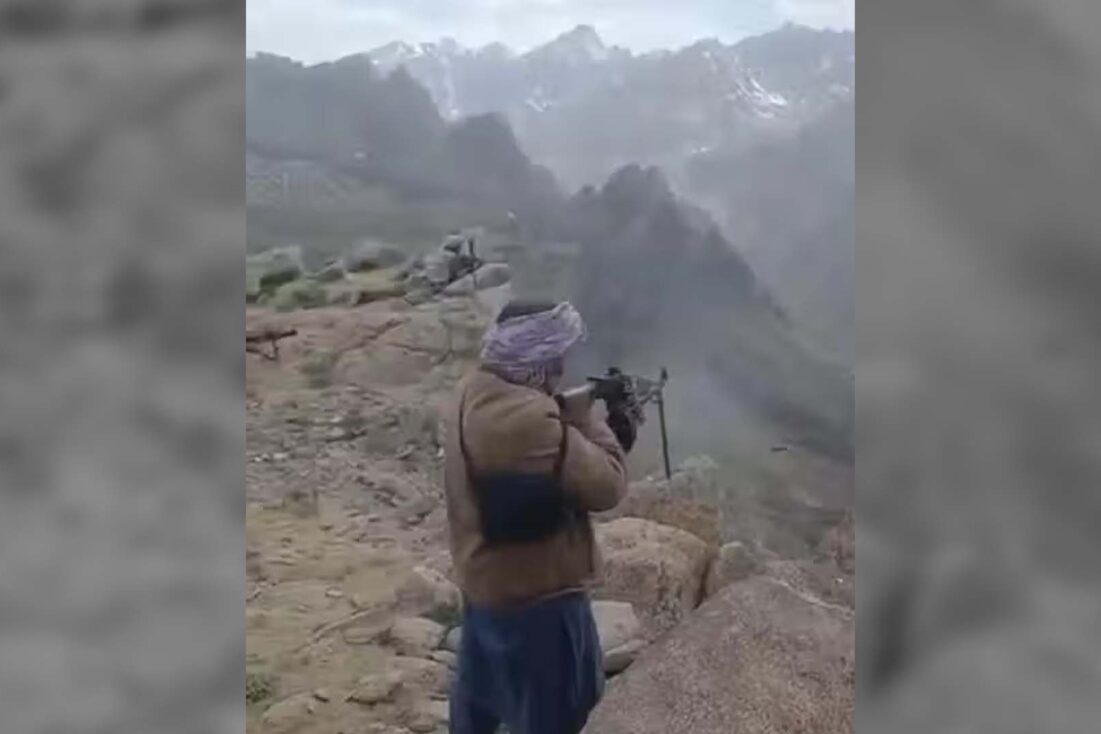

In a few days, Taliban rule in Afghanistan will enter its sixth year. Throughout this period, the group’s most important political and propaganda claims have been the establishment of nationwide security, complete control over Afghanistan’s territory, and the absence of any effective opposition force. The Taliban have turned these claims into one of their main propaganda tools in domestic and international discussions and have consistently attempted to present an image of a fully dominant, stable, and uncontested government.
In the Taliban’s narrative, the war in Afghanistan ended following the collapse of the previous government and the withdrawal of international forces, and the group brought the entire country under its control. Alongside denying the existence of domestic opposition groups, Taliban dismisses the presence and activities of regional and international terrorist groups in Afghanistan as insignificant or unfounded.
However, developments on the ground in Afghanistan over the past five years have shown that these claims face serious challenges. From the earliest days of the Taliban’s rise to power, the ISIS-Khorasan attack on Abbey Gate, one of the entrances to Kabul International Airport, on 26 August 2021 was the first major indication of the Taliban’s limited ability to ensure complete security. The attack took place as thousands of Afghan citizens and international military personnel, particularly American forces, were attempting to evacuate people from Afghanistan. Dozens of Afghan civilians and foreign military personnel were killed or wounded.
Following that incident, ISIS-Khorasan continued to carry out numerous attacks across different parts of Afghanistan. Amu TV documented at least 262 attacks linked to ISIS-Khorasan in Afghanistan during the first two years of Taliban rule.
The targets of ISIS-Khorasan during this period have been diverse. Hazaras and Shia Muslims, followers of Sufi movements, foreign citizens, nationals of regional countries—particularly Chinese citizens—and even some Taliban members have been among the group’s targets. In many cases, attacks on civilians and religious and ethnic communities, especially Hazaras, have resulted in hundreds of deaths. In addition, official sources have attributed some attacks on different ethnic and social groups to “unknown armed individuals,” while the identity of the perpetrators remains unclear.
Another issue is the presence of regional and international terrorist groups in Afghanistan. The Taliban have denied that groups such as Tehrik-i-Taliban Pakistan (TTP), Ansarullah Tajikistan, the East Turkestan Islamic Movement (ETIM), the Islamic Movement of Uzbekistan (IMU), Jaish al-Adl, and several others pose serious threats. However, concerns raised by neighboring countries and assessments by regional security institutions indicate that Afghanistan remains one of the region’s most complex security environments.
Following the Taliban’s takeover, security costs have also increased for Afghanistan’s neighboring countries. Almost all countries bordering Afghanistan have strengthened their security measures and raised their alert levels. These concerns relate not only to ISIS-Khorasan’s activities but also to the presence and operations of various armed groups that use Afghanistan as a base.
Inside Afghanistan, contrary to the Taliban’s claim that there are no effective opponents, armed opposition groups have continued their activities over the past several years. The National Resistance Front of Afghanistan and the Afghanistan Freedom Front are among the groups that have claimed responsibility for dozens of operations against Taliban forces. Most of their early operations were guerrilla attacks carried out using hit-and-run tactics. Although limited in military terms, these attacks demonstrated that Taliban opponents still had the ability to maintain operational networks.
However, recent developments in Badakhshan Province are particularly significant because they indicate that some anti-Taliban groups are attempting to move beyond limited operations and toward more organized forms of activity. For the first time since the Taliban’s return to power, attacks have been carried out that differ from previous operations in their target selection, level of organization, and duration.
Badakhshan is particularly important in this context. Because of its geographical location, shared borders with Tajikistan, Pakistan, and China, difficult mountainous terrain, and history of armed resistance movements, the province has always been one of Afghanistan’s most sensitive regions. In addition to its security significance, mining activities—particularly gold extraction—in some districts have increased its economic importance.
Districts such as Yaftal, Shahri Buzurg, and Nusay have witnessed an increased Taliban presence in recent years. While ethnic Tajik members of the Taliban have attempted to portray the province as an area where the group enjoys social support, they now face a reality demonstrating that administrative control of a region does not necessarily mean complete security control.
A: The Attack by “Sepahian-e Mihan” (Soldiers of the Homeland) in Yaftal-e Payeen District, Badakhshan
One of the most significant recent events challenging the Taliban’s claim of complete dominance over Afghanistan was the attack carried out by the “Sepahian-e Mihan” (Soldiers of the Homeland) in Yaftal-e Payeen District of Badakhshan Province.
This front is one of the newly emerging anti-Taliban movements, and its members are reportedly drawn mainly from Afghanistan’s former security and defense forces. It is led by Abdul Qayum Khan Malang, who previously served in Afghanistan’s security and defense forces during the period of international military presence.
The front’s first publicly claimed operation, described by some observers and Afghan citizens as significant and unusual, took place in one of Badakhshan’s sensitive districts. On 17 July 2026, “Sepahian-e Mihan” forces attacked the center of Yaftal-e Payeen District, approximately 25 kilometers northwest of Faizabad, the provincial capital of Badakhshan.
According to reports, the group’s forces took control of the district center and several government offices, including the Taliban police command headquarters, for several hours. After raising their flag, they removed weapons, military equipment, and vehicles from the site before leaving the area.
The importance of this operation lies not only in how long the district center was controlled but also in the message it conveyed. Over the past five years, the Taliban have consistently claimed that no opposing force can seriously disrupt their rule. However, the loss of control over a local administrative center, even for several hours, demonstrated that this claim does not fully reflect realities on the ground.
Yaftal-e Payeen District is particularly important because of its proximity to Faizabad, the provincial capital of Badakhshan. Unlike remote mountainous areas, the district lies near one of Afghanistan’s important provincial administrative centers. Therefore, a successful armed operation in such an area raises further questions about the Taliban’s level of security preparedness.
Badakhshan as a whole, and particularly districts such as Yaftal-e Payeen, Shahri Buzurg, and Nusay, has witnessed a significant Taliban military presence over the past year. The presence of gold mines and the economic importance of these areas have also increased their value for groups seeking influence and control.
The execution of such an operation indicates that Taliban opponents have managed, in certain areas, to obtain information about Taliban forces, security vulnerabilities, and operational routes. Such an attack would be difficult without detailed knowledge of the environment, prior planning, and local communication networks.
The Taliban’s response following the incident is also noteworthy. The group detained a number of local residents, and the fate of some remains unclear. The response may indicate weaknesses in the Taliban’s intelligence capabilities, as an effective security system should focus primarily on identifying the network that organized the attack, its sources of support, and its communication channels—not on applying broad pressure to residents of an entire area.
Collective punishment of a region or village may create an atmosphere of fear in the short term, but it cannot replace professional intelligence operations. This pattern has been observed in the Taliban’s conduct in several areas, including Balkhab, Panjshir, the Andarab valleys, and some villages in Kandahar.
B: The Attack by the Afghanistan Freedom Front in Zebak District, Badakhshan
Another significant event in Badakhshan was the attack carried out by the Afghanistan Freedom Front in Zebak District—an operation that differed considerably from many of the group’s previous operations in its nature, method of execution, and level of engagement.
Since announcing its existence in 2022, the Afghanistan Freedom Front has become one of the recognized anti-Taliban movements. Alongside the National Resistance Front of Afghanistan, the group has claimed responsibility for several military operations against Taliban forces in recent years. Its previous activities were mainly guerrilla operations, particularly in urban areas. These attacks were generally intended to strike Taliban forces, demonstrate the continuation of opposition activity, and maintain an operational presence.
However, the recent attack in Zebak District differed in several important ways. Unlike many previous attacks, the operation did not take place in an urban environment or as a short-term assault. Instead, it occurred in a mountainous and strategically important area and involved several hours of fighting that continued at the time of writing. This increased the military and political significance of the event.
The Afghanistan Freedom Front said its fighters launched a series of coordinated attacks on Taliban bases and positions around the Zebak Border Battalion on the morning of 23 July 2026. The area lies approximately 50 kilometers by road from the Zebak district center and is considered strategically important because of its geographical location. The front claimed that at least 21 Taliban personnel were killed and 37 others wounded and that the fighting continued for several hours.
Despite disagreements over the details, the occurrence of such an operation in a strategic area is significant, as it suggests that Taliban opponents have developed, in some locations, the capacity to plan and execute operations beyond the limited attacks of the past.
Zebak District has historically been important terrain for guerrilla warfare in Afghanistan. The region’s extensive mountains, numerous valleys, and difficult-to-access routes have made it a suitable environment for small but mobile armed groups. Across different historical periods—from resistance against Soviet forces and the civil wars to the two decades of the republic era (2002–2021)—the area has retained military importance.
In addition, Zebak’s border with Pakistan’s Chitral region and its links to the mountainous routes of Kiran wa Manjan in Badakhshan, Parian District in Panjshir, and Barg-e-Matal in Nuristan have increased the area’s strategic importance. These routes have historically served as communication and movement corridors for armed groups between different regions.
The Taliban have also been aware of the importance of this area. A comparison of satellite images from 2024 and 2025 appears to show that the Taliban reconstructed the road leading to the attack site and built at least three structures there to station their forces. These facilities indicate that the Taliban sought to strengthen their military presence in the area and create the capacity to accommodate dozens of armed personnel.
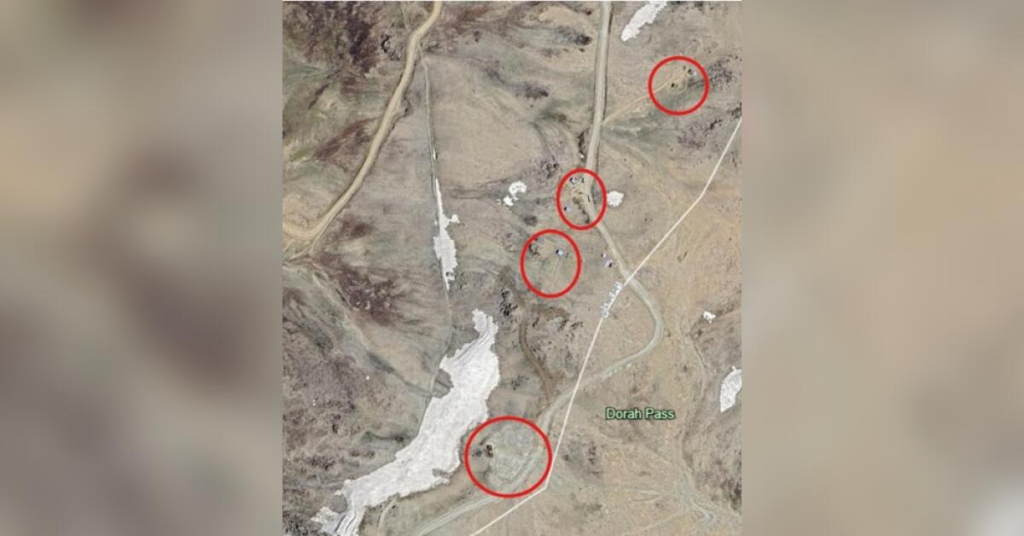
(Several newly constructed buildings are visible at the site.)
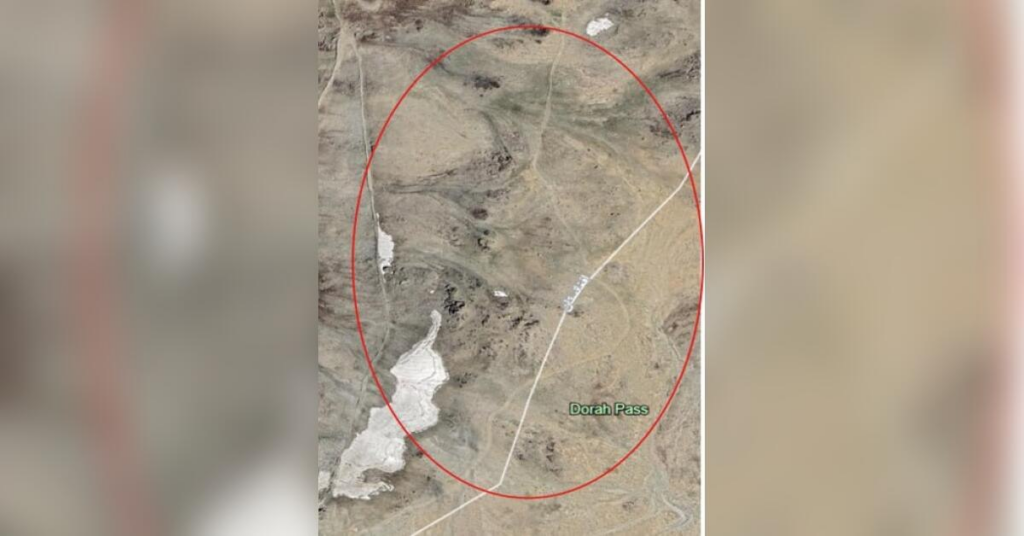
(No visible construction activity can be observed at the site.)
However, the fundamental question is how, despite such preparations, an opposition force was able to conduct a multi-hour operation against this base.
The answer may lie in the nature of asymmetric warfare. In such conflicts, accurate intelligence, knowledge of the environment, surprise, and local support can sometimes be more important than troop numbers and equipment. A small force with sufficient information can strike effectively against a much larger force.
The operation also indicates that the Afghanistan Freedom Front has likely expanded its presence in some areas beyond urban operations. Establishing communication networks, understanding routes, securing equipment, and maintaining mobility in difficult terrain require a prior presence and organization.
This may indicate a change in the operational approach of Taliban opponents. During the first years after the fall of the republican government, most opposition activities consisted of limited and scattered attacks. Some recent operations, however, suggest that efforts to establish more organized structures are now emerging.
However, these developments must be assessed cautiously. The ability to carry out several sustained or coordinated operations does not necessarily indicate the creation of a large and decisive military force. Taliban opponents continue to face major challenges, including the absence of a unified command structure, limited resources, and a lack of extensive territorial control.
By contrast, although the Taliban still control formal government structures, provincial centers, and security institutions, recent events demonstrate that administrative control of a country does not necessarily mean complete security control. The existence of opposition networks and armed groups capable of conducting operations in different regions seriously challenges the Taliban’s claim of complete control.
What Are the Messages and Consequences of These Attacks?
The recent attacks in Badakhshan carry important political, security, and psychological messages for the Taliban, the people of Afghanistan, and the international community.
For the Taliban, these attacks are a serious warning that the narratives of the “end of the war” and the “absence of opponents” do not fully explain the reality of Afghanistan. The Taliban may currently control a large portion of Afghanistan’s governmental and administrative structures, but power cannot be maintained in the long term solely through military force and the elimination of armed rivals. Sustainable security requires strong intelligence capabilities, effective governance, public trust, and political acceptance and legitimacy.
The claim of nationwide dominance can be credible only when a government effectively controls not only government buildings but also the country’s social, political, and security processes. The events in Badakhshan demonstrated that gaps remain in parts of Afghanistan and that opponents can exploit these weaknesses.
For the people of Afghanistan, these attacks carry a dual message. On the one hand, they demonstrate that, contrary to Taliban propaganda, the group continues to face security challenges and that its opponents remain active. On the other hand, Afghanistan’s historical experience shows that an increase in armed conflict alone cannot resolve the country’s political crisis.
Over the past four decades, Afghanistan has repeatedly witnessed governments being changed through warfare. However, these conflicts have often resulted in greater instability, migration, economic destruction, and widespread human suffering. Therefore, every new military development must be examined within the broader context of Afghanistan’s political crisis.
For the international community and regional countries, the message of these developments is clear: Afghanistan has not yet entered a phase of complete stability. The reduction in large-scale warfare after 2021 does not mean the end of security threats. The activities of terrorist groups, the emergence of armed opposition movements, and political fragility indicate that Afghanistan will remain an important security issue for the region and the world.
Ultimately, the significance of the recent attacks in Badakhshan may lie more in their broader implications than in their immediate military outcomes. These events have challenged an important political narrative that the Taliban have sought to establish over the past five years: that Afghanistan is completely under their control and that no force is capable of mounting a serious challenge.
The reality, however, is more complex. The Taliban are currently the ruling power in Afghanistan, but their rule continues to face security, political, legitimacy, and social challenges. Badakhshan has demonstrated that the question of power in Afghanistan remains unresolved and that the Taliban’s claim of absolute authority continues to face challenges on the ground.

