

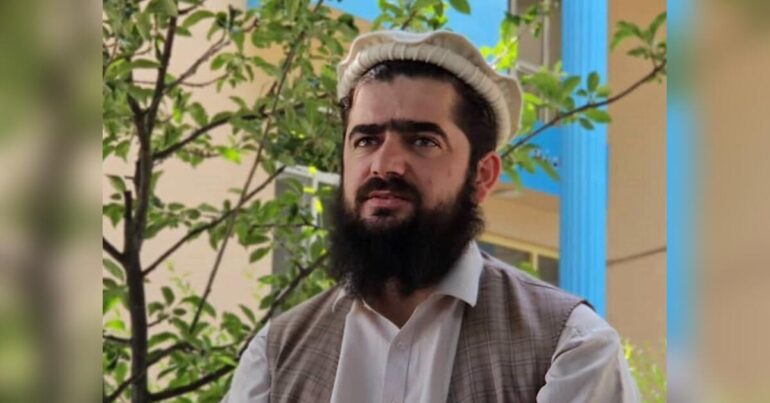

KABUL, AFGHANISTAN – The Islamic State Khorasan Province (ISIS-K) has claimed responsibility for the killing of Zabihullah Amiri, the Taliban’s director of Information and Culture in northeastern Badakhshan province, in the latest attack targeting a senior Taliban member.
According to Agence France-Presse (AFP), citing the SITE Intelligence Group, ISIS-K said in a statement on Wednesday that its members attacked Amiri while he was traveling toward Faizabad, the capital of Badakhshan province, on Tuesday. The group claimed that Amiri and one of his bodyguards were killed in the attack.
Local sources had earlier reported that two armed men on a motorcycle opened fire on Amiri on the Faizabad-Baharak road on Tuesday morning. According to the sources, Amiri was the nephew of Amanuddin Mansour, the Taliban governor of southern Helmand province.
The Taliban police command in Badakhshan confirmed Amiri’s death and said security forces killed one attacker and arrested another after the shooting.
The Taliban has repeatedly said it has brought security to Afghanistan and curbed ISIS-K activity, but the group has continued to claim high-profile attacks in recent years, including those targeting senior Taliban members, foreign nationals, and members of ethnic and religious minorities, particularly Shi’ite Hazaras and Sufis.
Earlier this year, ISIS-K claimed responsibility for an attack on a Chinese restaurant in Kabul that killed at least seven people. In December 2024, the group also claimed responsibility for a suicide bombing that killed Khalil-ur-Rahman Haqqani, the Taliban’s acting minister for refugees and repatriation, in one of the deadliest attacks against a senior Taliban figure since the group returned to power.
Several other senior Taliban officials, including the Taliban governor of Balkh province and the group’s police chief in Badakhshan, have previously been killed in attacks claimed by ISIS-K.
The United Nations and regional countries have repeatedly expressed concern over ISIS-K’s presence and operational capabilities in Afghanistan and beyond. UN assessments have warned that the group continues to maintain networks in eastern and northern Afghanistan, including parts of Nangarhar, Kunar, and Badakhshan provinces, while expanding recruitment and propaganda efforts through online platforms in multiple languages.

