

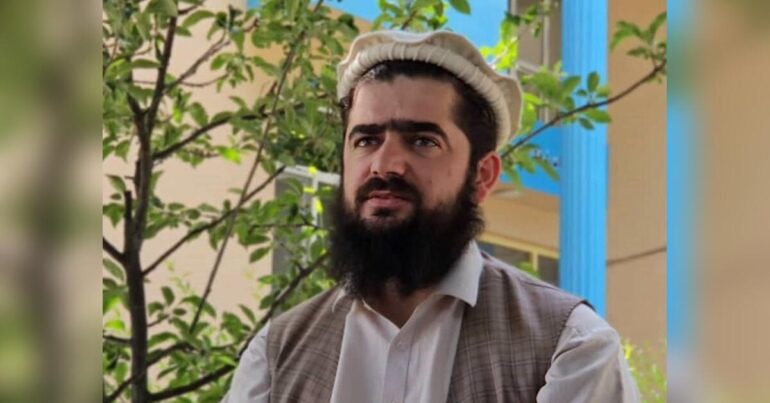

KABUL, AFGHANISTAN – Local sources in Badakhshan province say that Zabihullah Amiri, the Taliban’s Director of Information and Culture in the province, was killed in an armed attack on Tuesday morning.
According to the sources, the attack took place on the Fayzabad–Baharak road when armed men riding a motorcycle opened fire on Amiri, killing him at the scene.
The Taliban’s Police Command in Badakhshan later confirmed Amiri’s death, stating that security forces killed one of the attackers and arrested another following the incident.
No individual or group has claimed responsibility for the attack.
The killing comes amid reports of increased activity by armed groups opposed to the Taliban in Badakhshan. Last week, the Afghanistan Freedom Front (AFF) claimed that its fighters killed at least 21 Taliban members and wounded 37 others during clashes in Zebak district of Badakhshan. The group said the fighting marked a “new phase” in its campaign against the Taliban.
Earlier, a newly formed anti-Taliban group known as Sepahian-e Mihan, or Soldiers of the Homeland, briefly seized control of Yaftal-e Payeen district. The incident marked the first reported temporary loss of a district by the Taliban since it returned to power in 2021.
Following the Taliban’s takeover of Afghanistan, multiple opposition armed groups were formed, with many still actively fighting in various provinces. The NRF and AFF, largely composed of former members of the Afghan National Defense and Security Forces, have been particularly active in Kabul city, Panjshir province, and the northern regions of the country.
They have carried out guerrilla-style operations against the Taliban and claimed responsibility for dozens of attacks in recent years, saying they have killed and wounded hundreds of Taliban members across the country.
While the Taliban generally downplays the activities of such opposition groups and rarely provides detailed comments on individual attacks, the United Nations Assistance Mission in Afghanistan (UNAMA) regularly tracks and reports security incidents involving anti-Taliban groups in its quarterly updates to the U.N. Security Council.
Relations between the Taliban and many residents of Badakhshan have deteriorated significantly since the group’s return to power in 2021. Tensions have been fueled by widespread dissatisfaction over the Taliban’s governance, the appointment of non-local officials to key positions, strict religious and social restrictions, and heavy-handed security measures.
The province has also witnessed repeated protests, particularly over the Taliban’s anti-narcotics operations targeting poppy cultivation, which many local families relied on for their livelihoods. In addition, reports of arbitrary arrests, house searches, and the suppression of dissent have deepened public resentment. These grievances, combined with the growing presence and activities of anti-Taliban armed groups in the province, have contributed to an increasingly volatile security environment and a noticeable deterioration in relations between the Taliban authorities and sections of the local population.

