
KABUL, AFGHANISTAN – United Nations food agencies have warned that acute hunger is expected to worsen in 16 regions around the world over the next six months, with most of the affected areas located in Africa. Afghanistan has also been classified among the countries facing a very high risk of worsening food insecurity.
In a joint report, the Food and Agriculture Organization of the United Nations (FAO) and the World Food Programme (WFP) said armed conflict and violence remain the primary drivers of acute food insecurity worldwide, while extreme weather events, including the El Niño climate phenomenon, are further aggravating the crisis.
The two Rome-based agencies identified 16 “hunger hotspots” where food insecurity is expected to deteriorate between December 2026 and May 2027. Sudan, South Sudan, Somalia, northern Nigeria and Yemen were classified as the areas of highest concern.
The report warned that the risk of famine remains plausible in parts of Sudan, including North Darfur and South Kordofan, as well as in South Sudan.
According to the agencies, conflict, displacement, economic pressures, climate-related disasters and restrictions on humanitarian access are contributing to worsening food conditions in the affected areas.
The report also highlighted a significant decline in humanitarian funding. Assistance for food security and nutrition in the five countries classified as the world’s most critical hunger hotspots has fallen by 62 percent between 2022 and 2025, dropping from $5.1 billion to $2 billion.
FAO and WFP said that although conflict, economic shocks, extreme weather and access restrictions continue to drive these crises, declining humanitarian funding has weakened efforts to maintain progress and prevent conditions from deteriorating further.
The agencies added that although humanitarian assistance had previously helped prevent famine in some of these countries, the improvements proved fragile, with the risk of severe food insecurity and famine re-emerging within a few years.
Afghanistan, the Democratic Republic of the Congo, Haiti and Palestine were placed in the category of countries facing a very high level of concern.
In Haiti, expanding violence by criminal gangs has displaced approximately 1.5 million people and disrupted humanitarian access.
The report also identified Chad, northeastern Uganda, Southern Africa and the Central American Dry Corridor as new hunger hotspots. Southern Africa includes Eswatini, Malawi, Mozambique, Zambia and Zimbabwe, while the Central American Dry Corridor stretches across parts of Central America, including areas from Guatemala to Costa Rica.
The two agencies warned that the latter regions are particularly vulnerable to the effects of El Niño, which is expected to disrupt agricultural production and reduce crop yields.
Mali, Myanmar and Madagascar were also included in the list of hunger hotspots.
“Targeted humanitarian action is urgently needed to save lives and protect livelihoods across all hunger hotspots,” the report said, adding that immediate intervention is particularly critical in areas facing the greatest risk of famine.
El Niño, a natural climate phenomenon characterised by unusually warm ocean surface temperatures in the central and eastern equatorial Pacific, disrupts weather patterns worldwide and can cause severe droughts, heatwaves and flooding.
According to the report, preliminary estimates suggest that the particularly intense El Niño developing this year could push an additional 49 million people into acute food insecurity by the end of 2027.
The agencies said rainfall deficits and rising temperatures associated with the phenomenon had already contributed to crop losses in the Central American Dry Corridor and parts of East Africa, while threatening the upcoming agricultural season in Southern Africa.
They also warned that heavier rainfall expected in parts of East Africa could increase the risk of flooding and further displace vulnerable communities.
In the Gaza Strip, winter rainfall and localised flooding could worsen conditions for displaced families by damaging inadequate shelters and disrupting essential services and humanitarian operations.
The report said anticipatory measures, including providing climate-resilient seeds, protecting livestock and safeguarding water resources, could help reduce the impact of climate shocks on vulnerable communities.
However, FAO and WFP said their joint anticipatory action plan was facing a funding shortfall of approximately $125 million.
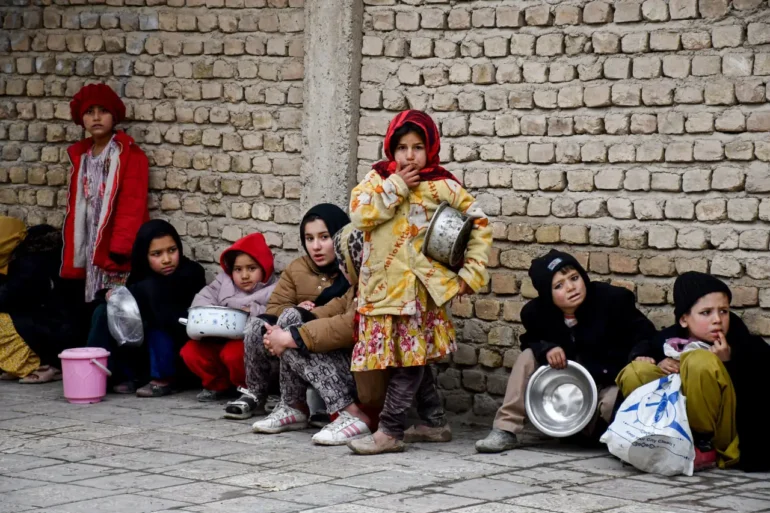
The situation in Afghanistan is particularly concerning as the country faces growing economic pressures, regional instability and a sharp reduction in humanitarian assistance.
According to the FAO-WFP report, 5.1 million people in Afghanistan are expected to face emergency levels of acute food insecurity between November 2026 and April 2027. In total, approximately 19.2 million people, representing 38 percent of the population analysed, are projected to experience crisis-level food insecurity or worse during the same period.
The report said continued tensions along Afghanistan’s borders, particularly disruptions to trade and population movements, and the large-scale return of Afghans from neighbouring countries are placing additional pressure on livelihoods, household incomes and purchasing power. Falling incomes and rising food prices have further reduced families’ ability to afford essential food and other basic necessities.
The country’s nutrition situation is also deteriorating. The report estimates that four million children aged between six months and five years will experience acute malnutrition during 2027, including 1.1 million cases of severe acute malnutrition. An additional 1.3 million pregnant and breastfeeding women are also expected to suffer from acute malnutrition.
The agencies warned that reduced humanitarian assistance and growing economic pressures could further worsen food insecurity and malnutrition in Afghanistan.
According to the United Nations’ 2026 Humanitarian Needs and Response Plan, approximately 21.9 million people, or 45 percent of Afghanistan’s population, require humanitarian assistance. The UN Office for the Coordination of Humanitarian Affairs (OCHA) has requested $1.71 billion to provide assistance to 17.5 million vulnerable people. However, as of November 11, only $560.7 million, or 32.7 percent of the required funding, had been received.
The FAO-WFP report also warned that climate-related risks could affect Afghanistan’s agricultural production. Although above-average rainfall could support winter crops and spring planting, rising temperatures could reduce snowfall and subsequently limit water availability for irrigation during the spring and summer growing seasons. Heavier rainfall could also increase the risk of localised flooding.
The agencies have called for urgent humanitarian assistance, particularly for vulnerable households, returnees and internally displaced people, alongside support for agricultural production, livestock and nutrition services.