

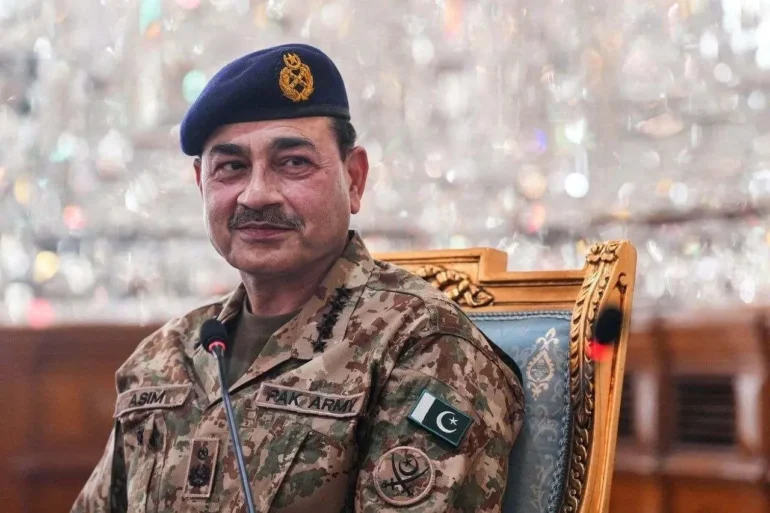

KABUL, AFGHANISTAN – Pakistan’s Chief of Army Staff and Chief of Defence Forces, Field Marshal Asim Munir, has described the country’s recent airstrikes inside Afghanistan as “targeted actions against terrorism” and blamed the Taliban leadership for the consequences of what Pakistan describes as militancy originating from Afghan territory.
Munir made the remarks on Friday, October 2, during the 277th Corps Commanders’ Conference at Pakistan’s General Headquarters in Rawalpindi. The meeting brought together senior Pakistani military commanders to review the country’s security situation and counterterrorism operations.
According to a statement issued by Pakistan’s military, the commanders reaffirmed Pakistan’s “right to self-defence” and endorsed what they described as targeted action against terrorism emanating from Afghanistan.
The statement said the Taliban leadership was responsible for the consequences of what Pakistan described as terrorism being facilitated “on behalf of India.” Munir also said Pakistani security forces were conducting intelligence-based operations against militant groups.
Pakistan has repeatedly accused the Taliban authorities of allowing the Tehrik-e-Taliban Pakistan (TTP) and other militant groups to operate from Afghan territory and carry out attacks inside Pakistan. The Taliban authorities have rejected the allegations and have maintained that insecurity inside Pakistan is an internal issue for Islamabad.
The latest remarks come a day after Pakistan carried out airstrikes in Afghanistan’s Kunar and Helmand provinces. Taliban authorities said the strikes killed nine civilians, including women and children, and injured 11 others. Pakistan, however, said its forces had acted on credible intelligence, targeted militant hideouts and killed 22 militants.
The United Nations Assistance Mission in Afghanistan (UNAMA) separately said it had confirmed at least 10 civilian deaths, most of them children, and nine injuries from the October 1 airstrikes. UNAMA called for de-escalation, dialogue and respect for international law.
The strikes followed another Pakistani airstrike in Kunar province on September 21, in which UNAMA confirmed that at least three civilians were killed and four others injured. Pakistan said at the time that it had targeted militants.
Tensions between Islamabad and the Taliban authorities have intensified significantly in recent months. Pakistan has accused the Taliban of providing safe haven to the TTP, which Islamabad considers a major security threat. The Taliban authorities deny the accusation and have also accused Pakistan of violating Afghanistan’s territorial sovereignty through cross-border attacks.
The two countries have also experienced direct military clashes this year. In February, fighting between Pakistani forces and Taliban forces escalated into several days of clashes after Pakistan carried out strikes inside Afghanistan, with both sides reporting significant casualties. International actors, including the United Nations, China, Saudi Arabia, the European Union and the United States, have called for de-escalation and dialogue.
Meanwhile, Taliban officials have continued to issue statements warning Pakistan against military action. Earlier this week, Nooruddin Noori, the Taliban’s minister for borders and tribal affairs, claimed that Taliban forces could advance to Peshawar within two days and capture Pakistani territory.
Faisal Karim Kundi, the governor of Pakistan’s Khyber Pakhtunkhwa province, described the remarks as “foolish and provocative.” Former Balochistan information minister Jan Achakzai also dismissed the claim, arguing that the Taliban had not been able to defeat their own opponents in Afghanistan’s Kunar and Nuristan provinces and describing the threat to capture Peshawar as baseless rhetoric.
UNAMA said that cross-border violence has continued to take a toll on Afghan civilians. The UN mission reported that, so far in 2026, it has documented more than 1,100 civilian deaths and injuries resulting from cross-border armed violence in Afghanistan.

