

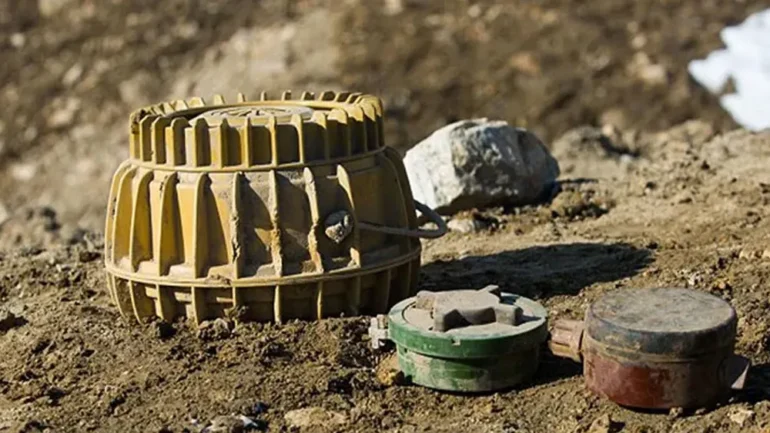

KABUL, AFGHANISTAN – The United Nations Office for the Coordination of Humanitarian Affairs (OCHA) says explosive remnants of war continue to pose a daily threat to civilians in Afghanistan, warning that sustained financial support for mine-action projects is needed to make communities safer.
In a report published on Wednesday, OCHA said children accounted for 78 percent of casualties caused by explosions involving remnants of past conflicts between January and the end of August 2026.
The UN agency said that despite the continuing risks, funding for mine-action projects in Afghanistan has declined.
According to OCHA, humanitarian organizations require $14.5 million under the 2026 Humanitarian Response Plan to support mine-action activities in Afghanistan. So far, only $4.3 million has been secured, leaving a funding shortfall of $10.2 million.
Olga Cherevko, a member of the OCHA team in Afghanistan, said the country contains areas that may appear safe on the surface but still conceal explosive devices capable of killing or causing severe injuries, including amputations.
She said some of the hazardous devices may have been planted decades ago, while others could have been placed more recently.
During a visit to a controlled detonation operation in Zhari district of Kandahar province, Cherevko observed the destruction of a bomb dating back to the 1980s. The device had been discovered by a local resident two days before it was safely destroyed.
Cherevko described the continued work of mine-clearance teams across Afghanistan as critically important. She said the teams search for and destroy explosive remnants left behind by decades of conflict in order to protect civilians.
In a video report published by OCHA, Cherevko warned that declining financial support for mine-action programs means people are being forced to live with dangers they cannot see.
She stressed that sustained funding is necessary to remove unexploded remnants of war so that farmers can safely work their land and children can play without facing hidden explosive hazards.
The threat is particularly severe for children, who can encounter unexploded devices while playing, collecting scrap metal, grazing livestock or moving through contaminated areas.
The danger was underscored by a recent incident in eastern Afghanistan. On September 30, three children were killed and another was injured after an unexploded piece of ordnance detonated in Khogyani district of Nangarhar province. The children had reportedly been playing with the unexploded device when it exploded. The injured child was taken to a hospital for treatment.
A United Nations report published in June found that explosive ordnance, including mines, explosive remnants of war and improvised explosive devices, was the leading cause of verified child casualties in Afghanistan during the reporting period. The UN recorded 390 children killed or maimed, with 271 of the casualties attributed to explosive ordnance.
UN data cited in recent reporting estimates that about 3.3 million people in Afghanistan live within one kilometre of areas contaminated by landmines and unexploded ordnance.

