

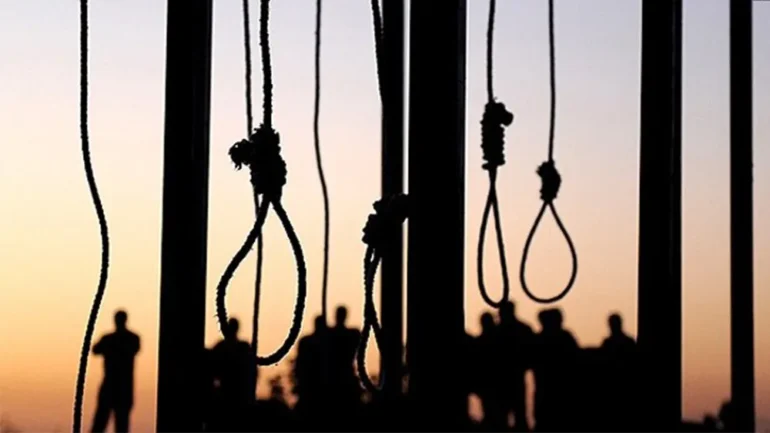

KABUL, AFGHANISTAN – Iran executed five Afghan nationals in September, according to figures released by the Hengaw Organization for Human Rights.
Hengaw said Iranian authorities carried out at least 68 executions across prisons in the country during September, including those of five Afghan nationals. The figure represents a 23.5 percent decrease from August, when the rights group documented 89 executions.
According to Hengaw, 32 of those executed in September had been sentenced to death on murder charges, while 31 were executed over drug-related offences. Four others were executed in political or espionage cases and one on a rape charge. Four women were among those executed, and two of the executions were carried out in public, the organization said.
Hengaw’s figures also show that the number of Afghan nationals executed in Iran has remained significant in recent months. The organization documented the execution of four Afghan nationals in August, compared with one in July.
Among the Afghan nationals executed in September was Khalil Afghan, 25, who was executed at Zahedan Central Prison on September 13 after being sentenced to death on drug-related charges, according to Hengaw. The organization said Iranian state media and judiciary-affiliated outlets did not announce his execution.
Earlier in September, Hengaw also reported the secret execution of two Afghan nationals, Ansar Nami and Nazif Rasoulkhandeh, at Vakilabad Prison in Mashhad. Both had been sentenced to death in a murder case. Their families were reportedly not notified in advance and were not given an opportunity for a final visit.
Afghan nationals constitute one of the largest groups of foreign prisoners in Iran. Many Afghan migrants in Iran live and work without permanent legal status, while some face criminal prosecution under Iran’s judicial system. Drug-related offences and murder are among the charges reported in cases involving Afghan nationals sentenced to death.
The number of executions in Iran has remained high throughout 2026. Hengaw documented at least 109 executions in June, 67 in July, 89 in August and 68 in September, bringing the organization’s documented total for the first nine months of the year to 604 executions.
The figures are based on Hengaw’s own monitoring and documentation. The organization said Iranian state media and judiciary-affiliated outlets reported only eight of the 68 executions recorded for September, meaning many of the cases were not publicly announced by Iranian authorities.
The treatment of Afghan prisoners has also been discussed as part of broader cooperation between Tehran and the Taliban authorities. In recent years, Iran and the Taliban authorities have worked on the transfer of some Afghan prisoners from Iranian prisons to Afghanistan, although the scale and conditions of such transfers have varied.
Hengaw is an independent human rights organization that documents executions and other rights violations in Iran. Its figures cannot always be independently verified because Iranian authorities do not publish comprehensive, publicly accessible statistics on all executions.

