

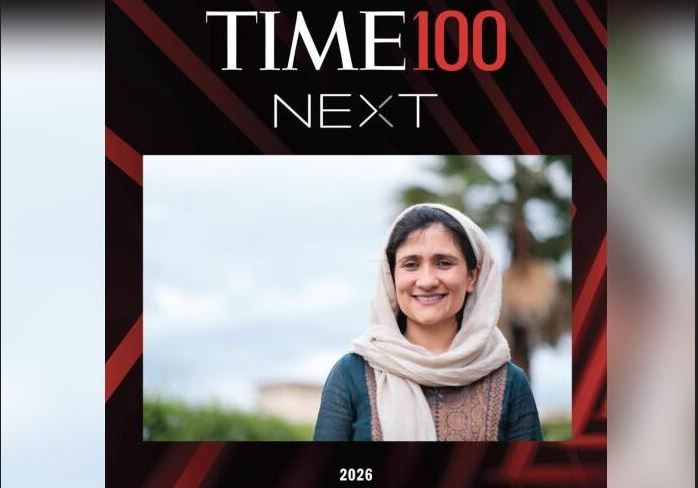

KABUL, AFGHANISTAN – Shabana Basij-Rasikh, an Afghan girls’ education advocate and co-founder and president of the School of Leadership, Afghanistan (SOLA), has been named to TIME magazine’s TIME100 Next 2026 list of “the world’s most influential rising stars.”
TIME announced the selection on Wednesday, September 30, citing her work defending Afghan girls’ right to education. The annual list recognizes 100 individuals who are defining the next generation of leadership.
Basij-Rasikh was born and raised in Kabul. During the Taliban’s first rule in the 1990s, she attended underground schools after the authorities banned girls from formal education. She later earned a master’s degree in public policy from the University of Oxford and has received multiple awards for her work, including the 2023 National Geographic Explorer of the Year.
SOLA was established in 2008 as a scholarship program and later became Afghanistan’s first boarding school for girls. It operated in Kabul until August 2021, when the Taliban returned to power and the school evacuated its students and staff to Rwanda.
TIME said Basij-Rasikh moved quickly after the Taliban takeover, destroying students’ records to protect their identities and arranging for students enrolled at the time to be evacuated to Rwanda.
The magazine highlighted her message: “Afghan women and girls will never give up. Don’t look away.” TIME also noted that her leadership earned her the Elevate Prize in 2026.
In a post on X reacting to the TIME recognition, Basij-Rasikh wrote that she was proud and humbled. “While this honor is for me, it’s not about me. It’s about the women of Afghanistan and the hope they carry… It’s about the students of SOLA Afghanistan, the Afghan girls who will change the world. It’s about the resilient SOLA global village of friends and supporters.”
In an interview with KabulNow last month, Basij-Rasikh said SOLA provides education to Afghan girls through its boarding school in Rwanda and SOLAx, a free, WhatsApp-based learning platform launched in March 2024. She said the platform has more than 40,000 learners, about 85% of them inside Afghanistan.
She said online learning has become an essential lifeline but cannot substitute for restoring girls’ right to attend school in person. “An online education can never replace in-person learning. It should never replace in-person learning. It should never excuse what is happening inside Afghanistan,” she told KabulNow.
Shortly after regaining power in August 2021, the Taliban barred girls from secondary school and later extended the ban to universities and most forms of higher education. According to UNICEF, an estimated 2.6 million girls and young women in Afghanistan are currently denied access to education. Afghanistan remains the only country in the world where secondary and higher education are prohibited for girls and women.

