

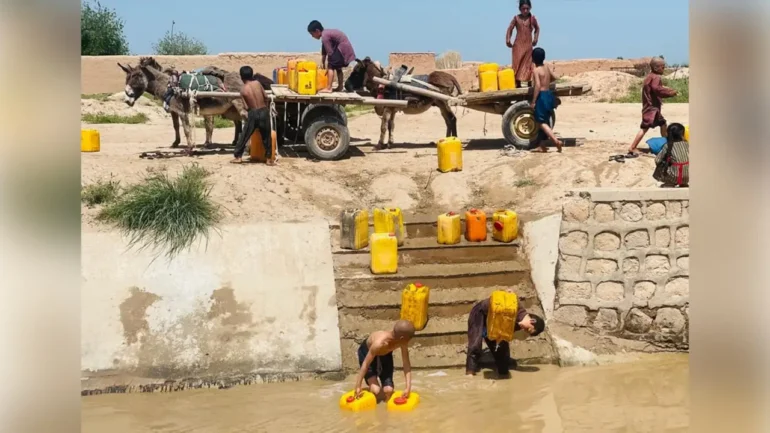

KABUL, AFGHANISTAN – The United Nations Human Settlements Programme (UN-Habitat) says millions of people in Afghanistan still lack reliable access to safe drinking water.
In a post on X on Sunday, September 13, UN-Habitat said smart urban planning and effective water and waste management could help protect water resources, improve sanitation and build healthier communities.
The UN agency stressed the importance of ensuring universal access to water.
Afghanistan’s water crisis is particularly severe in rural areas, where drought and climate change have contributed to growing shortages. However, major cities, including Kabul, are also facing an increasingly serious water crisis.
Kabul currently relies heavily on groundwater to meet the needs of its growing population. UN agencies have warned that the city’s groundwater reserves could be depleted within the next five years, potentially turning Kabul into the world’s first major capital to run out of water.
Rapid urban population growth, inadequate water management and the over-extraction of groundwater have been identified as major drivers of Kabul’s worsening water crisis.
According to a recent report by Mercy Corps, groundwater levels in Kabul have fallen by as much as 30 meters over the past decade due to rapid urbanization and worsening climate change. The report noted that water extraction currently exceeds natural recharge rates by 44 million cubic meters annually.
UN-Habitat has warned that Kabul’s groundwater reservoir could be depleted by 2030, while UNICEF says approximately 31 percent of Afghans lack access to basic drinking water. In 2025, UNICEF also reported that 25 percent of households relied on unimproved water sources, while 46 percent identified access to safe drinking water as their top concern.
The lack of safe water has also contributed to public-health risks, with UNICEF reporting more than 166,000 cases of acute watery diarrhoea with dehydration and 80 associated deaths across Afghanistan in 2025.
The country’s prolonged droughts and changing climate patterns have further intensified pressure on already limited water resources, while inadequate infrastructure and rapid urbanization have made it increasingly difficult to ensure reliable access to safe drinking water.
Afghanistan ranks sixth globally on the Climate Risk Index, highlighting its extreme vulnerability to climate-related disasters. Experts stress that without urgent international support and sustainable water management measures, the crisis could escalate into a full-blown humanitarian catastrophe.

