

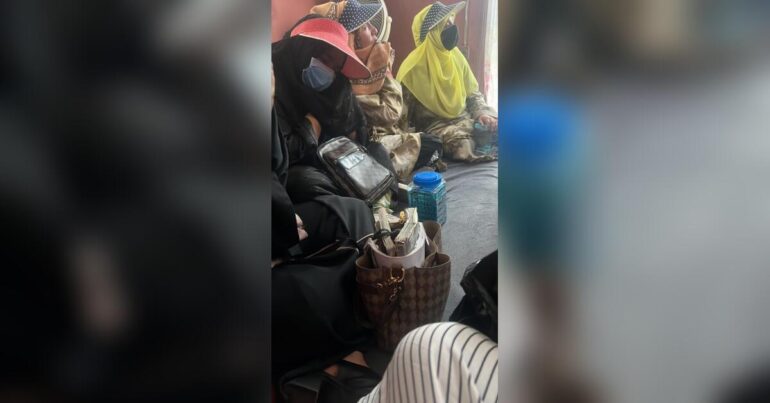

KABUL, AFGHANISTAN – Taliban morality police detained around 16 women and girls in central Kabul on Thursday after male and female officers patrolled the city, forced them into vehicles and took them away, local sources told KabulNow.
The detentions occurred around noon in the Shah-e Do Shamshira area, near the city centre, government ministries and other public institutions, the sources said.
According to the sources, about 20 women were initially detained. Four were later released after their mobile phones were checked and their families provided guarantees. The remaining 16 women and girls are still in custody.
KabulNow also obtained a video showing a woman, believed to be a Taliban female police officer, attempting to force another woman into a vehicle. The woman resists, while a male Taliban official and several other women can be seen inside the vehicle. The source said the video was related to Thursday’s incident, but KabulNow could not independently verify the footage.
The reason for the detentions remains unclear. Taliban authorities have not yet commented on the incident.
In recent months the Taliban has tightened restrictions on women’s clothing and freedom of movement in Kabul, Herat and other major cities. Numerous reports have previously emerged of women being detained in different parts of the capital for allegedly failing to comply with the Taliban’s dress code.
The Taliban’s Law on the Propagation of Virtue and Prevention of Vice requires women to cover their entire bodies in public and imposes restrictions on their voices and movement, giving morality officials broad powers to enforce rules governing public conduct.
Since taking power, the Taliban have imposed sweeping restrictions that have largely excluded women and girls from public life, including bans on secondary and higher education and severe limits on work, freedom of movement and choice of clothing.
UN experts and legal scholars have described the measures, taken together, as potentially amounting to gender persecution as a crime against humanity.

