

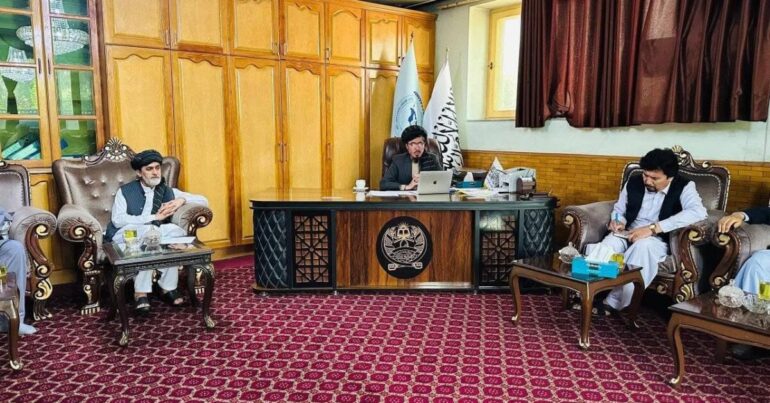

KABUL, AFGHANISTAN – Taliban Justice Minister Abdul Hakim Sharei has detained the head and four other members of a commission representing Afghanistan’s Shia community in his “private prison” inside the ministry, local sources in Kabul reported on Monday.
The commission’s head, Mohammad Ali Akhlaqi, along with members Sayed Nader Shah Bahr, Haji Amir Mohammad Bazel, Sayed Mohsen Hossaini and Sayed Abdullah Hashemi, were arrested inside the justice ministry on Sunday, the sources said.
The five men had gone to the ministry to mediate for the release of several influential Shia figures who had been detained by the minister’s forces a week earlier, according to the sources.
Sharei, who is believed to have close ties to Taliban Supreme Leader Hibatullah Akhundzada, described the commission, which was reportedly established by the group’s intelligence agency, as a political-intelligence institution and said its activities were illegal, the sources said.
He faces accusations of operating a private prison within the justice ministry. He has repeatedly been accused of arbitrary arrests, detentions and the humiliation of individuals, particularly members of the Shia-Hazara community, in recent years.
Last month, he reportedly dismissed and detained several Hazara employees of the Taliban’s justice department in Bamyan province after summoning them to Kabul. During Muharram this year, he ordered the detention of several Shia-Hazara elders over the raising of mourning flags in parts of Kabul.
Earlier this month, forces belonging to the ministry forcibly evicted students, lecturers and officials and seized the Khatam al-Nabieen complex, one of the largest Shia seminaries in Kabul. Authorities claimed the complex was built on government land and had ties to a political party, allegations rejected by the head of the complex.
In a joint statement issued earlier this month, several Shia scholars and elders accused Sharei of “systematic discrimination” against the Shia-Hazara community and described his treatment of the community as “intolerable.” They accused him of forcibly displacing community members from their homes and localities across Afghanistan, including Kabul, and of repeatedly insulting, detaining and imprisoning Shia religious scholars, community leaders and residents without court orders or evidence of wrongdoing.
“The collection of these behaviors and actions by the justice minister constitutes systematic discrimination and an attempt to forcibly displace Hazara and Shia people, and its continuation is intolerable,” the statement said, calling on Taliban authorities to ensure that Shia citizens are treated equally with other citizens.

