

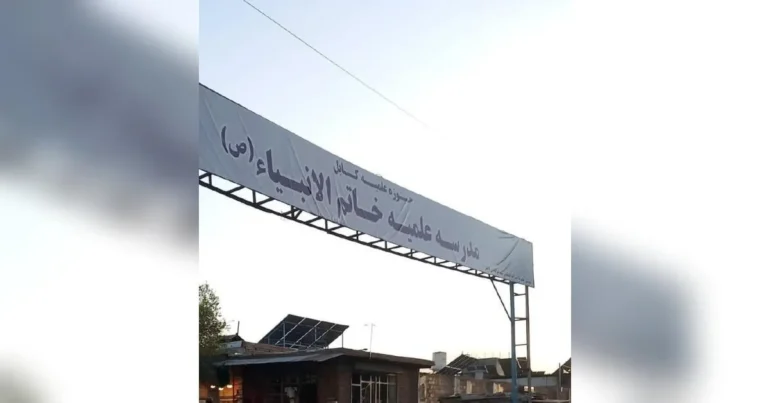

KABUL, AFGHANISTAN – Taliban intelligence forces have raided and closed a Shia religious school in western Kabul, expelling students and staff and reportedly detaining the school’s head and several teachers, according to local sources, in the latest in a series of actions against Shia religious and educational institutions in the capital.
The sources said Taliban intelligence forces surrounded the Khatam-ul-Anbia Religious School at around 10 a.m. on Monday, September 21, forcing students and school officials to leave before sealing the entire building, the Grand Martyr Mazari Prayer Hall and its administrative sections.
According to the sources, the Taliban also detained Sayed Hassan Fazelzada, the head of the Khatam-ul-Anbia school, along with several of its teachers, and took them away. Their current whereabouts and condition were not immediately known.
The school is located in the Madrasa area of western Kabul. A commission established by the Taliban to resolve disputes between nomadic Kuchi communities and settled residents also had an office at the same site. It remains unclear whether Taliban forces have also closed the commission’s office.
The Taliban have not publicly commented on the reported closure of the Khatam-ul-Anbia Religious School or the reported detention of its officials and teachers.
The closure comes as the Taliban have intensified restrictions on Afghanistan’s Shia community and its institutions. On Monday, the Taliban’s Ministry of Justice reportedly dissolved the High Shia Commission of Afghanistan, confiscating the membership cards of 25 members and ordering them not to return to the commission’s office. The commission had reportedly been established with the support and coordination of the Taliban’s intelligence agency.
Taliban authorities have raided and moved to close the Khatam al-Nabieen complex in Kabul, including its religious seminary and university, while the university’s operating license was subsequently revoked.
The Taliban have also taken action against Tamadon TV, a Shia-affiliated broadcaster, and have pursued a legal case declaring more than 1,500 jeribs of land in Omid-e-Sabz Township in Kabul state-owned. In Herat’s Jebrail area, Taliban authorities have also closed around 100 shops amid a land ownership dispute and reportedly arrested several residents.
These developments have prompted concerns among Shia and Hazara figures and rights advocates over what they describe as increasing restrictions on their religious, social and economic institutions.
A recent European Union Agency for Asylum report also documented restrictions on Shia religious practices under Taliban rule, including limitations on Muharram and Ashura commemorations and the removal of Shia religious symbols in several provinces. While Taliban authorities have generally framed recent actions against individual institutions as legal, administrative or land-related measures, Shia and Hazara representatives have argued that the cumulative effect amounts to discriminatory treatment of their communities.

