
KABUL, AFGHANISTAN – Forty-two countries and the European Union on Wednesday called on the Taliban authorities to immediately lift all restrictions on the rights of women and girls in Afghanistan, condemning the group’s policies as systematic gender discrimination.
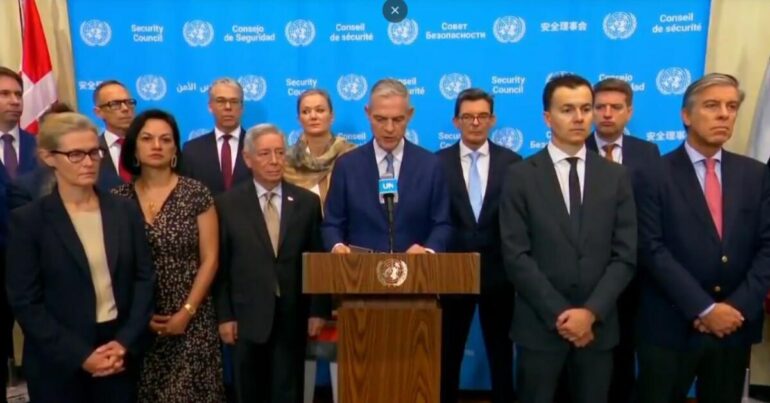
In a joint statement delivered ahead of a UN Security Council meeting on Afghanistan, the signatories — including numerous European nations as well as the United Arab Emirates, Mexico and Japan — described the Taliban’s approach as “gender discrimination” and the “systematic repression of women and girls.”
“Since August 2021, the Taliban have implemented a policy of gender-based segregation, virtually erasing women and girls from public life and severely restricting their access to education, healthcare and employment,” said Jerome Bonnafont, France’s representative to the United Nations, speaking on behalf of the 43 signatories.
“Women who refuse or are perceived to refuse to comply with these restrictions face arrest and arbitrary detention,” Bonnafont continued. “Their supporters and perceived critics of the Taliban rule also face detention and reprisals.”
The statement called on the Taliban “to immediately lift all restrictions on the rights of women and girls, in all their diversity, and to put an end to all human rights violations.”
Last month marked five years since the Taliban returned to power after the withdrawal of international forces and the collapse of Afghanistan’s former government in 2021. Since then, the group has imposed sweeping restrictions on women and girls, including bans on secondary and higher education, restrictions on most forms of employment, and limits on access to public spaces such as parks and gyms.
Around 2.6 million Afghan girls and young women are currently deprived of secondary education, while thousands of women remain barred from higher education and work, according to the UN.
The appeal came as the UN Security Council held a meeting on Afghanistan that focused on human rights, the threat of terrorism emanating from the country, and the situation of minority groups, particularly Shia Hazaras. Representatives of several countries at the meeting criticized the Taliban’s restrictions on women and girls and called for an end to the policies.
Nargis Nehan, who served as Afghanistan’s minister of mines and petroleum in the previous government, told the council that the treatment of women and girls under Taliban rule amount to “political femicide” and the worst form of “gender apartheid.”
“Today, women are allowed to beg for a piece of bread, but they are not allowed to work and earn a dignified income,” Nehan said. “A father is not allowed to send his daughter to school, but he can marry his daughter off at the age of eight to a 70-year-old man, or sell her for just $500,” she added.