
KABUL, AFGHANISTAN – The Afghan Cancer Foundation says more than 1.5 million people in Afghanistan are currently living with cancer, while around 50,000 new cases are diagnosed in the country each year.
National Television, which operates under Taliban control, reported on Saturday, September 12, quoting Shafiq Shinwari, head of the Afghan Cancer Foundation, as saying that more than 1.5 million Afghans are currently affected by cancer.
Shinwari said around 50,000 new cancer cases are identified in Afghanistan every year.
According to him, breast and cervical cancers are among the most common forms of the disease among women, while lung, stomach, prostate and colorectal cancers are among the most common cancers affecting men.
He said that after cardiovascular diseases, cancer is one of the major causes of death in Afghanistan.
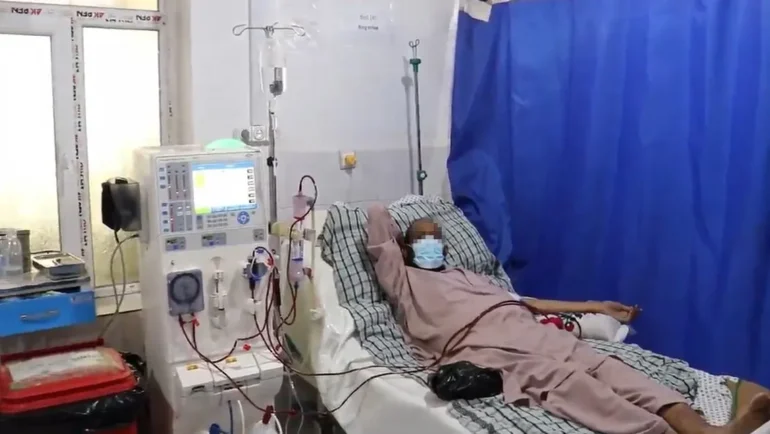
Sharafat Zaman Amarkhil, a spokesperson for the Taliban-run Ministry of Public Health, said that a 50-bed hospital is operating in each health zone and that a 200-bed facility in Kabul is providing services to cancer patients.
Amarkhil said around 90,000 cancer patients were registered at health facilities under the ministry last year and received outpatient services.
Rahim Gul Darwish, a cancer specialist, told National Television that smoking and the use of naswar, poor hygiene and unhealthy diets are among the major factors contributing to cancer in Afghanistan.
Amarkhil also identified substance use and poor diets as contributing factors and said decades of war in Afghanistan may have played a role in increasing cancer cases. He claimed that various types of ammunition were used during the country’s prolonged conflicts and that exposure to them could contribute to the development and spread of cancer.
However, the health authorities have not provided scientific evidence establishing the extent to which exposure to wartime ammunition has contributed to cancer rates in Afghanistan.
Earlier, on September 9, Taliban spokesperson Zabihullah Mujahid said nearly 99,000 cancer patients had received health services at government facilities during the Afghan year from June 27, 2025, to June 17, 2026. He also said a 200-bed hospital dedicated to the diagnosis and treatment of cancer had begun operating in Kabul, as the Taliban authorities seek to expand specialized cancer services in the country.
The figure announced by the Taliban is substantially higher than cancer incidence figures previously reported by Afghanistan’s former Ministry of Public Health. Annual reports from the ministry before 2021 estimated that around 20,000 people were diagnosed with cancer each year, with approximately 15,000 dying within six months to one year of diagnosis.
International estimates nevertheless show that cancer represents a significant and growing health burden in Afghanistan. According to the International Agency for Research on Cancer (IARC), an agency of the World Health Organization, an estimated 24,275 new cancer cases and 16,923 cancer deaths occurred in Afghanistan in 2022. There were an estimated 48,227 people living with cancer who had been diagnosed within the previous five years.
Breast cancer was the most commonly diagnosed cancer in Afghanistan in 2022, followed by stomach, lung, cervical and leukemia cancers. Among women, breast cancer accounted for 3,545 new cases, while cervical cancer accounted for 1,218 cases. Among men, stomach, lung and cancers of the lip and oral cavity were among the leading cancers.
Afghanistan has historically faced major challenges in cancer prevention, early detection and treatment, including shortages of specialized doctors and diagnostic facilities, limited access to expensive medicines and treatment, and the concentration of specialized services in a small number of urban centres.