

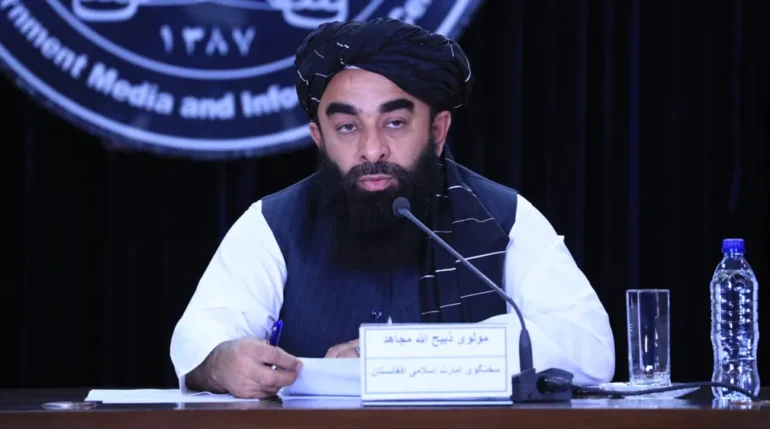

KABUL, AFGHANISTAN -Taliban spokesperson Zabihullah Mujahid says nearly 99,000 people with cancer received health services in Afghanistan over the past year, as the country’s already fragile health system continues to struggle with limited resources, inadequate specialized services and restricted access to treatment.
Speaking at a press conference in Kabul on Wednesday, September 9, Mujahid said that more than 99,000 cancer patients had received health services during the Afghan year June 27, 2025, through June 17, 2026. He said the figure represents patients registered and treated at government health facilities.
Mujahid also announced that a 200-bed hospital specializing in the diagnosis and treatment of cancer has begun operating in Kabul.
The figure announced by the Taliban is substantially higher than cancer incidence figures previously reported by Afghanistan’s former Ministry of Public Health. Annual reports from the ministry before 2021 estimated that around 20,000 people were diagnosed with cancer each year, with approximately 15,000 dying within six months to one year of diagnosis.
However, the two figures are not directly comparable. The Taliban’s 99,000 figure refers to patients who received services at government health facilities during a one-year period, while the earlier figure referred to estimated new cancer cases. It is therefore not possible to conclude from the Taliban figure alone that the number of new cancer cases has increased fivefold.
International estimates nevertheless show that cancer represents a significant and growing health burden in Afghanistan. According to the International Agency for Research on Cancer (IARC), an agency of the World Health Organization, an estimated 24,275 new cancer cases and 16,923 cancer deaths occurred in Afghanistan in 2022. There were an estimated 48,227 people living with cancer who had been diagnosed within the previous five years.
Breast cancer was the most commonly diagnosed cancer in Afghanistan in 2022, followed by stomach, lung, cervical and leukemia cancers. Among women, breast cancer accounted for 3,545 new cases, while cervical cancer accounted for 1,218 cases. Among men, stomach, lung and cancers of the lip and oral cavity were among the leading cancers.
Cancer treatment remains particularly challenging in Afghanistan because specialized diagnostic and treatment services are heavily concentrated in Kabul. Patients outside the capital often have to travel long distances for diagnosis, chemotherapy, surgery and other forms of treatment.
For years, many Afghan cancer patients who could afford treatment traveled to neighboring Pakistan, particularly hospitals in Peshawar and Karachi. Access to treatment abroad has become more difficult following restrictions and closures at border crossings between Afghanistan and Pakistan. Patients with sufficient financial resources increasingly seek treatment in countries such as India and Iran, while many others are unable to afford overseas medical care.
The shortage of specialized cancer services comes amid a broader health crisis in Afghanistan. The World Health Organization says decades of conflict, displacement, economic hardship and declining international assistance have left the country’s health system fragmented and severely under-resourced.
WHO estimated that 14.4 million people in Afghanistan would require health assistance in 2026. The organization has also warned that funding reductions have resulted in the suspension or closure of more than 422 health facilities, limiting access to essential health services for millions of Afghans.
The crisis is particularly severe in rural and hard-to-reach areas. WHO estimates that about one-third of Afghanistan’s population lives in areas that are underserved by the health system, while shortages of qualified health workers, inadequate financing and limited access to essential medicines continue to undermine healthcare delivery.
Afghanistan is also facing a combination of infectious and non-communicable diseases, malnutrition, maternal and child health problems and repeated disease outbreaks. WHO has warned that these challenges are placing additional pressure on a health system already struggling with insufficient funding and limited access to services.
The lack of early diagnosis and affordable treatment is particularly concerning for cancer patients. WHO says many cancers can be cured when detected early and treated effectively. In Afghanistan, however, limited screening, diagnostic capacity, specialized personnel and access to treatment can mean that patients are diagnosed at advanced stages, reducing their chances of survival.
The Taliban’s announcement comes as Afghanistan continues to face severe constraints in its healthcare system. While the opening of a 200-bed cancer hospital in Kabul could expand treatment capacity in the capital, the absence of specialized cancer centers in most provinces means that millions of Afghans still face significant geographic and financial barriers to accessing cancer diagnosis and treatment.

