

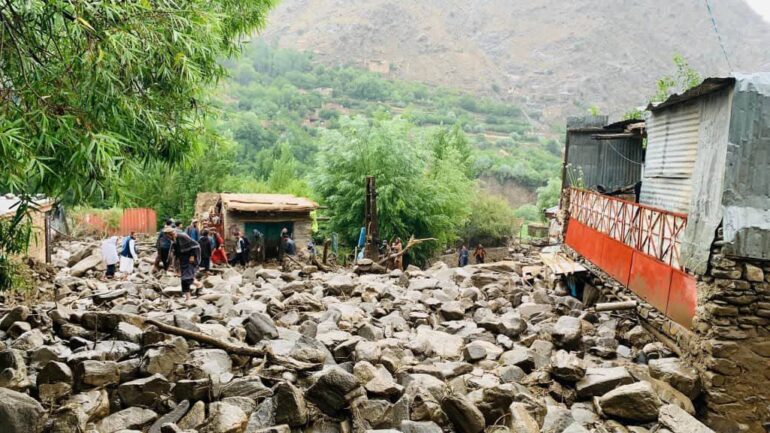

KABUL, AFGHANISTAN – Natural disasters have affected around 92,000 people across Afghanistan since the beginning of 2026, with 97 people killed and another 331 injured, according to the United Nations Office for the Coordination of Humanitarian Affairs (OCHA).
In a report published Sunday, August 16, OCHA said earthquakes, floods and landslides have been among the deadliest natural disasters to strike Afghanistan during the first seven months of the year.
According to the report, between January and August 2026, natural disasters affected approximately 13,000 families, or around 92,000 people, across 202 districts in all 34 provinces of Afghanistan. Of those affected, about 51,000 people were residents of provinces in the country’s eastern region.
The disasters have killed 97 people, injured 331 others, damaged around 10,000 homes and completely destroyed an additional 2,100 houses, OCHA said.
Behind these figures are families who have lost their homes, farmers whose agricultural land has been damaged by floods, and communities struggling with damaged roads, irrigation systems, water networks and local markets, the UN agency said.
OCHA warned that for households already facing limited livelihood opportunities, the loss of homes or productive assets could push them further into vulnerability and increase their dependence on humanitarian assistance.
The warning comes as humanitarian needs in Afghanistan continue to grow while funding for humanitarian response operations remains significantly below the level required. The United Nations had appealed for $1.71 billion to address Afghanistan’s humanitarian needs in 2026, but had received less than 20 percent of the requested funding during the first half of the year.
The funding shortfall comes as Afghanistan remains highly vulnerable to natural hazards, including earthquakes, floods, droughts and landslides. Recurrent disasters have compounded the effects of poverty, displacement, food insecurity and limited access to basic services, placing additional pressure on communities already struggling with severe humanitarian needs.
Afghanistan has experienced several consecutive years of reduced rainfall and severe drought, largely driven by climate change. While some areas have seen snowfall and rainfall this winter, overall precipitation levels are still considered below the long-term average.
This latest drought compounds a pattern of recurring water crises in Afghanistan. According to a report by ACAPS, the country has endured eight major droughts since 1969, including catastrophic events in 2018 and 2021 that affected over 11 million people. Ongoing groundwater depletion is threatening millions more.
Afghanistan’s humanitarian crisis is being driven by a convergence of pressures. Taliban restrictions on women and girls have deepened economic and social vulnerabilities, while the continued deportation of Afghans from neighboring countries is placing additional pressure on communities and overstretched services.
At the same time, climate-related disasters, including floods, droughts and earthquakes, continue to destroy homes, livelihoods and infrastructure. With humanitarian funding declining sharply, millions of Afghans are increasingly dependent on assistance just as the resources available to meet their needs are shrinking.

