

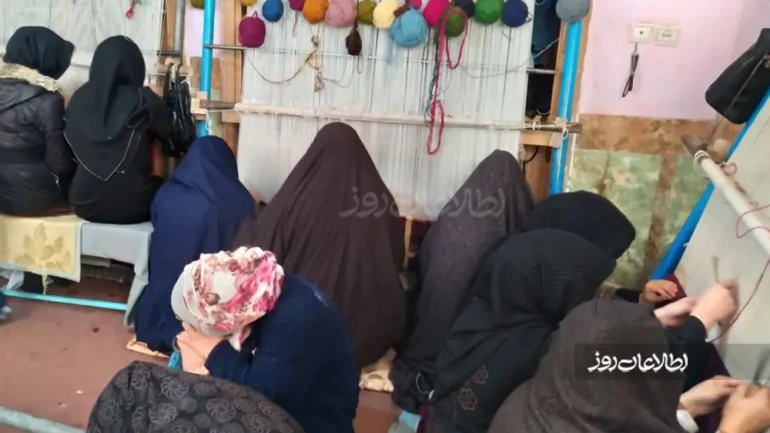

KABUL, AFGHANISTAN – Women’s participation in Afghanistan’s labour force has fallen to just 5.1 percent, while the country’s already fragile labour market is facing additional pressure from the large-scale return of Afghans from neighbouring countries, according to a new brief published by the International Labour Organization (ILO) on Tuesday, August 18.
The ILO says five years after the Taliban returned to power, Afghanistan’s labour market has undergone profound structural changes, marked by widening gender disparities, growing dependence on male employment and the severe exclusion of women from economic activity.
The organization estimates that Afghanistan now has the second-lowest female labour force participation rate in the world.
Overall employment has increased by an estimated 14 percent from its 2022 low, reaching nearly 8.5 million jobs in 2026. However, employment growth has failed to keep pace with population growth. The employment-to-population ratio is estimated at 32.5 percent, more than four percentage points below its 2020 level.
The increase in employment has been concentrated entirely among men. Male employment in 2026 is estimated to be around 22 percent higher than in 2020. Female employment, meanwhile, declined sharply after the Taliban takeover. It fell to less than one-third of its 2020 level in 2022 and has shown only a marginal recovery since then.
The ILO says the exclusion of women from economic activity is one of the defining features of Afghanistan’s labour market under Taliban rule. Tite Habiyakare, Senior Coordinator and Head of the ILO Office for Afghanistan, warned that the country cannot build a resilient labour market while such a large proportion of its population remains excluded from economic activity.
“Expanding women’s access to productive employment, while creating opportunities for returnees, young people and other vulnerable workers, is essential for strengthening livelihoods and supporting more inclusive economic development,” Habiyakare said.
The labour market is also coming under growing pressure from the large-scale return of Afghans from Pakistan and Iran. According to the ILO, many returnees are arriving in communities already struggling with poverty, underemployment and limited livelihood opportunities, increasing competition for scarce jobs.
The returns also threaten household incomes because many families have lost remittances previously sent by relatives working in neighbouring countries. After years of economic crisis, the ILO says very few households have sufficient savings to absorb another major economic shock.
The organization has also warned of risks linked to the ongoing crisis in the Middle East. Rising energy prices and inflation could place further pressure on Afghan workers, with more than 70 percent employed in activities considered to have at least medium exposure to these pressures.
The ILO is calling for productive employment to remain at the centre of Afghanistan’s economic response. Its recommendations include greater support for private-sector development, labour-intensive industries and micro, small and medium-sized enterprises, as well as support for the productive reintegration of returnees and stronger protection for vulnerable households facing rising living costs.
The organization also called for expanded access to employment opportunities across all segments of the population, including women and young people, and renewed investment in regular and representative labour-force data collection.
The ILO’s latest findings come as Afghanistan enters the fifth year since the Taliban’s return to power, following which women and girls have faced sweeping restrictions on education, employment and participation in public life.
At the same time, Afghanistan continues to face high poverty, limited formal employment and dependence on humanitarian assistance. The return of large numbers of Afghans from Pakistan and Iran is adding further pressure to communities with limited capacity to absorb new workers.
Since reclaiming power in August 2021, the Taliban have steadily imposed restrictions that have increasingly excluded women and girls from public life. Girls above sixth grade remain prohibited from attending school, leaving millions without access to secondary education and worsening Afghanistan’s humanitarian and economic challenges.
Women have also been barred from universities, while the suspension of medical education for women and girls has raised concerns about the country’s future shortage of female healthcare professionals.
The restrictions have also affected the humanitarian sector. In December 2022, the Taliban instructed national and international NGOs to prevent women from working, citing alleged violations of the group’s dress requirements. The policy has significantly disrupted aid operations, particularly in a country where many women and girls face cultural and social barriers to interacting with male aid workers.
The Taliban have announced new rules further restricting women’s rights and strengthening the authority of their supreme leader, Hibatullah Akhundzada. Published on August 16, the law makes obedience to Akhundzada mandatory and places decisions on jihad exclusively under his authority.
Under the new provisions on marriage and family, women are required to obey their husbands, while men are described as the “rulers” of their wives. Women are also instructed to keep their husbands “happy” and appreciate their kindness. The law also permits polygamy, requiring men with multiple wives to treat them fairly.

