

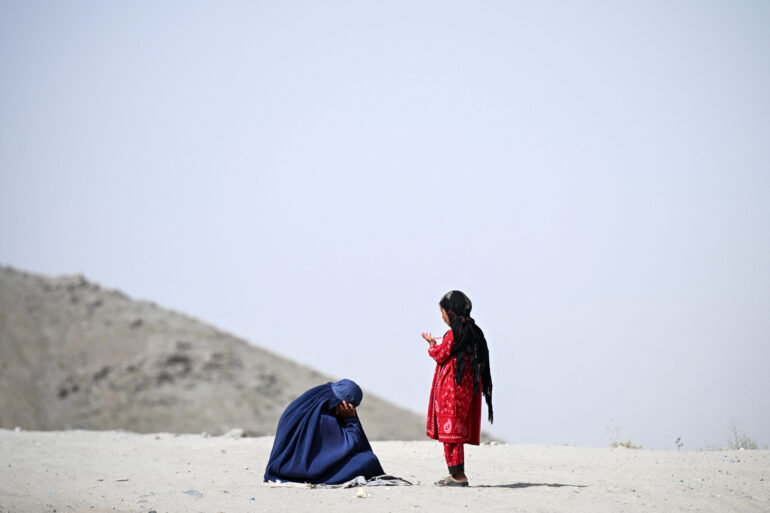

KABUL, AFGHANISTAN – Five years after the Taliban returned to power in Afghanistan, Human Rights Watch (HRW) has warned that the country is experiencing one of the world’s most severe human rights crises, urging governments to move beyond expressions of concern and take meaningful action to ensure accountability, protect vulnerable Afghans, and respond to the country’s worsening humanitarian situation.
In a statement released on Monday, the organization said that since seizing power on August 15, 2021, the Taliban have systematically dismantled the rights of women and girls while expanding restrictions that affect nearly every aspect of public life.
Human Rights Watch also published a timeline documenting major human rights violations committed during the past five years, arguing that the international community must take stronger steps to address ongoing abuses.
According to the organization, Taliban authorities have imposed sweeping restrictions on women’s right to work, freedom of movement, and participation in public life as part of a broader system of social control designed to silence dissent. At the same time, the Taliban’s morality police have conducted workplace raids, monitored public spaces, and arbitrarily detained women accused of violating dress code regulations.
Furthermore, Afghanistan remains the only country in the world where girls are prohibited from continuing their education beyond the sixth grade.
Fereshta Abbasi, Afghanistan researcher at Human Rights Watch, said the fifth anniversary of the Taliban’s return to power should serve as a reminder of the consequences of continued impunity.
“The fifth anniversary of the Taliban’s takeover is a stark reminder of the devastating cost of impunity,” Abbasi said. “Governments must move beyond statements of concern and demand justice for the grave crimes committed in Afghanistan, including the crime against humanity of gender-based persecution.”
Meanwhile, Human Rights Watch said recently enacted Taliban legislation has further strengthened the country’s repressive legal framework. The organization pointed to the Code of Criminal Procedure, promulgated on January 4, 2026, which recognizes only followers of the Hanafi school of Islamic jurisprudence as Muslims while classifying members of other religious communities, including Shia Muslims, as heretics. According to the report, the law also establishes severe penalties that could be used to suppress any form of opposition.
In addition, the newly adopted Preachers’ Law requires religious leaders to adhere exclusively to Hanafi jurisprudence. Human Rights Watch said these two laws institutionalize religious discrimination within Afghanistan’s legal system and further restrict religious freedom.
The organization also expressed concern over provisions affecting women’s legal protections. It noted that the revised criminal procedure code recognizes only “excessive” physical assault as domestic violence against women, leaving survivors of other forms of abuse without access to justice. Consequently, Human Rights Watch said the new definition significantly weakens legal protections for women and girls.
Similarly, the organization criticized a decree governing the legal separation of spouses, saying it removes the minimum legal age for girls’ marriage and, as a result, increases the risk of child marriage across the country.
Beyond restrictions on women, Human Rights Watch said Taliban authorities have intensified their crackdown on freedom of expression by expanding censorship of domestic media and suppressing independent voices. According to the report, journalists, women’s rights defenders, civil society activists, academics, artists, and other critics have been subjected to arbitrary arrest, torture, and other forms of ill-treatment.
At the same time, the organization warned that Afghanistan’s humanitarian crisis has continued to worsen amid declining international assistance. It estimated that more than 17 million people, representing approximately 40 percent of the country’s population, are projected to face acute food insecurity, while the United Nations Humanitarian Response Plan remains critically underfunded.
Human Rights Watch attributed the deteriorating humanitarian situation in part to significant reductions in foreign assistance from the United States, the United Kingdom, and other donor countries. As a result, humanitarian organizations have been forced to reduce operations and scale back essential services. Moreover, restrictions imposed by the Taliban on female humanitarian workers, including the requirement that women be accompanied by a male guardian, have further limited women’s access to employment opportunities and humanitarian assistance.
The organization also raised concerns over the continued forced return of Afghan nationals from neighboring countries and Europe. It said Iran and Pakistan have compelled millions of Afghans to return to Afghanistan, while Germany has intensified deportations since resuming removal flights in August 2024 despite the serious risks faced by returnees.
Furthermore, Human Rights Watch noted that representatives of the European Union hosted a Taliban delegation in Brussels on June 22 to discuss migration issues. It stressed that no government should forcibly return Afghans who may face persecution, arbitrary detention, torture, or other serious human rights abuses upon their return.
In addition to these concerns, Human Rights Watch highlighted renewed cross-border violence between Afghanistan and Pakistan. Citing United Nations figures, the organization said a Pakistani airstrike on the Omid Drug Rehabilitation Center in Kabul on March 16 killed at least 269 civilians and wounded more than 122 others.
Finally, Human Rights Watch welcomed the United Nations Human Rights Council’s decision on October 6, 2025, to establish an independent international mechanism to investigate past and ongoing human rights violations committed in Afghanistan by all parties, including former Afghan authorities and international forces.
The organization urged governments to ensure that the mechanism is adequately funded and fully operational while also supporting accountability efforts through investigations by the International Criminal Court and national prosecutions based on the principle of universal jurisdiction.
Concluding the report, Abbasi urged governments to match the seriousness of the crisis with concrete action.
“The Afghan population, especially women and girls, has endured repression and abuse for five years,” she said. “The international response must finally match the gravity of this crisis: it must end deportations to Afghanistan, protect Afghans at risk, and maintain funding for humanitarian aid to the country.”

