

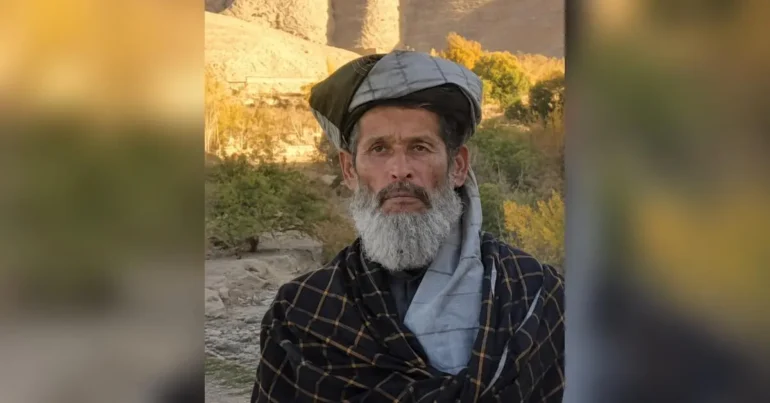

KABUL, AFGHANISTAN – Sources in Dushi district of Afghanistan’s northern Baghlan province have confirmed that a community elder was killed in an alleged armed attack by Gojar nomadic Kuchis in the district.
According to the sources, the victim was identified as Faiz Mohammad, an elder of the Sunni Hazara community in Dushi district.
A source told KabulNow newspaper that Faiz Mohammad was killed on Friday night in Zargha village of Dushi while he was staying at a threshing floor to protect his harvested crops. The source said he was attacked by armed Gojar Kuchis.
The motive for the killing and the identities of those responsible remain unclear. Local Taliban authorities in Baghlan have not commented on the incident.
Sources said that Faiz Mohammad’s brother was also killed by Gojar Kuchis six years ago.
According to the sources, tensions have persisted between Gojar Kuchis and local residents in Dushi district.
Sources added that about three months ago, two local residents were injured in a clash between residents of Dahan-e Piyazqul village in Dushi and Gojar Kuchis over grazing land.
The incident comes amid continued tensions between Kuchi nomads and local communities in several parts of Afghanistan over access to farmland and grazing areas. In a similar case reported in June, armed Kuchis reportedly released their herds onto farmland belonging to residents of Tobak and Poshta Gharghari villages in Panjab district of Bamyan province. After local residents protested, the Kuchis allegedly assaulted three men—Mohammad Hussain, Jafar, and Ali Dad—leaving them “on the brink of death.”
Earlier, on June 6, armed Kuchis allegedly assaulted five men—Naeem, Mehdi, Habib, Ibrahim, and Haji Ishaq—in the village of Zarsang.
Kuchis are traditionally nomadic pastoralist communities who move seasonally across Afghanistan in search of water and pasture for their livestock. Their migrations have historically brought them into conflict with settled farming communities, particularly in the central highlands.
Disputes over land ownership, grazing rights, and access to natural resources have repeatedly fueled tensions between Kuchi groups and local residents, especially in predominantly Hazara-populated areas.
Each spring, Kuchis travel with their livestock to the central parts of Afghanistan. Since the Taliban returned to power in 2021, the movement of Kuchi groups into Hazara-populated areas has become a growing source of tension and insecurity.
Local residents have accused Kuchis of damaging farmland and grazing areas and of engaging in harassment and violence. Several residents have reportedly been killed in clashes or confrontations involving Kuchi groups in recent years.
Although Kuchi-settler disputes remained largely unresolved under successive governments before the Taliban’s return, they were often addressed through mediation and negotiations. Under the Taliban, however, critics say the balance has shifted in favor of Kuchi claimants, many of whom are ethnic Pashtuns with longstanding seasonal grazing routes across the country.
Hazara residents in affected areas say Taliban courts have frequently ruled in favor of the nomads, leaving them with limited or no effective legal avenues to defend their land and property rights.

