


KABUL, AFGHANISTAN – Sources in Punjab district of Bamyan province say that five residents of the district were injured in an attack by armed Kuchis. Following the attack, the Taliban cut off telecommunications networks in Punjab district.
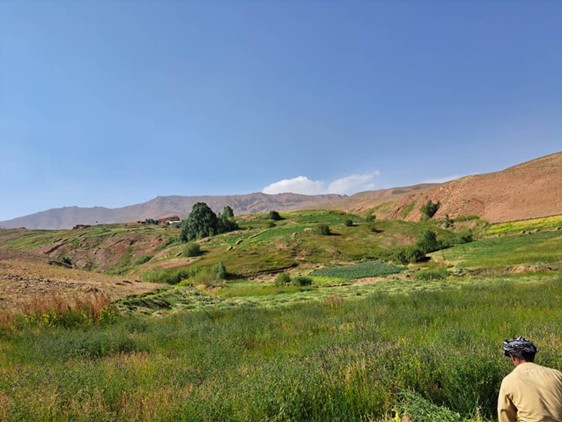
According to the sources, on Saturday (June 6), armed Kuchis entered the “Zarsang” area of Punjab district with thousands of livestock. Local residents attempted to prevent the animals from entering and damaging their farmlands, but armed Kuchi men attacked the local inhabitants by opening fire and throwing stones.
A source told KabulNow in a message that the Kuchis were moving through people’s farmlands with thousands of livestock.
The source added that on Saturday, residents of Zarsang turned back the Kuchi livestock, and when they were in an area called “Tala-Qol,” armed Kuchi men arrived and attacked the residents.
Sources say that five local residents were seriously injured in the Kuchi gunfire and stone-throwing.
The injured have been identified as Naeem, Mahdi, Habib, Ibrahim, and Haji Ishaq. Sources say they sustained injuries to their heads and legs from bullets and stones.
Sources added that “Habib Karbalayi” and “Haji Ishaq,” two elderly men, were severely beaten, and one of them was shot in the leg and transferred to the center of Bamyan for medical treatment.
According to the sources, following the attack, telecommunications networks in Punjab district were shut down on the orders of the Taliban governor, and the outage continued until Monday evening.
Sources say that armed Kuchis are grazing their livestock “freely and in complete silence on the people’s irrigated and rain-fed lands.”
According to the sources, the Taliban had sent a delegation from the provincial center to Punjab district, but the delegation returned after meeting with the Kuchis.
The Kuchis are traditionally nomadic pastoralist communities who move seasonally across different parts of Afghanistan in search of grazing land and water for their livestock. Their migrations have historically brought them into contact with settled farming communities, particularly in the central highlands.
Disputes over access to land, grazing rights, and natural resources have periodically led to tensions and conflicts between Kuchi groups and local residents, especially in predominantly Hazara areas.
Every year with the arrival of spring, Kuchis move with their livestock to the central regions of Afghanistan. Since the Taliban’s return to power, the influx of Kuchis into Hazara-populated areas has become a major source of tension and crisis.
In addition to the destruction of farmlands and grazing areas, local residents have faced harassment and violence by Kuchis. In recent years, several local residents have reportedly been killed by Kuchis.
Under successive governments before the Taliban’s return to power in 2021, Kuchi-settler disputes had remained unresolved but were often subject to mediated negotiation. The Taliban’s approach, however, has tipped the balance decisively in favor of the Kuchis, many of whom are ethnic Pashtuns with historic grazing routes across the country.
The latest incident comes amid a broader pattern of disputes involving Kuchi groups and Hazara communities in central Afghanistan.
Last year, Taliban authorities forcibly evicted 25 Hazara and Sayyid families from Rashk village in Panjab district of Bamyan after a Taliban court ruled in favor of the Kuchis in a long-running land dispute. Residents were reportedly given a 15-day deadline to leave before Taliban forces, accompanied by Kuchi men, enforced the eviction. The case drew concerns among local communities over land rights and the treatment of residents in disputed areas.
Many Kuchis traditionally spend winters in Pakistan’s tribal areas and summers grazing livestock mainly in central and northern Afghanistan. Some Kuchi leaders claim pasture rights granted by Afghan kings in the late 19th century. These claims, often lacking formal documentation, have long clashed with the lived reality of settled communities farming the land for generations.
Now, with Taliban courts consistently ruling in favor of nomads, Hazara residents say they have no legal recourse.
The latest incident highlights the continuing tensions between local communities and Kuchi groups in Afghanistan’s central highlands. Residents have repeatedly raised concerns over the destruction of agricultural land, security threats, and the lack of effective mechanisms to resolve disputes over land use and grazing rights, issues that remain a recurring source of conflict in the region.

