

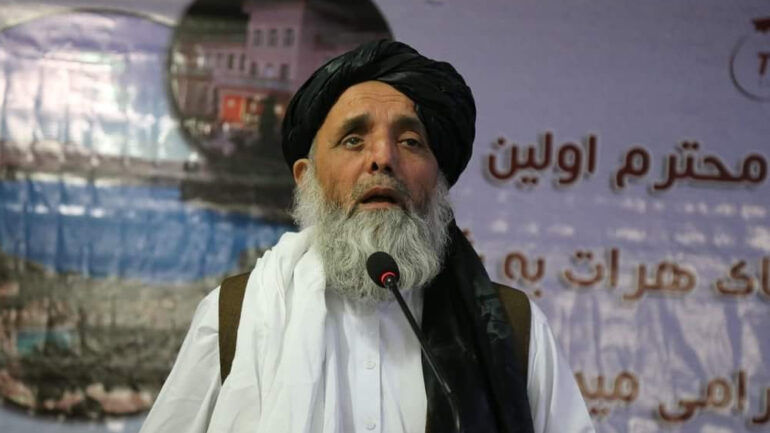

KABUL, AFGHANISTAN – Abdullah Sarhadi, a former Taliban governor of Bamyan, has admitted that he helped destroy the historic Buddha statues in the province during the group’s first rule over Afghanistan.
Speaking to the BBC World Service, Sarhadi admitted that he personally took part in the destruction of the Buddha statues.
Sarhadi said their actions, both in the past and present, were carried out in accordance with what he described as God’s guidance and law. He said the Taliban’s aim was to destroy idols rather than sell them.
He also said he had no regrets over the destruction of the Buddha statues, arguing that their demolition was carried out in accordance with what he believed to be God’s will.
On March 11, 2001, the Taliban, under the orders of their then-leader Mullah Mohammad Omar, destroyed the monumental Buddha statues in Bamyan using explosives as well as artillery and tanks.
Sarhadi, who was a Taliban military commander at the time, has now acknowledged his direct involvement in the destruction of the ancient monuments.
Following the Taliban’s return to power in Afghanistan, Sarhadi was appointed governor of Bamyan Province and remained in the position until January 2026.
On January 1, 2026, Taliban leader Hibatullah Akhundzada removed Sarhadi from the governorship of Bamyan and appointed him governor of Jawzjan Province. He was later appointed deputy commander of the Taliban’s 217 Omar Corps in Kunduz Province.
The Salsal Buddha, standing 53 meters tall, and the smaller Shamama Buddha, measuring 35 meters, were carved into the cliffs of Bamyan between the third and seventh centuries CE. The statues were among the most significant surviving examples of Gandharan Buddhist art in Afghanistan.
The destruction of the statues, which were part of the Bamyan Cultural Landscape listed as a UNESCO World Heritage Site, sparked widespread international condemnation and was described as a major loss to Afghanistan’s cultural heritage.
In a related development, a 27-foot sandstone sculpture inspired by Bamyan’s Salsal Buddha was put on display at New York City’s High Line park in April 2026. Created by Vietnamese-American artist Tuan Andrew Nguyen, the sculpture is named after the meaning attributed to “Salsal” — “light that shines across the world” — and will remain on public display until spring 2027.
The installation offers a symbolic contrast to the destruction of the original Buddha statue in Bamyan and reflects continuing international efforts to engage with the site’s cultural legacy.
Japan’s Ambassador to Afghanistan, Takashi Okada, visited the remains of the Bamiyan Buddhas during a trip to the province, underscoring their cultural and historical significance. He also commended archaeologists and experts for their efforts to preserve the site, calling the ruins an important cultural asset for the people of Bamyan.
The destruction of the Bamyan Buddhas remains one of the most prominent examples of the loss of Afghanistan’s cultural heritage during the Taliban’s first rule. Despite international efforts to preserve the site, the original statues have not been rebuilt, while UNESCO and Afghan heritage experts continue to emphasize the importance of protecting the Bamyan Cultural Landscape and its remaining archaeological sites.

