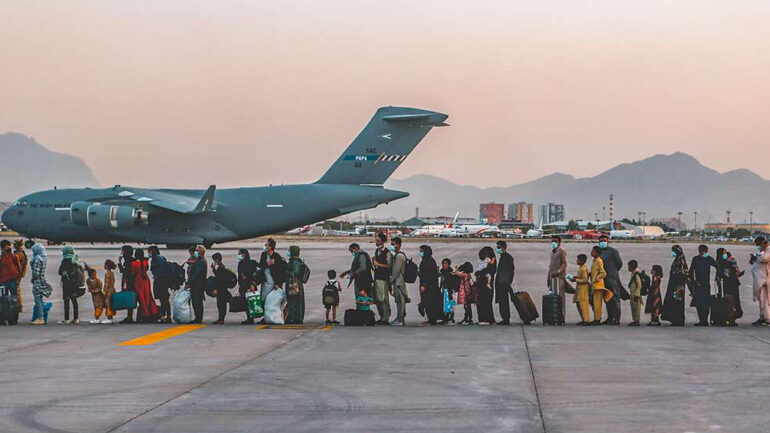

KABUL, AFGHANISTAN – A U.S. federal judge has ruled that the Trump administration cannot use its travel restrictions to block approved family members of Afghan refugees from entering the United States, declaring the policy illegal and ordering the government to process affected cases.
U.S. District Judge Anthony J. Trenga of the Eastern District of Virginia issued the ruling on Wednesday in a lawsuit filed by seven Afghan refugees who had already been granted asylum in the United States but were unable to reunite with their immediate family members because of the administration’s travel restrictions.
In his ruling, Trenga said the State Department’s decision to apply Presidential Proclamations 10949 and 10998 to Afghan refugees seeking to bring their family members to the United States was unlawful and must be set aside.
The judge said the presidential proclamations specifically exempt individuals who have already received asylum and that the restrictions could not be used to prevent the legal admission of their immediate family members.
Under the court order, the U.S. government must issue travel documents within 15 days for five family members of the plaintiffs whose applications had already been approved. The government must also review two additional cases without applying restrictions linked to the travel ban.
The judge said the court would continue monitoring the implementation of the order until the family members of the plaintiffs are admitted to the United States.
The ruling does not overturn the broader travel restrictions imposed by the Trump administration, Trenga said. Instead, it applies only to spouses and children of individuals who have already obtained asylum in the United States and whose family reunification petitions were approved before the restrictions took effect.
The decision comes amid wider uncertainty over U.S. immigration programs for Afghans following policy changes introduced by President Donald Trump last year.
In November 2025, after a shooting in Washington involving an Afghan national who killed a U.S. National Guard member and injured another, Trump ordered a suspension of Afghan settlement programs and visa issuance for Afghan passport holders. He also directed a review of Afghans who entered the United States during the administration of former President Joe Biden.
The measures affected thousands of Afghans waiting for relocation from third countries, including former interpreters, contractors, civil society workers, and others who supported U.S. government and military operations during the two-decade presence in Afghanistan.
Many Afghan applicants remain in countries such as Pakistan and Qatar while awaiting visa processing and relocation decisions, with some facing uncertain legal status and security concerns.
Refugee advocacy groups, US lawmakers, UN officials and human rights organizations have criticized restrictions affecting Afghan applicants, urging the US government to maintain pathways for eligible Afghans seeking protection and family reunification. They have argued that former partners of the United States and vulnerable applicants should continue to have access to established resettlement programs.