


KABUL, AFGHANISTAN – Local sources in Panjshir province have told KabulNow that the Taliban have adopted a “hostile attitude and open animosity” toward residents of Pariyan district.
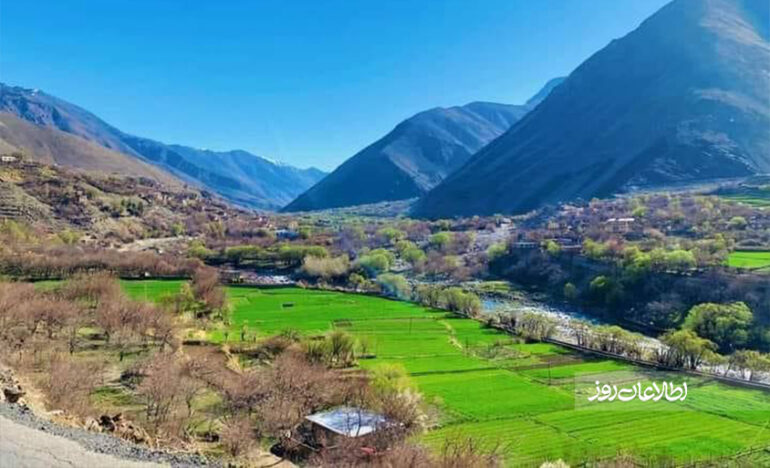
A source who spoke on condition of anonymity said that Taliban forces have recently been building roads to access their security posts, destroying residents’ agricultural lands and fruit trees along the routes.
The source said that in the Khawak area of Pariyan district, Taliban forces from the special military unit stationed in Panjshir are currently constructing roads. In one section, the road has been built directly through a piece of farmland belonging to a local resident.
According to the source, when the landowner requested that the road be diverted to the lower part of his property, where there was unused space and a more suitable route, Taliban forces ignored his request.
The elderly landowner attempted to take photos of the destruction of his land, after which Taliban members allegedly beat him severely with sticks and rifle butts, telling him: “After five years, you still have not become Muslims.”
The source added that in the same area, Taliban forces built another access road to one of their posts through a water canal and told residents they were no longer allowed to rebuild or dig the canal because it would damage the road. As a result, the water supply has been cut off, and crops and fruit trees dependent on the canal are at risk of drying out.
Residents said that Taliban forces have used similar methods across villages in Pariyan district, allegedly constructing roads through people’s lands “out of resentment.” They added that in some villages, residential houses have also been demolished.
Another source told KabulNow that in the Kojan area of Pariyan district, Taliban forces stationed at military bases told local residents: “We did not see any Muslims among you.”
Sources said that after Taliban forces forcibly removed residents of several villages from their summer pastures and prevented them from taking their livestock to the mountains, villagers obtained grazing and migration permits from the Taliban governor of Panjshir and the provincial military commission.
The Taliban unit stationed in the area reportedly refused to accept the orders issued by the governor and military commission, telling residents that they did not trust their commitments, as attacks against Taliban forces continued despite previous assurances.
The unit also accused local residents of failing to support them, claiming that they had not seen people among them whom they considered to be true Muslims.
Pariyan district of Panjshir has witnessed attacks by anti-Taliban groups in recent months. In the latest incident, the National Resistance-related group known as the Green Trend, led by former Afghan Vice President Amrullah Saleh, announced last week that its forces had carried out a rocket attack on the Pariyan district administrative building.
Panjshir has remained one of Afghanistan’s most sensitive security regions since the Taliban returned to power in August 2021. The province became the main stronghold of the National Resistance Front (NRF), led by Ahmad Massoud, and has also witnessed activities by other anti-Taliban armed groups.
Although the Taliban claimed to have taken control of the province in September 2021, resistance attacks have continued intermittently, particularly in remote mountainous districts.
Because of its symbolic importance as a historic center of anti-Taliban resistance and its difficult mountainous terrain, Panjshir continues to receive a significant Taliban military presence.
The group has maintained extensive security deployments, intelligence operations, and frequent search campaigns in the province, citing the need to suppress armed opposition, while residents and human rights organizations have repeatedly raised concerns over arbitrary arrests, enforced disappearances, and alleged abuses against civilians during these operations.
Human rights organizations, including Amnesty International, have described the Taliban’s actions in Panjshir as amounting to war crimes, citing arbitrary detentions and collective punishment of civilians. In 2023, Amnesty said many individual acts by Taliban forces constitute war crimes and together amount to the war crime of collective punishment.

