

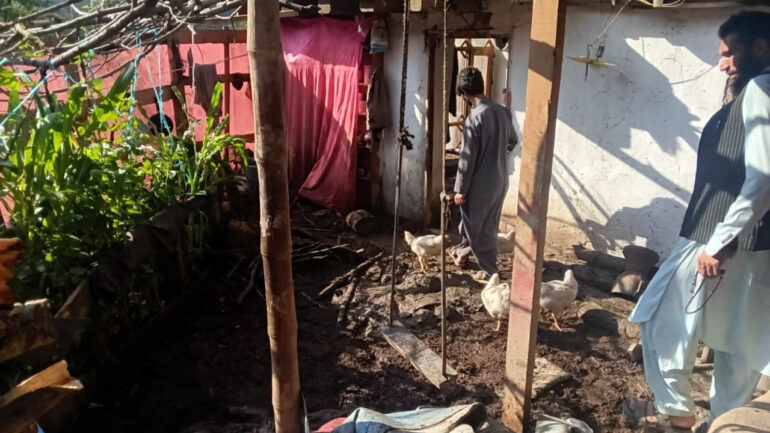

KABUL, AFGHANISTAN – The United Nations Office for the Coordination of Humanitarian Affairs (OCHA) says flash floods in three eastern Afghan provinces have caused fatalities and widespread damage to homes, farmland, and infrastructure.
In a post on X on Tuesday, OCHA said the provinces of Nuristan, Nangarhar, and Laghman were affected by the floods, leaving families impacted and causing significant destruction.
The agency did not provide a specific figure for casualties or material losses but said humanitarian partners are currently conducting needs assessments and responding to affected communities.
Updated figures released by Taliban authorities on Tuesday further highlighted the scale of the disaster. According to the Taliban-run National Disaster Management Authority, the death toll in Nuristan remained at 23, while at least 80 people were injured and more than 100 others were still missing after floodwaters swept through Parun and surrounding villages following hours of intense rainfall.
Search and rescue efforts were continuing as authorities and humanitarian organizations worked to assess the full extent of the damage and locate those still unaccounted for.
The renewed disaster comes amid an unusually severe year of extreme weather in Afghanistan, marked by repeated heavy rainfall, flash floods, seasonal storms, and climate-related shocks linked to the ongoing El Niño phenomenon.
Earlier assessments by the United Nations Office for the Coordination of Humanitarian Affairs had already highlighted the scale of the crisis. According to an update published two months ago, heavy rainfall and flash floods between mid-March and late April affected more than 73,000 people across all 34 provinces of Afghanistan, leaving around 57,000 in urgent need of humanitarian assistance.
More than 10,000 families across Afghanistan have been affected by flooding since the beginning of 2026.
Afghanistan is highly vulnerable to climate-related disasters, including flash floods, droughts, and landslides, which frequently devastate rural communities. Humanitarian organizations have repeatedly warned that years of conflict, widespread poverty, fragile infrastructure, and the effects of climate change have left millions of Afghans increasingly exposed to natural disasters, while limiting the country’s capacity to prepare for and recover from such emergencies.

